
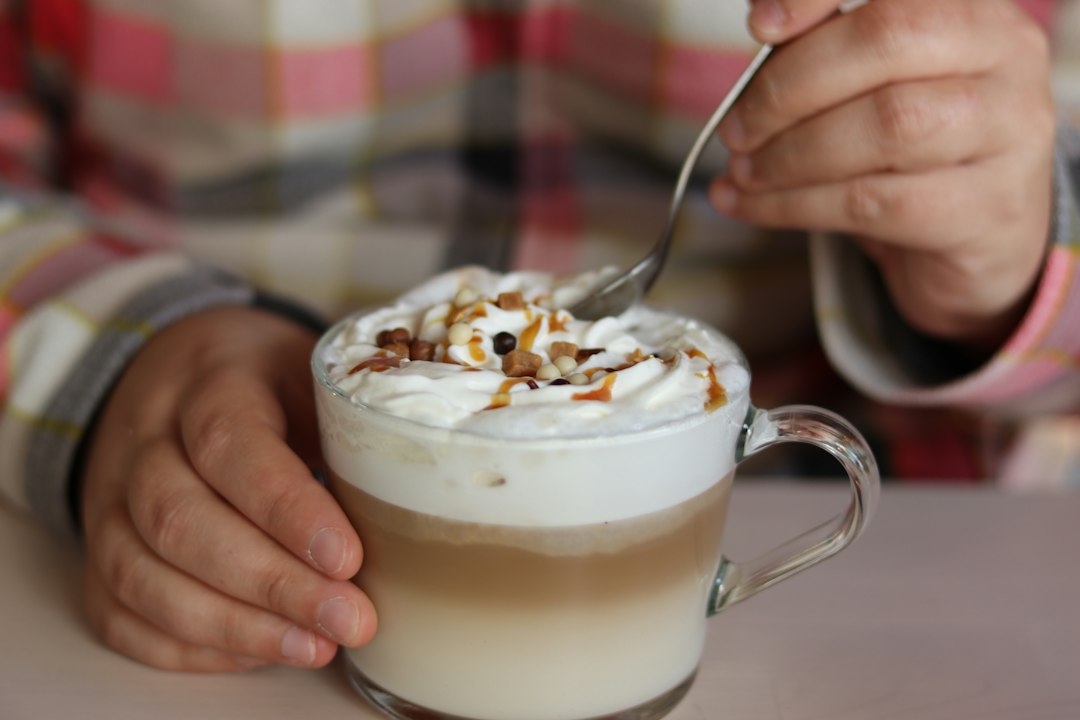
Every November the Caramel Brûlée Latte comes back to the Starbucks holiday menu, and every November people go looking for a way to make it at home. Most copycat recipes stop at “add caramel sauce to a latte.” That gets you a caramel latte, which is a nice drink, but it is not the one you are after.
What makes a caramel brûlée latte different is the brûlée: caramel cooked darker than usual, until it tastes toasty and a little bitter, like the cracked sugar top on a crème brûlée. That edge is what keeps the drink from tasting like warm candy, and it is also what lets the coffee come through.
Below is the latte recipe, a burnt caramel sauce you can make in about 15 minutes, a trick for getting the crunchy brûlée topping out of the same pan, and how to make the drink iced, lighter, or without an espresso machine.
Caramel brûlée latte recipe
Caramel brûlée latte (one 12 oz drink)
A caramel brûlée latte is a double shot of espresso and steamed milk sweetened with a dark, burnt-sugar caramel sauce, then topped with whipped cream and crunchy pieces of hardened caramel. With the sauce made ahead, it takes about five minutes.
- Spoon 2 tablespoons (30 ml) of caramel brûlée sauce into a warmed 12 oz mug. Use 3 tablespoons if you like it as sweet as the café version.
- Pull a double shot of espresso, about 2 oz (60 ml), straight onto the sauce and stir until it dissolves.
- Steam or heat 8 oz (240 ml) of milk to 140–150°F (60–65°C), with a thin layer of foam.
- Pour the milk into the mug and give it one more stir from the bottom.
- Top with whipped cream, a thin drizzle of sauce and a spoonful of crushed brûlée bits. Serve right away, before the topping softens.
Stirring the sauce into the hot espresso first matters. Thick caramel sauce dropped straight into milk tends to sink and sit at the bottom of the mug, so you get plain latte for most of the drink and a syrupy last sip. Hot espresso thins the sauce so it mixes evenly.
What is in a caramel brûlée latte?
The Starbucks version is espresso, steamed milk and caramel brûlée sauce, finished with whipped cream and a crunchy caramel brûlée topping. It is sold hot, iced and as a Frappuccino, and it is a seasonal drink that only appears with the holiday menu. Built from the bottom up, it looks like this:
Shards of hardened dark caramel. They are the “brûlée” you can see, and they melt slowly into the cream.
Cool and soft against the hot drink. It also stops the topping from sinking straight away.
A double shot and about 8 oz of milk. This is where the coffee flavor lives.
Caramel cooked to a deep amber, then softened with cream and butter. Toasty, buttery and slightly bitter.
Caramel brûlée latte vs caramel latte vs caramel macchiato
All three are espresso, milk and caramel, which is why they get mixed up. The difference is what kind of caramel goes in and where it ends up.
- Caramel
- Clear caramel syrup mixed into the drink
- Taste
- Sweet and simple; the syrup is light and sugary
- Topping
- Usually none
- Caramel
- Vanilla syrup inside, caramel drizzled on top
- Taste
- Vanilla milk first, espresso and caramel at the end
- Topping
- A crosshatch of caramel sauce on the foam
- Caramel
- Dark, burnt-sugar caramel sauce mixed in
- Taste
- Toasty and buttery with a bitter edge; richest of the three
- Topping
- Whipped cream and crunchy brûlée bits
If you have only ever had a macchiato at a chain, note that the coffee-shop “caramel macchiato” is really an upside-down vanilla latte. The traditional Italian macchiato is a shot of espresso with a dab of foam and nothing else.
How to make caramel brûlée sauce (and the topping from the same pan)
This makes about 1¼ cups of sauce, enough for eight to ten lattes, plus a small batch of brûlée bits. The trick is to pour a little of the caramel off onto parchment before you add the cream. That portion sets into hard caramel you can crush for the topping, so you only cook sugar once.
Ingredients: 1 cup (200 g) granulated sugar, ¼ cup (60 ml) water, ¾ cup (180 ml) heavy cream, 2 tablespoons (28 g) butter, ¼ teaspoon fine salt and 1 teaspoon vanilla extract.
- Get set up. Line a small tray with parchment or a silicone mat. Warm the cream in the microwave or a small pan until it is hot but not boiling. Hot cream bubbles up far less than cold cream when it hits the caramel.
- Dissolve the sugar. Put the sugar and water in a heavy, light-colored saucepan over medium heat. Swirl the pan (don’t stir) until the sugar dissolves and the syrup turns clear.
- Cook it dark. Let it boil, swirling now and then, until the caramel goes past golden to a deep amber, the color of a dark beer or an old penny, and smells toasty. That is about 350–360°F (177–182°C) on a thermometer, usually 8 to 12 minutes in. This is the brûlée flavor, so be brave — but watch closely, because it can go from amber to burnt in under a minute.
- Pour off the topping. Take the pan off the heat and immediately pour about 3 tablespoons of the caramel onto the parchment in a thin puddle. Leave it to harden.
- Add the cream. Pour the hot cream into the pan slowly, standing back, as it will bubble and steam hard. Whisk until smooth. If a few lumps of hardened caramel form, set the pan back over low heat and whisk until they melt.
- Finish. Off the heat, whisk in the butter, salt and vanilla. Let the sauce cool before you jar it; it thickens as it cools.
- Crush the topping. Once the poured caramel is fully hard (10 to 15 minutes), slip it into a zip-top bag and break it into small pieces with a rolling pin.
Keep the sauce in a jar in the fridge for up to two weeks. It firms up when cold, so warm the jar in a bowl of hot water or give it 10 to 15 seconds in the microwave before measuring. Store the brûlée bits in an airtight container at room temperature with a square of parchment between layers. Humidity is their enemy and will turn them sticky within a day or two if they are left out.
Caramel at this stage is well above the temperature of boiling water and sticks to skin. Use a deep pan, keep kids and pets clear, and never taste it off the spoon.
It crystallized, usually from stirring or a stray sugar crystal on the side of the pan. Add a few tablespoons of water, stir over low heat until it dissolves again, and start the boil over — swirling only.
It was not cooked dark enough. Next batch, wait for deep amber and a toasty smell before you take it off the heat.
It went past amber to black. There is no rescuing burnt caramel; start again and pull it a little sooner.
Short on time? A good store-bought caramel sauce with a pinch of flaky salt stirred in gets you closer than you might think, though it will be sweeter and less toasty. If you are choosing a brand, our guide to the best coffee syrups compares the big names and explains the difference between thin syrups and thick sauces.
Making it without an espresso machine
You need about 2 oz of coffee that is strong enough to hold its own against a rich sauce and 8 oz of milk. Regular drip coffee is too weak and will make the drink taste milky and flat. Any of these will work:
- Moka pot. The closest stovetop match for espresso: strong, rich and slightly bitter, which suits dark caramel well. Here is how to use a moka pot without scorching the coffee.
- AeroPress. Use a heavy dose of fine coffee and just enough water for about 2 oz of concentrated coffee. Our AeroPress guide covers the espresso-style method.
- Strong French press or pour-over. Brew at roughly double strength and use 3 to 4 oz of coffee with 6 oz of milk so the drink still tastes like coffee.
For the milk, a handheld frother, a French press or even a lidded jar shaken hard will do the job. Our guide on how to froth milk walks through each method. A latte only needs a thin layer of foam, so don’t overwork it.
Iced caramel brûlée latte
Stir 2 tablespoons of sauce into a fresh double shot while it is still hot, so the sauce dissolves. Fill a 16 oz glass with ice, add 6 oz of cold milk, then pour the sweetened espresso over the top. Finish with whipped cream and brûlée bits, or go the cold foam route below. Cold milk will not dissolve the sauce on its own, so don’t skip mixing it with the hot espresso first.
Caramel brûlée cold foam. Starbucks now offers a caramel brûlée cream cold foam on its holiday menu, and it is easy to copy. Froth 2 tablespoons of heavy cream, 1 tablespoon of 2% milk and 2 teaspoons of the sauce (warmed so it is pourable) with a handheld frother for 20 to 30 seconds, until thick but still spoonable. Spoon it over an iced latte or a glass of cold brew.
How the homemade version compares
A grande (16 oz) Caramel Brûlée Latte made with 2% milk and whipped cream is listed at around 410 calories and roughly 150 mg of caffeine from two shots of espresso. If you are tracking either one, our Starbucks nutrition calculator lets you change the size, milk and toppings, and our guide to Starbucks cup sizes explains how many shots come in each.
Our 12 oz version has the same double shot of espresso, so a similar amount of caffeine in a smaller cup. With 2 tablespoons of sauce rather than 3, it is also noticeably less sweet. You can tell exactly how much sugar is going in, which you can’t at the counter.
Lighter and dairy-free versions
- Lighter. Use 1 tablespoon of sauce, skip the whipped cream and keep the brûlée bits. The crunch and the burnt-sugar flavor carry the drink, so it still tastes like a treat.
- Dairy-free latte. Oat milk is the best match here. Its natural sweetness and body suit caramel, and barista-style oat milks steam well. See our rundown of the best milks for coffee for other options.
- Dairy-free sauce. Swap the heavy cream for full-fat canned coconut milk and the butter for a plant-based butter or coconut oil. The coconut is faint once it is cooked with dark caramel.
- Caffeine-free. Leave out the espresso and you have a caramel brûlée steamer, the same drink Starbucks sells as a Caramel Brûlée Crème. Or use decaf shots and keep the coffee flavor.
Making a round of holiday drinks? Our pumpkin spice latte recipe uses the same build: a homemade sauce, a double shot and steamed milk. If you want something with a little more kick, try an espresso martini with a spoonful of caramel brûlée sauce in place of the simple syrup.
As an Amazon Associate, Craft Coffee Guru earns from qualifying purchases.
Making the sauce for the first time? A clip-on candy thermometer takes the guesswork out of how dark to go, and a handheld milk frother is the cheapest way to get latte foam and cold foam without an espresso machine.
Caramel brûlée latte FAQ
What does a caramel brûlée latte taste like?
Like a caramel latte with more depth. The dark caramel tastes buttery and toasty with a slightly bitter, burnt-sugar finish, and the crunchy topping adds texture. It is sweet, but the bitterness keeps it from being cloying.
Is caramel brûlée the same as regular caramel?
It starts the same way, by melting sugar, but it is cooked longer and darker. That extra time develops roasted, nutty flavors and some bitterness, much like the torched sugar on top of a crème brûlée.
Is the Caramel Brûlée Latte available all year?
No. At Starbucks it is a holiday drink that usually arrives with the holiday menu in early November and leaves when the winter menu takes over in January. The homemade sauce keeps for two weeks, so you can make it whenever you like.
Can I make it in a Keurig or with pods?
Yes, though it will be milder. Brew the smallest, strongest cup your machine allows (a dark roast pod on the 4 to 6 oz setting), stir in the sauce while it is hot, then add 6 oz of frothed milk.
What coffee works best?
A medium-dark or dark roast. Chocolatey, nutty coffees, such as many Brazilian and Central American blends, pair naturally with caramel. Very bright, fruity light roasts can clash with the burnt-sugar notes.

Former roastery owner and coffee tour operator. Steve spent five years roasting coffee for his own shop and wholesale customers. More about Steve