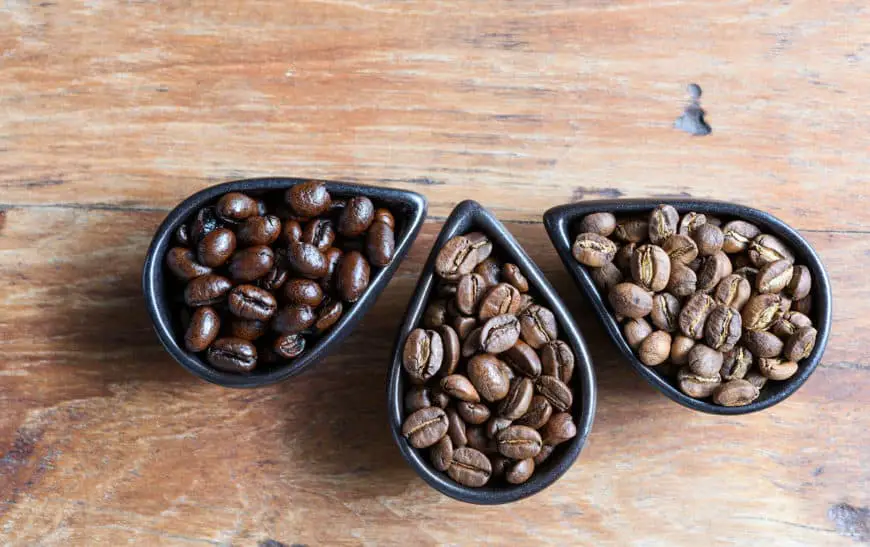
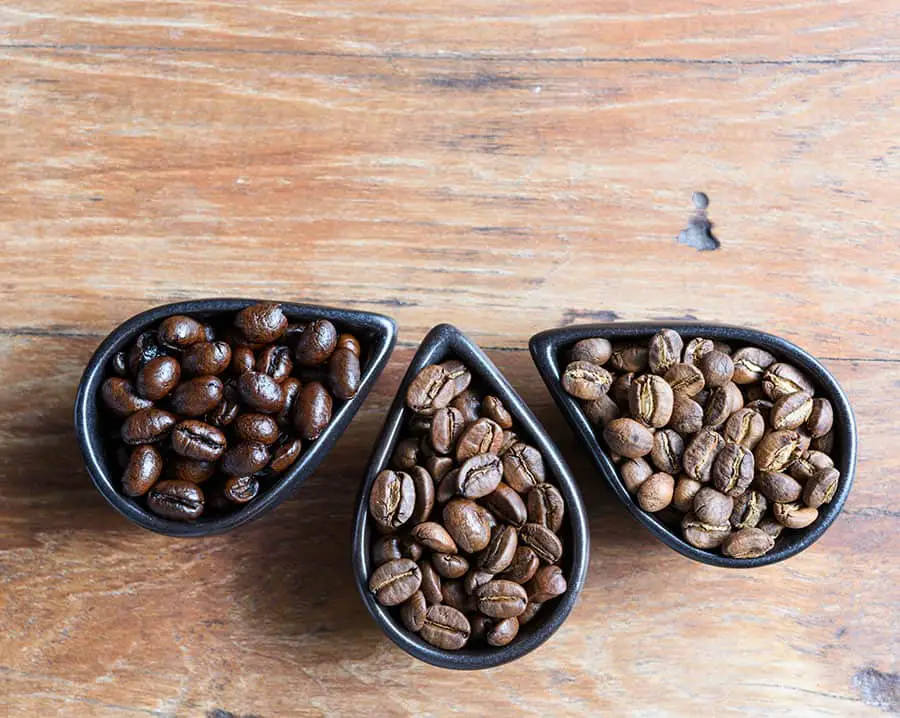
Roast level is the single biggest influence on how your coffee tastes — bigger than origin, bigger than brewing gear. The same Ethiopian bean can taste like blueberries and jasmine or like dark chocolate and smoke, depending entirely on how long it spent in the roaster.
This guide covers all five roast levels, what physically happens to the bean at each stage, how to brew for each one, and the honest answer to the caffeine question almost everyone gets wrong.
What Are Coffee Roast Levels?
Green coffee beans are dense, grassy, and essentially undrinkable. Roasting applies heat over time to trigger the chemical reactions that create everything we recognise as coffee flavor — and roast level simply describes how far along that process the roaster stopped.
Two reactions do most of the work. Caramelization breaks down the bean’s sugars into sweet, nutty, toffee-like compounds. The Maillard reaction — the same browning that gives seared steak and toasted bread their flavor — builds hundreds of aromatic compounds from sugars and amino acids.
The trade-off running through every roast decision: the longer you roast, the more the roast’s own character replaces the bean’s origin character. Light roasts taste like where they grew. Dark roasts taste like roast.
First Crack and Second Crack
Roasters navigate by sound. Two audible milestones mark the boundaries between every roast level.
First crack arrives around 385°F (196°C). Steam pressure inside the bean builds until the structure gives way with an audible pop, similar to popcorn. The bean nearly doubles in size and loses much of its moisture. Nothing before first crack is drinkable coffee — this is the floor for every roast level.
Second crack follows around 435°F (224°C), quieter and faster, more like crackling than popping. Here the bean’s cell walls fracture and oils migrate to the surface — which is why darker beans look glossy while lighter ones stay matte. Push much past second crack and you move from roasted into burnt.
Everything below is defined by where the roaster stopped relative to these two events.
The Five Coffee Roast Levels
Light Roast
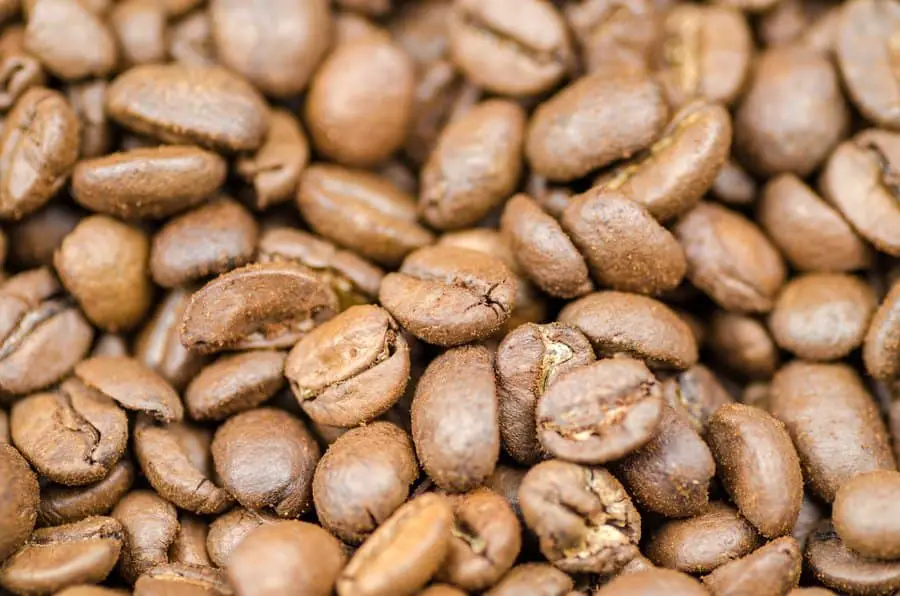
Also sold as cinnamon roast, blonde roast, or half city. Roasted at roughly 350–400°F and pulled at or just after first crack, producing light brown beans with a completely dry surface.
Light roasts preserve the most origin character of any level. Expect citrus, berry, floral, and green apple notes, high acidity, and a light, almost tea-like body. This is where single-origin beans justify their price — an Ethiopian or Kenyan light roast tastes unmistakably of its region in a way no dark roast can.
Light roasts also retain the most chlorogenic acids, the antioxidant compounds that degrade with heat. They’re the least forgiving level to brew: under-extract a light roast and it turns aggressively sour.
Medium-Light Roast
Sometimes labelled city roast, this sits between light and medium and often goes unlabelled entirely — plenty of bags marked “medium” are really medium-light.
Acidity softens from sharp to sweet-tart, and caramelization starts producing cocoa and toasted-grain notes alongside the surviving fruit. The bean is medium brown, like hazelnut, with no surface oil. It’s a good landing spot if light roasts taste too sour to you but medium roasts feel flat.
Medium Roast
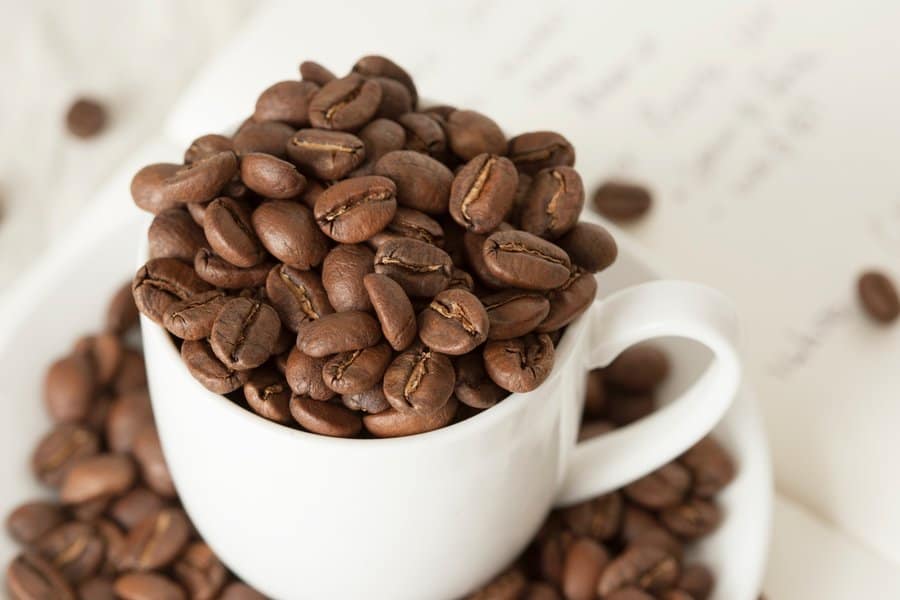
The most popular roast level worldwide, and the default for most supermarket and café coffee. Roasted at 400–430°F, well past first crack but stopped before second, giving medium brown beans with a dry to barely oily surface.
This is the balance point: mild acidity, medium body, and flavors of caramel, chocolate, nuts, or stone fruit depending on origin. Colombian and Brazilian beans are classics here. Medium roast is also the most forgiving to brew — it tolerates a wider range of grind sizes and ratios before it starts tasting wrong, which is exactly why it dominates.
Medium-Dark Roast
Roasted at 430–445°F, into the start of second crack. Dark brown beans with visible oil droplets beginning to surface — the most under-appreciated level on this list.
Acidity drops away and caramelized sugars turn bittersweet, giving dark chocolate, toasted nut, and spice notes over a full body. The roast now leads, but origin hasn’t disappeared — Guatemalan and Sumatran beans hold their character well here. It’s the backbone of most espresso blends, because the body stands up to milk without the scorched edge of a full dark roast.
Dark Roast
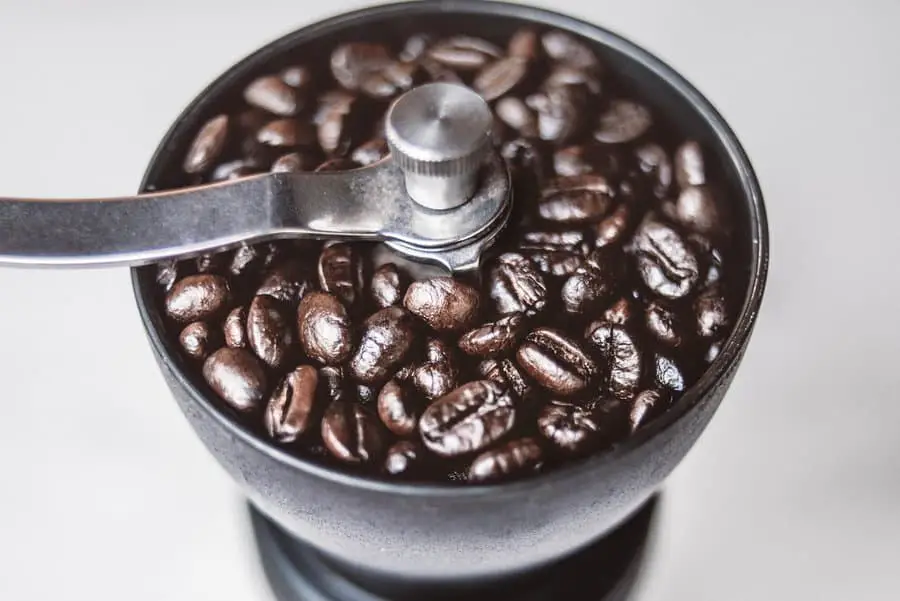
Sold as French, Italian, Vienna, or espresso roast. Roasted at 445–480°F, well past second crack, producing near-black beans with a distinctly shiny oil coating.
Origin character is essentially gone — a dark-roasted Kenyan and a dark-roasted Brazilian are difficult to tell apart, which is precisely the point for blends that need to taste identical year-round. Expect smoky, bittersweet flavors of molasses, charred sugar, and dark chocolate, with very low acidity and a heavy, syrupy body.
One practical caution: those surface oils go rancid faster than a dry light roast will stale. Dark roasts have the shortest useful shelf life, so buy smaller bags more often and store them properly.
Coffee Roast Level Comparison Chart
| Roast Level | Temp | Appearance | Flavor Notes | Acidity | Body | Best Brewing Methods |
|---|---|---|---|---|---|---|
| Light | 350–400°F | Light brown, dry | Citrus, berry, floral, green apple | High | Light | Pour-over, AeroPress |
| Medium-Light | 400–410°F | Hazelnut brown, dry | Cocoa, toasted grain, sweet-tart fruit | Medium-high | Light-medium | Pour-over, Chemex, drip |
| Medium | 400–430°F | Medium brown, near-dry | Caramel, chocolate, nuts, stone fruit | Medium | Medium | Drip, French press, espresso |
| Medium-Dark | 430–445°F | Dark brown, lightly oily | Dark chocolate, toasted nuts, spice | Low | Full | Espresso, moka pot, cold brew |
| Dark | 445–480°F | Near-black, shiny | Smoky, molasses, charred sugar | Very low | Heavy | Espresso, French press, drip |
Does Dark Roast Have More Caffeine?
This is the most widely repeated piece of misinformation in coffee, and it gets repeated in both directions — some sources insist dark roast is stronger, others that roasting burns caffeine away. Neither is quite right.
Caffeine is remarkably heat-stable. It doesn’t meaningfully break down at roasting temperatures. A bean that goes into the roaster with a given amount of caffeine comes out with very nearly the same amount, whether it’s pulled at first crack or well past second.
What actually changes is mass and density. Dark roasting drives off more moisture and burns away more organic material, so beans lose weight and expand. A dark-roasted bean is physically larger and lighter than a light-roasted one from the same batch.
That produces a genuinely confusing result depending on how you measure:
- By scoop (volume): light roast wins. The denser beans mean more coffee mass per scoop, so more caffeine.
- By weight (grams): dark roast edges ahead, or they’re level. You need more dark-roasted beans to reach the same weight, and each carries roughly the same caffeine.
- Bean for bean: effectively identical.
In practice the difference is small enough to ignore. If you measure by weight rather than by scoop, roast level barely affects your caffeine intake at all. Bean species matters far more — robusta carries roughly twice the caffeine of arabica at any roast level. Our guide to caffeine content by cup covers the numbers in detail.
The reason dark roast feels stronger is flavor intensity, not stimulation. Bitter and smoky reads as “strong” to most palates regardless of what the caffeine is doing.
Origin or Roast: Which Shapes the Flavor More?
Both — but their influence trades off in a predictable way as the roast progresses.
At light roast, origin dominates. A light-roasted Ethiopian can genuinely taste of blueberry and jasmine, shaped by altitude, heirloom varietals, and processing method. A Colombian light roast leans citrus and toffee from entirely different growing conditions.
As roast darkens, heat overrides that. Medium roasts blend caramelized sweetness with surviving origin notes. By dark roast, the roast has effectively overwritten the bean — which is a feature, not a failure, when a blend needs to taste the same in January and July regardless of which harvest is in the hopper.
So the practical rule: if you paid a premium for a distinctive single origin, a dark roast wastes it. If you want consistency and body, dark roast delivers exactly what it promises.
How to Brew Each Roast Level
Roast level changes how easily a bean gives up its solubles, so it changes how you should brew.
Light roasts are dense and resist extraction. Grind a step finer than usual, brew at the top of the temperature range (200–205°F), and consider a slightly longer contact time. Pour-over and AeroPress suit them best. If a light roast tastes sour, it’s under-extracted — grind finer before you blame the bean.
Medium roasts work almost anywhere. Standard grind, 195–205°F, standard ratios. Drip, Chemex, and French press all treat them well.
Dark roasts are brittle and extract fast, which makes over-extraction the main risk. Grind a step coarser, drop the water temperature slightly (195°F or a touch below), and keep contact time shorter. They excel in espresso, French press, and cold brew, where their body carries through milk and ice.
If a brew tastes wrong after switching roast levels, the fix is usually grind rather than dose — see bitter or sour coffee for the full diagnosis.
Can You Roast Coffee at Home?
Yes, and it’s cheap to start — a popcorn popper and green beans will get you a drinkable roast. Whether you’ll get a good one is a different question.
The difficulty is that the window between ideal and ruined is measured in seconds, and colour alone won’t guide you, since beans keep darkening from residual heat after you pull them. Roasters work by sound (listening for the cracks), smell (the shift from grassy to toasty to smoky), and temperature, not by looks.
If you try it: listen for first crack around the 8–10 minute mark, decide your target relative to the cracks rather than the clock, and cool the beans as fast as you can to halt the roast. Expect several failed batches. That’s normal, and it’s the fastest way to understand what everything above actually means.
Choosing Your Roast
Work backwards from how you drink it.
- Black, and you enjoy fruit and acidity — light or medium-light.
- Black, and you want something smooth and easygoing — medium.
- With milk — medium-dark. It cuts through dairy without turning harsh.
- Espresso or a big bold mug — medium-dark or dark.
- You bought an interesting single origin — light or medium-light, or you’ve paid for character you’ll never taste.
And if you’ve only ever had one, try the opposite end once. Plenty of people who believe they dislike light roasts have only had badly brewed ones.
Frequently Asked Questions
Which roast level is strongest?
Depends what you mean by strong. Dark roast tastes strongest — bold, bitter, smoky. But it doesn’t contain meaningfully more caffeine, and by the scoop it contains slightly less. Flavor intensity and stimulation are separate things.
Why are my beans oily?
Surface oil means the roast went to or past second crack — normal for medium-dark and dark roasts. On a bean sold as light or medium, oil suggests it was roasted darker than labelled, or that it’s old and the oils have migrated out over time.
Is light roast more acidic?
In taste, yes — light roasts retain more of the bright, fruit-like acids that heat degrades. In terms of pH they’re all similar and all mildly acidic. If coffee upsets your stomach, dark roast is generally gentler, largely because it contains fewer chlorogenic acids.
What roast is best for espresso?
Traditionally medium-dark to dark, because the body and low acidity produce sweet crema and hold up to milk. Modern specialty cafés increasingly pull light roasts as espresso, which tastes fruitier and more acidic but demands a finer grind and more precise dialling in.
How long does each roast level stay fresh?
Aim to use any roast within two to four weeks of the roast date. Dark roasts have the shortest window because their surface oils go rancid, while light roasts stale more slowly but lose their aromatics steadily. Buy smaller quantities more often rather than one large bag.
Final Thoughts
No roast level is objectively better. Light roasts trade body for clarity and origin character; dark roasts trade nuance for consistency and richness; the middle gives you some of each. What matters is matching the roast to how you drink your coffee and brewing it the way that level wants to be brewed.
Once you’ve found a roast level you like, keep it fixed while you dial in your ratio and grind size. Changing all three at once is how people end up convinced they hate a roast they’ve simply never brewed properly.