
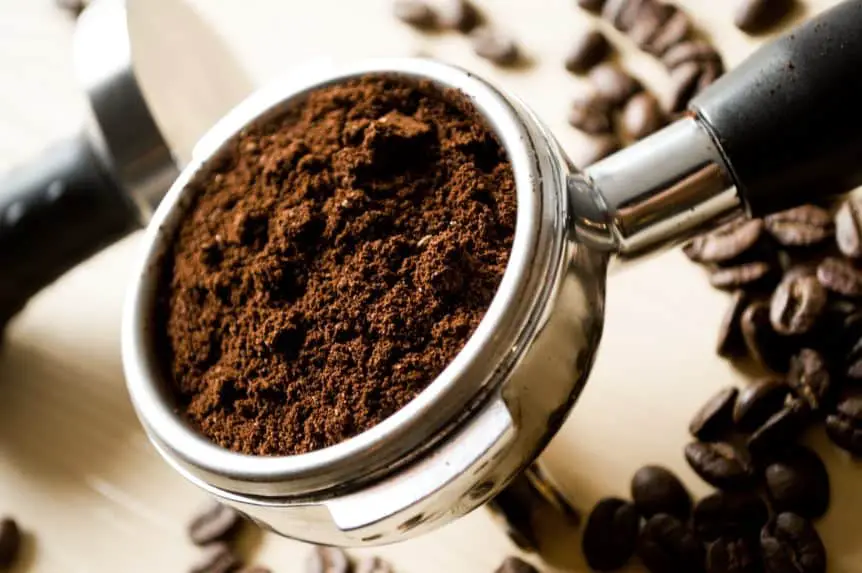
Grind size is the single most powerful variable a home brewer can change. Get it wrong and even excellent beans turn sour and thin or harsh and drying. Get it right and the same beans taste sweet, clear, and repeatable — cup after cup.
This guide gives you the grind size for every brewing method, the micron ranges behind each one, and a step-by-step routine for dialing in your own grinder by taste. If your coffee is already tasting off, skip to the sour or bitter section — your cup is telling you exactly which way to move.
Why Grind Size Controls Extraction
Grind size sets the pace at which water pulls flavor out of coffee. Smaller particles expose more surface area, so extraction happens faster. Larger particles slow it down. Too coarse and the water rushes past without collecting enough — weak, sharp, sour. Too fine and it lingers, dragging out bitter compounds that bury the good notes.
The target is an extraction yield of roughly 18–22% of the coffee’s soluble solids dissolved into the water, which is the range specialty coffee bodies settle on. Total dissolved solids in the finished cup usually land around 1.15–1.45% for most palates. You don’t need to measure any of this — but it explains why the answer is never simply “finer is stronger.” Past about 22%, finer just means more bitterness, not more flavor.
Grind works alongside the other brewing variables rather than independently. If you haven’t set your coffee-to-water ratio yet, do that first — grind adjustments are much easier to read when the dose is already consistent.
Coffee Grind Size Chart for Every Brewing Method
Here is the full reference. Micron ranges are approximate — grinders vary, and no two burr sets are calibrated identically — but the relative order never changes.
| Brewing Method | Grind Size | Feels Like | Microns |
|---|---|---|---|
| Cold Brew | Coarse to Extra Coarse | Peppercorns | 1,000–1,600 |
| French Press | Coarse | Sea salt | 1,000–1,200 |
| Percolator | Coarse | Sea salt | 1,000–1,200 |
| Chemex | Medium-Coarse | Raw sugar | 800–1,000 |
| Clever Dripper | Medium | Table salt | 600–800 |
| Drip Machine | Medium | Table salt | 600–800 |
| Siphon | Medium | Table salt | 600–800 |
| Kalita Wave | Medium-Fine | Sand | 400–600 |
| Pour-Over (V60) | Medium-Fine | Sand | 400–600 |
| AeroPress | Medium-Fine | Sand | 400–600 |
| Moka Pot | Fine-Medium | Sand to powdered sugar | 300–500 |
| Espresso | Fine | Powdered sugar | 200–400 |
| Turkish Coffee | Extra Fine | Flour | Under 200 |
Roast level shifts these slightly. Darker roasts are more brittle and extract faster, so they tolerate a step coarser. Lighter roasts are denser and need a step finer to give up their brighter notes.
The Seven Grind Sizes Explained
- Extra Coarse (1,200–1,600 microns): Chunky, like cracked peppercorns. Built for cold brew’s 12–24 hour steep.
- Coarse (1,000–1,200): Sea salt. French press and percolators, where contact time runs four minutes or more.
- Medium-Coarse (800–1,000): Raw sugar. Chemex and flat-bottom pour-overs that need even, unhurried flow.
- Medium (600–800): Table salt. The daily-driver setting for drip machines, siphon, and the Clever Dripper.
- Medium-Fine (400–600): Sand. V60, Kalita Wave, and AeroPress.
- Fine (200–400): Powdered sugar. Espresso, where 25–30 seconds under pressure is all the contact you get.
- Extra Fine (under 200): Flour. Turkish coffee only, where the grounds are boiled directly and never filtered out.
Grind Size by Brewing Method
Cold Brew — Coarse to Extra Coarse
Cold brew runs the longest contact time of any method, so it needs the biggest particles. Anything finer than coarse turns muddy and over-extracted despite the cold water, and it clogs your filter on the way out.
French Press — Coarse
French press steeps for about four minutes, then relies on a metal mesh to hold everything back. Coarse grounds — sea salt texture — let water soak through evenly and stay out of your cup.
The plunger tells you when you’ve got it wrong. Heavy resistance means your grind is too fine. Almost no resistance means it’s too coarse. Sediment in the bottom of the cup is the classic sign of fines slipping through.
Chemex — Medium-Coarse
Chemex filters are noticeably thicker than standard paper, which slows drainage on its own. Medium-coarse compensates. Go finer and you’ll stall the bed and over-extract; go coarser and it runs thin. Our V60 versus Chemex comparison covers why the two want different settings.
Clever Dripper — Medium
The Clever Dripper is a hybrid — it steeps like an immersion brewer, then drains like a pour-over. Medium keeps both halves working. It’s among the most forgiving brewers here, but go too fine and the valve clogs on release.
Drip Machine — Medium
Medium suits nearly every automatic drip machine. Basket shape matters a little: flat-bottom baskets do best at straight medium, while cone-shaped ones can take a step finer toward medium-fine.
Siphon — Medium
Siphon brewing is theatre, but the grind is unglamorous — medium, table salt texture. Fine grounds clog the cloth or glass filter and stall the draw-down; coarse ones under-deliver in the short immersion.
Kalita Wave — Medium-Fine
The Kalita Wave‘s flat bottom and three small holes meter the flow for you, which makes it more forgiving than a cone. Medium-fine gives a rounded, even cup without the channeling risk a V60 carries.
V60 and Pour-Over — Medium-Fine
The V60‘s single large hole means the grind — not the dripper — controls flow rate. Medium-fine, like fine sand you can still feel between your fingers. Thin and sour? Finer. Heavy and bitter? Coarser. Our full pour-over guide covers pour technique alongside it.
AeroPress — Medium-Fine
The AeroPress is the most tolerant brewer on this list because you control both steep time and press pressure. Medium-fine is the reliable default. Going finer works if you shorten the steep to around 20 seconds — that’s the basis of most espresso-style AeroPress recipes.
Moka Pot — Fine-Medium
The moka pot sits between drip and espresso — finer than drip, but coarser than a true espresso grind. Espresso-fine grounds choke it and force steam through channels instead of the bed, which is where that scorched, bitter taste comes from.
Level the basket off with a finger. Never tamp — the moka pot generates a fraction of an espresso machine’s pressure and can’t push through a compacted puck.
Espresso — Fine
Espresso gets 25–30 seconds under nine bars of pressure, so the grind has to do the work. Fine, like powdered sugar. Shot running fast and thin? Grind finer. Choking or dripping? Coarser.
Espresso is also where grinder quality stops being optional — the adjustment steps on entry-level grinders are often too coarse to land a shot properly. Our espresso troubleshooting guide goes further on diagnosing shots.
Turkish Coffee — Extra Fine
Turkish coffee is the one method where the grounds are never filtered out — they’re boiled in the cezve and settle in the cup. That demands a flour-fine grind, finer than espresso. Most home grinders genuinely cannot reach it; a dedicated Turkish mill usually can.
How to Dial In Your Grind, Step by Step
Fine-tuning turns trial and error into a short routine. The discipline that matters most: change one thing at a time, and move one notch at a time.
- Pick a starting setting from the chart above, or from your grinder’s manual if it lists one.
- Weigh your dose — around 15–20 grams of coffee per 250–300 ml of water for most methods.
- Brew, and time it against the method’s normal window.
- Taste deliberately. Weak and tart means under-extracted. Harsh and drying means over-extracted.
- Adjust one notch: finer for tart, coarser for harsh.
- Brew again and note what changed. Three or four rounds usually lands it.
Recalibrate with each new bag. Origin, roast level, and how long ago the beans were roasted all shift how fast they extract — a setting that was perfect last month may not be today.
Sour or Bitter? What Your Cup Is Telling You
These two faults pull in opposite directions, which is why guessing so often makes things worse.
| Symptom | Cause | Grind fix |
|---|---|---|
| Sour, sharp, empty finish | Under-extraction | Grind finer |
| Bitter, harsh, drying | Over-extraction | Grind coarser |
| Weak but not sour | Under-dosed, not under-extracted | Fix the ratio first |
| Gritty or muddy | Too fine for the filter | Grind coarser |
| Sour and bitter at once | Uneven particle size | Burr grinder, not blade |
That last row is the one people miss. Tasting sour and bitter simultaneously usually isn’t a setting problem at all — it’s dust and boulders in the same batch, extracting at different rates. No grind setting fixes that; only a better grinder does. We go deeper in why your coffee tastes bitter or sour and under-extracted coffee.
Why a Burr Grinder Beats a Blade
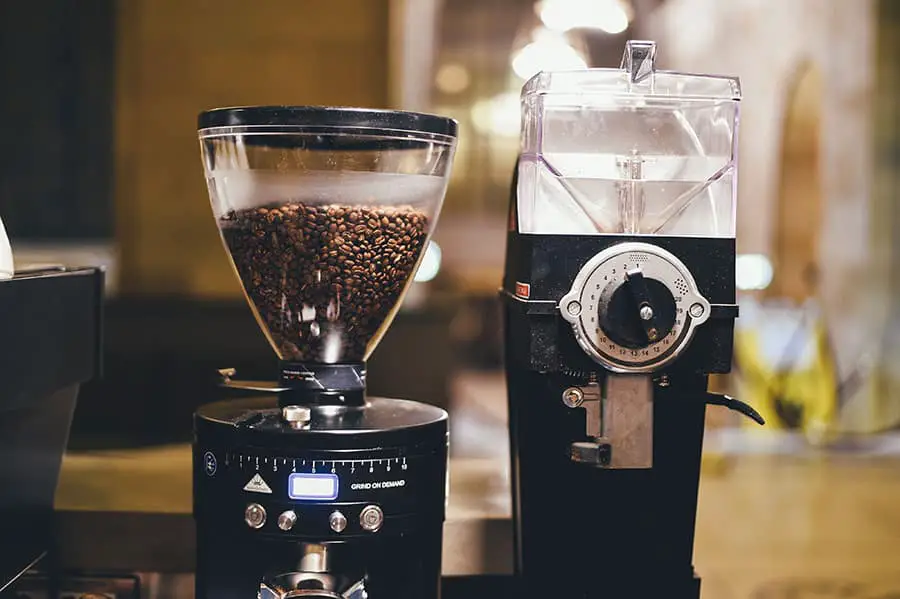
Blade grinders chop. They spin a propeller through the beans and produce a mix of dust and boulders in the same batch — the dust over-extracts into bitterness while the boulders under-extract into sourness, and you taste both at once.
Burr grinders crush beans between two surfaces set a fixed distance apart, so particles come out close to uniform. That consistency is what makes every other adjustment in this guide meaningful. On a blade grinder, “one notch finer” isn’t a thing you can actually do.
Between burr types, flat and conical burrs both work well at home; conicals tend to run cooler and cost less, flats often give marginally more uniform particles. If you’re shopping, our grinder recommendations cover both manual and electric options.
How Altitude and Water Temperature Shift Your Grind
Water boils about 2°F lower for every 1,000 feet of elevation. Cooler water extracts more slowly, so at altitude you generally need to grind a step finer to compensate for the reduced extraction.
Brew temperature works the same way at any elevation. Aim for 195–205°F. If your kettle runs cool, grind finer to speed extraction up. If you’re brewing near boiling, grind coarser to keep from overshooting into bitterness.
How Grind Size Shapes Flavor
Common Grind Mistakes
- Jumping too far. Move one notch at a time or you’ll overshoot and never learn where the sweet spot was.
- Changing grind and ratio together. Change one variable per brew or the result tells you nothing.
- Never recalibrating. New bag, new beans, new setting. Bean age alone moves the target.
- Grinding ahead of time. Ground coffee loses aromatics within minutes. Grind immediately before brewing.
- Never cleaning the grinder. Stale oils and retained grounds from last week’s beans muddy today’s cup. Clean it regularly.
Frequently Asked Questions
What grind size should I use for drip coffee?
Medium — roughly the texture of table salt, around 600–800 microns. If your machine uses a cone-shaped basket rather than a flat one, you can go a step finer toward medium-fine.
Should I grind finer or coarser if my coffee is bitter?
Coarser. Bitterness means over-extraction — the water is pulling too much out of the grounds. Coarser particles slow that down. Sour coffee is the opposite problem and wants a finer grind.
Can I use pre-ground coffee for espresso?
Only if it’s sold specifically as espresso grind, and even then results are inconsistent. Supermarket pre-ground is almost always calibrated for drip machines, which is far too coarse to build pressure in a portafilter.
Does grind size change how much caffeine I get?
Slightly. Finer grinds extract marginally more caffeine because of the increased surface area, but dose and brew method matter far more. Don’t adjust grind to chase caffeine — adjust it for taste.
Why does my coffee taste sour and bitter at the same time?
That’s the signature of uneven particle size — fines over-extracting alongside boulders under-extracting in the same brew. It points to the grinder rather than the setting, and it’s the clearest argument for moving from a blade grinder to a burr.
Final Thoughts
Grind size isn’t one setting to memorize — it’s the variable you adjust to match how long your method keeps water and coffee in contact. Short contact wants fine. Long contact wants coarse. Everything in the chart above follows from that one idea.
Start from the recommended setting, change one notch at a time, and taste every brew. Pair it with a dialed-in coffee-to-water ratio and you’ve got control of the two variables that account for most of the difference between a forgettable cup and a very good one.