


A coffee bag label tells you who roasted the coffee, where it was grown, how it was processed, how dark it was roasted and, most importantly, when it was roasted. Specialty bags often add the farm or producer, the variety, the altitude and tasting notes. The single most useful detail is the roast date: coffee tastes best within about 2 to 4 weeks of roasting, and a bag with only a “best by” date gives you no way to know how old it is.
- Roaster
- The company that chose and roasted the coffeeYour best guide to quality
- Origin
- Ethiopia, Gedeo zone, YirgacheffeCountry, then region, sometimes farm
- Producer
- Smallholder farmers, washing station namedMore detail usually means better traceability
- Process
- WashedWashed is clean; natural is fruity; honey is in between
- Variety
- Ethiopian landracesThe type of coffee plant
- Altitude
- 1,900 to 2,100 mHigher usually means denser, brighter coffee
- Tasting notes
- Jasmine, lemon, black teaWhat it reminds the roaster of, not added flavors
- Roast level
- LightLighter shows more origin character
- Roast date
- Printed on the bagBest within about 2 to 4 weeks
- Whole bean or ground
- Whole beanStays fresh far longer
- Certification
- OrganicAbout farming practices, not flavor
- Net weight
- 12 oz (340 g)One of the few details required by law
Labels vary. In the United States, the law requires little more than what the product is, the net weight and the name and address of the company. Everything else is up to the roaster, which is why a specialty bag can be packed with detail while a supermarket tin lists almost nothing. Here is what each part means.
Roast Date (and Why “Best By” Is Not Enough)
Coffee is at its best from a few days after roasting to about 4 weeks after. Freshly roasted beans release carbon dioxide for the first several days, so many coffees, especially for espresso, taste better after a short rest. After about a month, aroma and flavor fade noticeably.
Supermarket coffee usually shows a “best by” date instead, often a year or more after roasting. That tells you when the coffee stops being sellable, not when it was fresh. If a bag has no roast date, assume it is not fresh. Our guide to storing coffee beans covers resting times and keeping beans fresh once the bag is open.
Roaster
The roaster’s name is usually the biggest thing on the bag, and it matters: the roaster chose which green coffee to buy as well as how to roast it. A roaster you trust is the most reliable shortcut to good coffee, more than any single detail on the label.
Origin, Region and Farm

Almost every bag names the country the coffee came from, and origin gives you a rough idea of what to expect. Kenyan coffees are often bright and berry-like, Ethiopian coffees floral and citrusy, Brazilian coffees nutty and chocolatey, and Costa Rican coffees clean and sweet. These are tendencies, not rules; the farm, the process and the roast matter just as much.
Better roasters go further and name the region, the washing station, or the farm and producer. Farms such as Finca Kilimanjaro in El Salvador and La Palma y El Tucán in Colombia have become well known this way. A named farm does not guarantee a great cup, but it shows traceability: the roaster knows exactly where the coffee came from.
Single Origin or Blend
A single origin coffee comes from one place. In specialty coffee that usually means one farm, producer or washing station; on cheaper coffee it can just mean one country. Single origins have a distinct character and are usually best brewed black so you can taste it.
A blend mixes coffees, often from different countries, to create a flavor the roaster designs, for example the fruit of an East African coffee with the chocolate of a Central or South American one. Blends are often built for espresso and milk drinks like lattes and cappuccinos, because they stay consistent through the year, but plenty of good filter blends exist too.
Roast Level

Roast level tells you how dark the beans were roasted. Light roasts keep the most origin character: fruit, florals and brighter acidity. Medium roasts balance that with more sweetness and body. Dark roasts taste mostly of the roast itself, with chocolate and caramel at best and bitter, ashy notes at worst, and the beans often look oily. There is no industry standard, so one roaster’s medium can be another’s dark. Our comparison of dark and medium roast goes deeper.
Process: Washed, Natural or Honey

Processing is how the seed is removed from the coffee cherry and dried, and it has a big effect on flavor.
| Process | What happens | Typical taste |
|---|---|---|
| Washed | The fruit is removed, the sticky layer is broken down by fermentation in water for about 12 to 72 hours, then the beans are rinsed and dried | Clean and clear; shows origin and variety |
| Natural | Whole cherries are dried with the seed inside for 2 to 4 weeks, then the dried fruit is removed. It is the oldest method, traditional in Ethiopia and Yemen | Fruity, sweet, heavier body; can be winey |
| Honey | The skin is removed but some of the sticky fruit layer stays on while the beans dry. Popularized in Costa Rica; white and yellow honey keep the least, red and black the most | Sweet, with brown sugar and dried fruit; between washed and natural |
| Anaerobic and other experimental | Fermented in sealed tanks or with added yeasts before drying | Intense and unusual; tropical fruit, spice, sometimes boozy |
For more on each, see our guides to honey processed coffee and experimental fermentation.
Species and Variety
Almost all specialty coffee is Arabica; Robusta is mostly found in cheaper blends and instant coffee. Within Arabica there are many varieties, much like grape varieties in wine. Common ones on labels include Bourbon, Typica, Caturra, Catuaí, SL28 and SL34 (from Kenya) and Ethiopian landraces, often listed as “heirloom.” The most famous is Geisha (also spelled Gesha), prized for its floral, tea-like flavor and very high prices. Variety means little at first, but once you notice which ones you like, it becomes a useful guide.
Altitude
Many specialty bags list the growing altitude in meters above sea level (sometimes as “masl”). Much of the best Arabica grows between about 1,200 and 2,200 m. The cooler temperatures at altitude slow the ripening of the cherries, which tends to produce denser beans with more sugar, brighter acidity and more complex flavor. Lower-grown coffee tends to be softer and simpler, though there are good exceptions.
Tasting Notes
The flavor words on a bag, such as “blueberry, cocoa, honey,” come from the roaster’s cupping sessions. They describe what the coffee reminds the tasters of. Nothing has been added, and you will not necessarily taste blueberries in every sip. Treat them like the notes on a wine bottle: a guide to the coffee’s general character (fruity, chocolatey, floral) rather than a promise. Our guide to the coffee flavor wheel explains the vocabulary.
Certifications
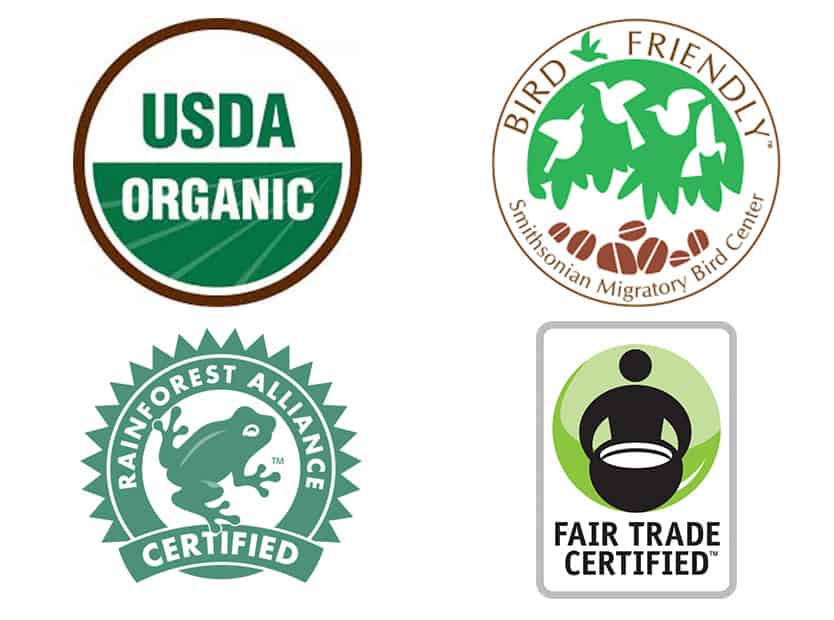
Seals such as Fairtrade, Rainforest Alliance, USDA Organic and Smithsonian Bird Friendly mean the coffee met that organization’s standards for farming practices, pricing or the environment. They say nothing direct about flavor. The absence of a seal does not mean a coffee was produced badly either: many specialty roasters buy directly from farms and pay well above certified minimums without paying for certification. Our guide to coffee certifications explains each one.
Whole Bean or Ground
Buy whole bean if you can. Ground coffee loses its aroma within minutes to hours, while whole beans stay fresh for weeks. Many specialty roasters sell only whole beans for this reason. If you do not have a grinder yet, a burr grinder is the best upgrade you can make.
What to Look For When You Buy
- A roast date, ideally within the last 2 weeks when you buy it.
- Whole beans rather than ground.
- Specific origin details: a region, washing station or farm, not just a country.
- A process and tasting notes that match what you like, such as washed and floral, or natural and fruity.
- A roast level that suits how you brew: lighter for pour-over, medium to medium-dark for espresso and milk drinks.
In general, the more a roaster tells you, the more care went into the coffee. A roaster who knows the name of the farmer who grew it will usually put it on the bag.
Former roastery owner and coffee tour operator. Steve spent five years roasting coffee for his own shop and wholesale customers. More about Steve