
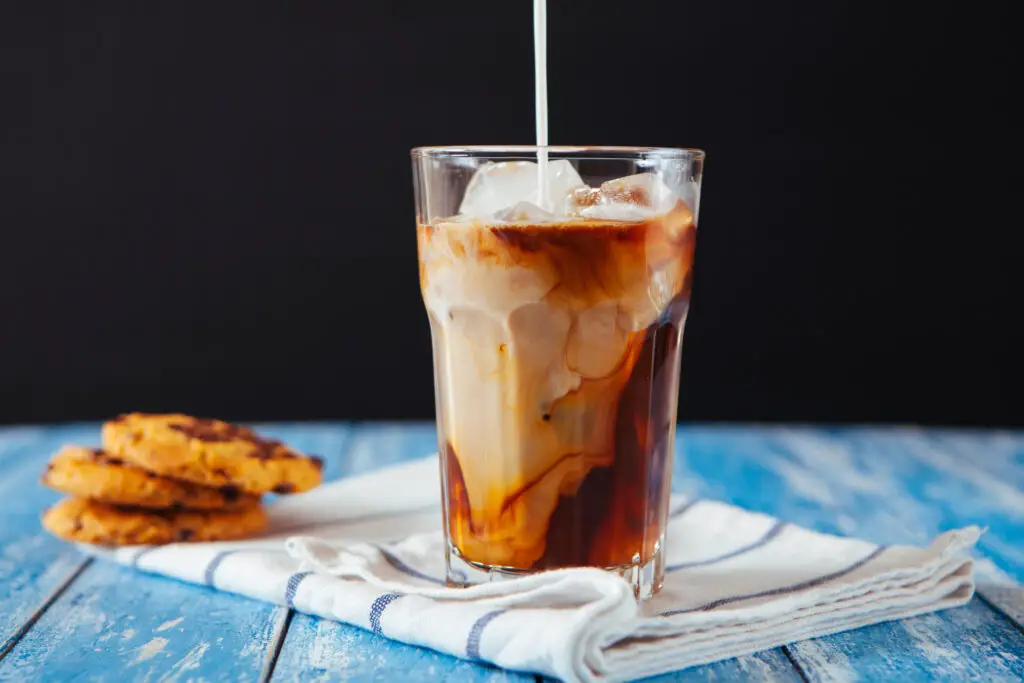
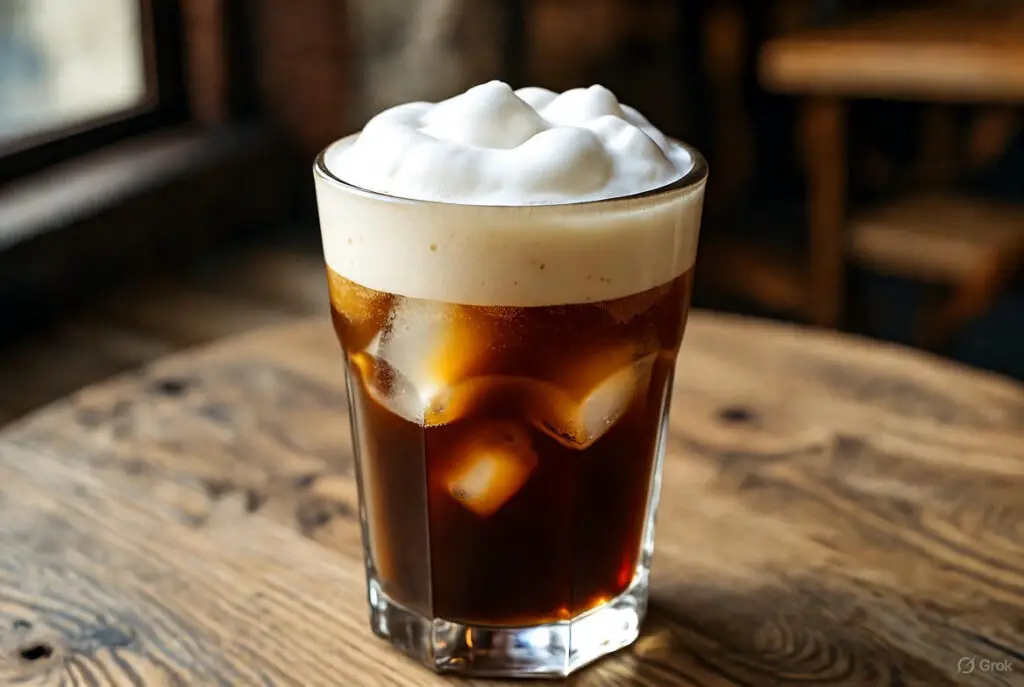
Freddo coffee is Greece’s iced espresso. A double shot of espresso is whipped with ice until it is cold and frothy, then poured over fresh ice. Served like that it is a freddo espresso; topped with a thick layer of cold, frothed milk it becomes a freddo cappuccino. “Freddo” is Italian for cold. In Greece and Cyprus it is the everyday summer coffee, and in many cafés it outsells everything else.
- Made with
- Double espresso whipped with ice
- Milk
- None
- Tastes like
- Strong, cold espresso with a light, frothy top
- Made with
- Freddo espresso plus cold milk foam
- Milk
- A thick cap of cold-frothed milk
- Tastes like
- Strong coffee under a creamy, airy layer
- Made with
- Instant coffee shaken with water and ice
- Milk
- Optional, added to taste
- Tastes like
- Lighter, very foamy, the older Greek classic
How Greek Cafés Make It
In Greece, the barista pulls a double espresso straight into a metal cup with a little sugar, if you asked for it, and a few ice cubes, then whips it for a few seconds with a frappé mixer, a high-speed drink mixer. That chills the coffee instantly and turns it into a fine, tan foam. It is poured over fresh ice in a tall glass and served with a straw.
The sugar goes in before mixing, because it will not dissolve in cold coffee. That is why you order sweetness up front:
- Sketos: no sugar.
- Metrios: medium, about one teaspoon.
- Glykos: sweet, about two teaspoons.
For a freddo cappuccino, cold milk is frothed separately into a thick, stiff foam and spooned or poured on top. Cafés usually use low-fat milk because it foams best when cold.
How to Make Freddo Espresso at Home
Freddo espresso (one glass)
A double shot of espresso (about 2 oz), sugar to taste, and plenty of ice. You need a shaker, a jar with a tight lid, or a milk frother.
- Pull a double espresso. Stir in the sugar right away, while the coffee is hot.
- Put 3 or 4 ice cubes in a shaker or jar, pour in the espresso, close it, and shake hard for 15 to 20 seconds. Or use a handheld milk frother in a tall cup with the ice for about 20 seconds.
- Fill a tall glass with fresh ice and strain the coffee over it. The foam will rise to the top.
Freddo cappuccino (one glass)
Make a freddo espresso as above, plus about 1/3 cup (80 ml) of very cold milk.
- Froth the cold milk with a handheld frother for 30 to 60 seconds, or shake it hard in a jar, until it is thick and roughly doubled in volume.
- Spoon or pour the milk foam on top of the freddo espresso to make a thick white cap. Drink it through a straw, so you get the coffee first and the cream last.
No espresso machine? A moka pot or an AeroPress makes a strong, concentrated coffee that works well here; our moka pot and AeroPress guides show how. Regular brewed coffee is too weak and watery to foam well.
Tips
- Use fresh ice for serving. The ice you shake with melts and breaks up; strain it out and pour over new cubes so the drink is not watered down.
- Shake harder, not longer. A short, very vigorous shake gives the best foam. Over-shaking just melts more ice.
- Medium or dark roasts taste best cold; very light, acidic coffees can taste sour over ice.
- Dairy-free: barista-style oat milk foams well cold. Our guide to milks for coffee compares the options.
Freddo vs Frappé vs Iced Latte
The Greek frappé came first. It was invented in 1957 at the Thessaloniki International Fair, when a Nestlé representative shook instant coffee with cold water and ice, and it was Greece’s summer coffee for decades. Freddo espresso appeared in the 1990s, as espresso machines spread through Greek cafés and people wanted a cold drink with real espresso flavor. Today the freddo has largely taken over in cafés, while the frappé is still popular at home and at the beach.
An iced latte is different again: espresso poured over ice and topped up with plenty of cold milk, with no whipping and no foam. A freddo cappuccino has far less milk and much more coffee flavor. See our guide to the latte and cappuccino for the hot versions.
Common Questions
How much caffeine is in a freddo espresso?
About as much as a double espresso, roughly 128 mg. Our caffeine guide compares it with other drinks.
How many calories are in a freddo espresso?
Unsweetened, almost none: under 10 calories. Each teaspoon of sugar adds about 16. A freddo cappuccino adds the milk, usually somewhere around 30 to 60 calories with low-fat milk.
Is freddo espresso Greek or Italian?
Greek. The name is Italian, because it is made with espresso, but the drink was created in Greece and is far more common there than in Italy. Italy’s own iced espresso, the shakerato, is similar but served in a small glass without ice.
Former roastery owner and coffee tour operator. Steve spent five years roasting coffee for his own shop and wholesale customers. More about Steve