
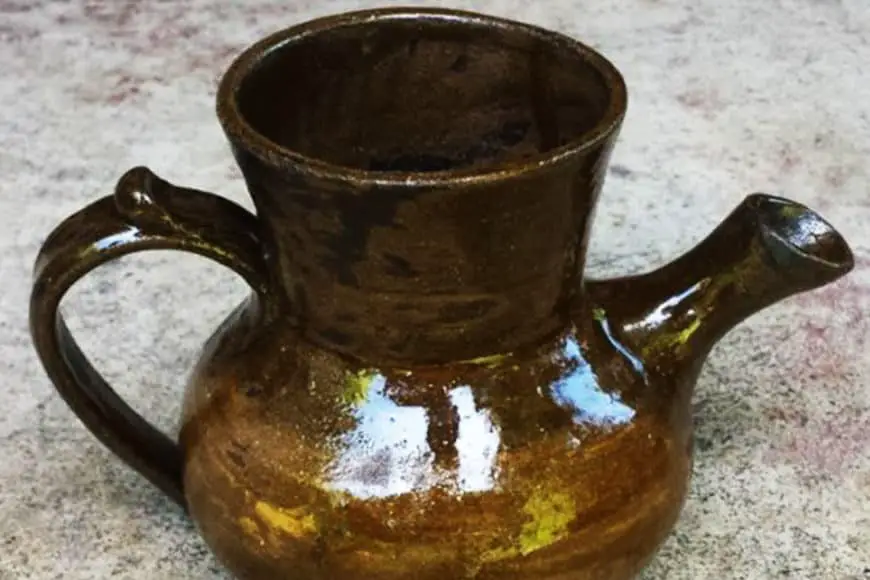
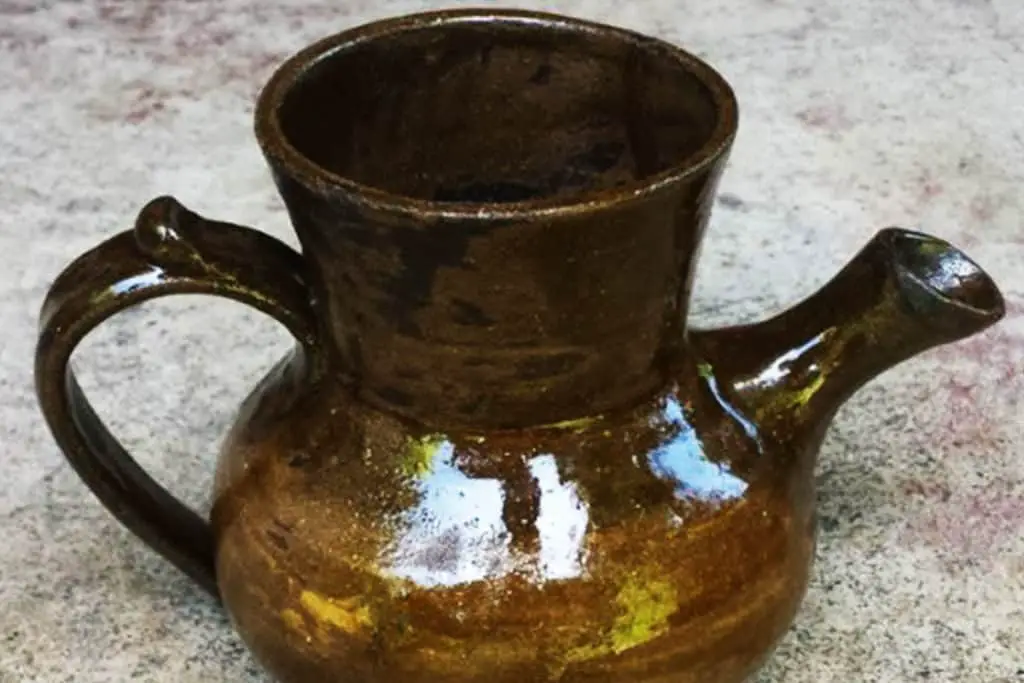
The vandola is a handmade clay pour-over coffee maker from Costa Rica. It looks like a painted clay jug with a funnel built into the top: you set a paper filter (a Chemex or V60 filter) in the funnel, add ground coffee and pour hot water over it, and the coffee drips into the clay body below, which keeps it warm. A small hole, the válvula, sits in the neck under the filter. Although it looks centuries old, the vandola is a modern design, created in the mid-2010s by Costa Rican café owner Minor Alfaro and inspired by the traditional chorreador and pre-Columbian pottery.
| What it is | A clay pour-over brewer and serving jug in one |
| Origin | Costa Rica, created in the mid-2010s by Minor Alfaro |
| Material | Handmade clay, painted, glazed and fired twice |
| Sizes | Commonly about 500 ml and 1 liter; other sizes are sold |
| Filters | Chemex or V60 paper filters; metal or cloth filters also work |
| Special feature | A small hole (válvula) in the neck, below the filter |
| Taste | Clean and sweet, like a Chemex or V60, kept warm by the clay |
| Starting recipe | 30 g coffee, 480 g water at 200 to 205°F, about 4 minutes |
What Is a Vandola?
A vandola has two parts made as one piece: a cone at the top that holds the filter, and a round clay body below that collects the coffee and works as a serving pot, with a handle and a spout. You brew it on the table and pour straight from it, so it is made for sharing. It works like a Chemex or any other pour-over brewer, but in clay rather than glass.
Every vandola is handmade and hand-painted, often with pre-Columbian patterns, so no two look exactly alike. Small differences in shape and in the valve mean each one brews a little differently, so expect to adjust your grind over the first few brews.
Who Invented the Vandola?
The vandola was created by Minor Alfaro, a Costa Rican café owner, in about 2015. He based it on café chorreado, coffee brewed through a cloth bag in a wooden chorreador, the way Costa Rican families have made coffee for generations, and on the clay work of the country’s pre-Columbian cultures. He wanted a brewer that would show off Costa Rican coffee and that a group could share at the table. Alfaro has said he prefers clay to glass because it holds heat and, in his view, improves the coffee’s aroma and texture.
The vandola quickly caught on with Costa Rican baristas. In 2019 it was the only brewer used in a barista competition at the Costa Rica Coffee and Chocolate Expo in Alajuela, and it has since spread through Costa Rica, Central America and Europe.
How a Vandola Is Made
Each vandola is shaped by hand by a potter, with the cone and the body sculpted separately and then joined. According to Alfaro, the whole process takes about a month:
- Shaping: the potter sculpts the cone and body and joins them.
- Drying: the thick clay dries slowly for about 15 to 22 days, depending on humidity.
- First firing: the piece is fired at about 800°C (1,470°F).
- Painting and glazing: it is hand-painted and varnished.
- Second firing: it is fired again at about 1,100°C (2,010°F).
Not every piece survives the firings, which is part of why vandolas cost more than mass-produced brewers.
What Does the Hole in the Vandola Do?
The small hole in the neck, just below the filter, is the vandola’s signature feature. Alfaro calls it a valve and says it lets air into the brewer, which speeds the flow of coffee through the filter and lets the coffee take in oxygen as it drips, bringing out its aroma and sweetness. There is no published research on the effect, so treat the flavor claims as the maker’s view. The hole likely also works as an air vent, letting air out of the body as coffee fills it so the filter does not seal against the cone and slow the flow; a Chemex does the same job with the air channel in its glass.
How to Brew Coffee With a Vandola
This recipe makes about 15 oz (450 ml), enough for two or three small cups, in a 500 ml or larger vandola. For a 1-liter vandola, double it. For one mug, use 20 g of coffee and 320 g of water.
- Coffee: 30 g, medium grind, between a V60 and a Chemex grind
- Water: 480 g at 200 to 205°F (93 to 96°C), plus extra for rinsing
- Filter: a Chemex or V60 paper filter that fits your vandola’s cone
- Gear: a scale, a timer and a gooseneck kettle
- Warm the vandola. Clay can crack if very hot water hits cold clay, so first rinse it with warm water, then hot. Put the filter in the cone and rinse it with hot water to remove any paper taste and preheat the body. Pour out the rinse water.
- Grind the coffee. Grind 30 g to a medium grind, like coarse sand. See our grind size chart.
- Bloom. Set the vandola on the scale, add the coffee and tare. Start the timer and pour about 60 g of water to wet all the grounds. Wait 30 to 45 seconds while fresh coffee bubbles; see what the coffee bloom is.
- Pour. Add the rest of the water in slow circles from the center outward, in two or three pours, reaching 480 g by about 2:00.
- Let it drain. The coffee should finish dripping at about 3:30 to 4:30.
- Serve. Remove the filter, give the vandola a gentle swirl and pour straight from it.
If the coffee tastes bitter or takes much longer than 4:30 to drain, grind coarser. If it is sour or thin and drains quickly, grind finer. A V60 filter usually needs a finer grind than a thicker Chemex filter. For more on ratios, see our coffee-to-water ratio guide.
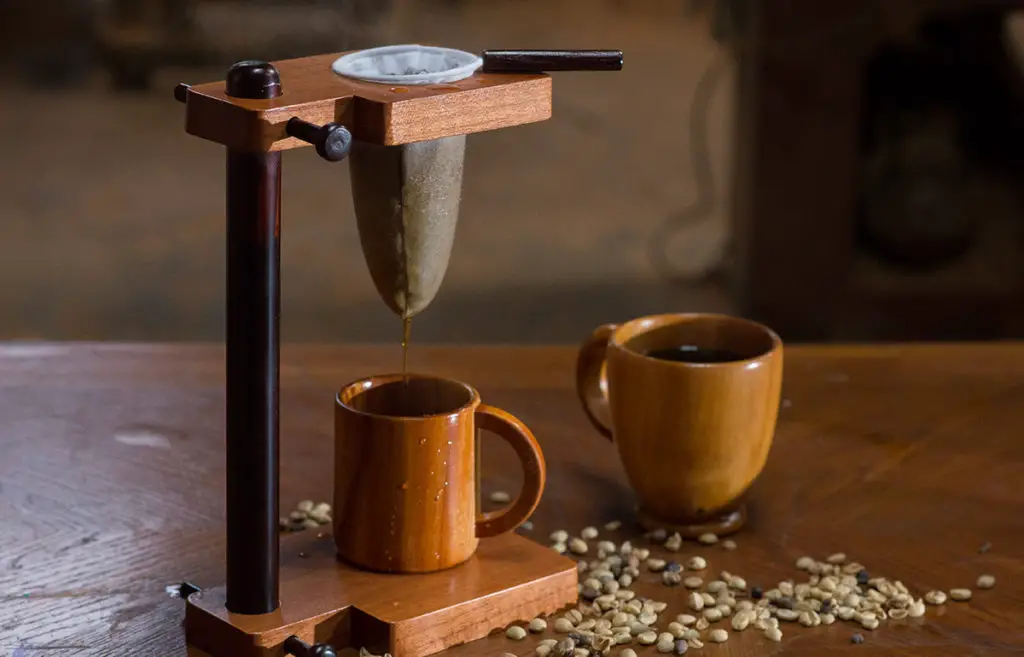
Vandola vs Chemex and Chorreador
| Vandola | Chemex | Chorreador | |
|---|---|---|---|
| Material | Handmade clay | Glass | Wood or wire stand, cloth filter |
| Filter | Chemex or V60 paper | Thick Chemex paper | Reusable cloth bag |
| Taste | Clean, sweet | Very clean, bright | Fuller body, more oils |
| Keeps coffee warm | Yes, the clay holds heat | No, glass cools quickly | No, brews into a cup or pot |
| Best for | Sharing at the table | Batches and clarity | Simple, everyday coffee |
In the cup, a vandola with a paper filter tastes much like a Chemex or V60: clean and sweet. The differences are the clay, which keeps the coffee warm at the table, and the look. A chorreador’s cloth filter lets more oils through for a rounder, fuller cup. Compare more brewers in pour over vs Chemex.
Best Coffee for a Vandola
Costa Rican coffee is the natural match. Washed coffees from Tarrazú, the West Valley and the Central Valley are clean and bright, and the country’s honey-processed coffees add extra sweetness. A light to medium roast shows off their fruit and sweetness in a vandola. Buy whole beans roasted within the last 2 to 4 weeks and grind them just before brewing. Learn more in our guide to Costa Rican coffee and the people behind the harvest in Costa Rica’s coffee pickers.
How to Care for a Vandola
- Warm it gradually and avoid pouring boiling water into cold clay, to prevent cracks.
- Hand-wash with warm water and a soft sponge, and let it dry fully before storing.
- Keep it off the stove and out of the microwave unless the maker says it is safe.
- Handle the spout and cone with care; handmade clay chips more easily than glass.
Where to Buy a Vandola
In Costa Rica, vandolas are sold in specialty coffee shops, roasteries and craft and souvenir stores, and many coffee tours show them in use. Outside Costa Rica, look for them from specialty coffee retailers and online shops that import Costa Rican crafts. Because each one is handmade, sizes, filter fit and finishes vary, so check the capacity and which filters it takes before you buy. Serve it with a favorite mug and some Costa Rican beans for the full experience.
Former roastery owner and coffee tour operator. Steve spent five years roasting coffee for his own shop and wholesale customers. More about Steve