
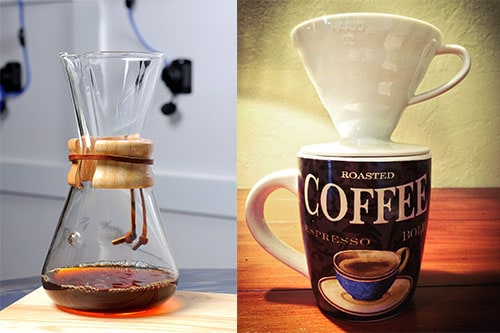
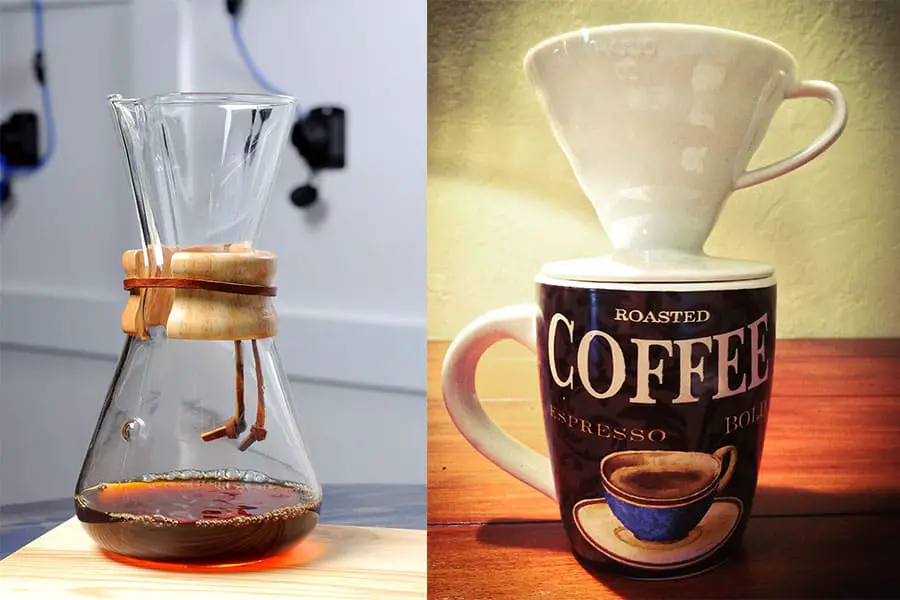
The Chemex and the Hario V60 are both pour-over brewers, but they make noticeably different coffee. The Chemex uses a thick paper filter that strips out almost all oils and fine particles, so its coffee is exceptionally clean and light-bodied, and it brews several cups at a time. The V60 uses a thin filter and a large opening, so it makes a cup with a little more body and lets your pouring control the brew. It is also cheaper, smaller and easier to travel with.
- Filter
- Thick bonded paper
- Grind
- Medium-coarse
- Brew time
- About 4 to 5 minutes
- Makes
- Several cups at once (3- to 10-cup models)
- In the cup
- Very clean, light body, bright
- Best for
- Brewing for two or more, and people who like a delicate cup
- Filter
- Thin paper
- Grind
- Medium-fine
- Brew time
- About 2.5 to 3 minutes
- Makes
- 1 to 2 cups (size 01) or up to 4 (size 02)
- In the cup
- Clean but fuller, more texture
- Best for
- One cup at a time, travel, and people who like to tinker
The Hario V60
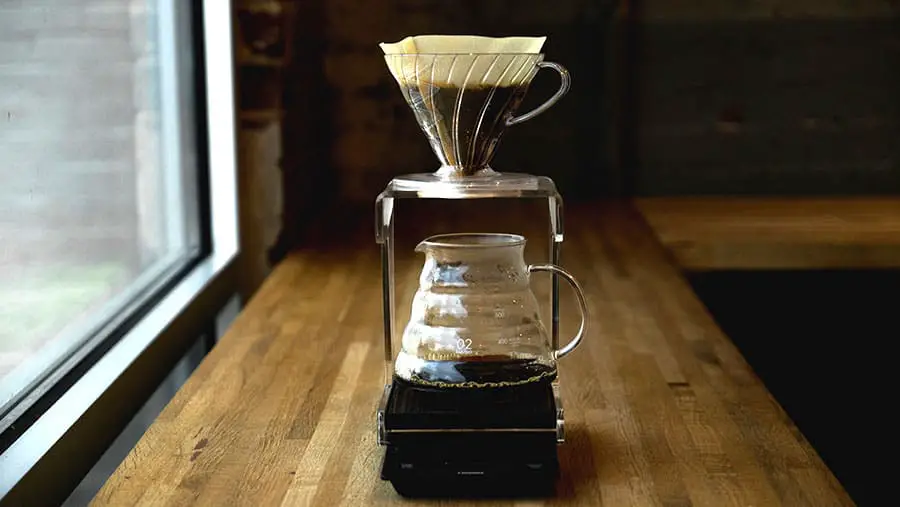
The Hario V60 is a cone-shaped dripper from the Japanese company Hario. The name comes from its V shape, with walls angled at 60 degrees. Spiral ridges inside let air escape and keep the filter from sticking to the walls, and a single large hole at the bottom lets coffee drain quickly. Because nothing restricts the flow, how fast and where you pour controls how long the water stays in contact with the coffee.
It sits on top of a mug or carafe and comes in plastic, ceramic, glass and metal. The plastic version is inexpensive and nearly unbreakable, which makes it a favorite for travel. Size 01 brews one or two cups; size 02 brews up to about four. Our V60 brew guide has the full technique.
The Chemex
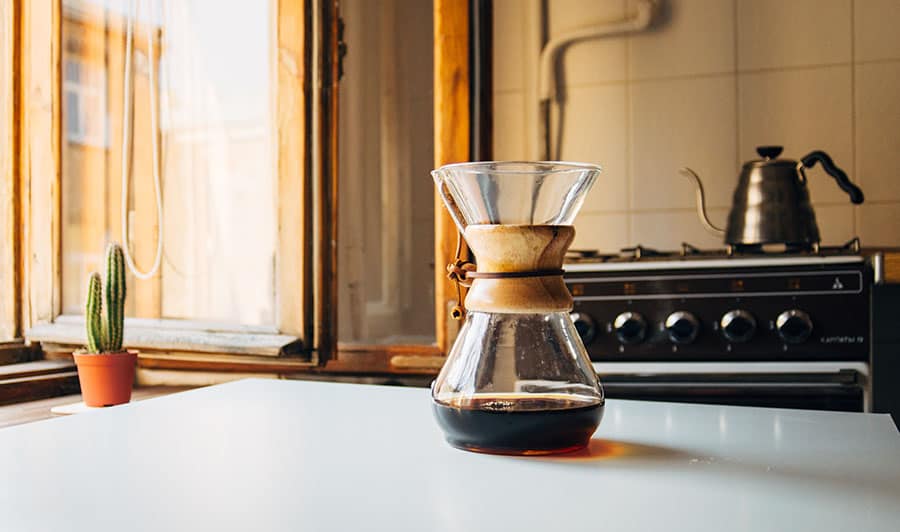
The Chemex was invented in 1941 by Peter Schlumbohm, a German-born chemist in New York, and its hourglass shape has barely changed since. It is a single piece of heat-resistant glass: the top holds the filter, the bottom is the carafe, and a wooden collar tied with leather makes it easy to hold. It is good-looking enough to be in museum design collections.
What really sets it apart is the filter. Chemex filters are much thicker than standard paper filters. They hold back nearly all the coffee oils and fine particles, and they slow the flow, which makes the Chemex more forgiving of an uneven pour. Chemex makers come in sizes from 3 to 10 cups (a Chemex “cup” is about 5 oz). Our Chemex guide has a step-by-step recipe.
Chemex vs V60: The Differences That Matter
| Chemex | Hario V60 | |
|---|---|---|
| Filter | Thick bonded paper; holds back most oils | Thin paper; lets a little more through |
| Taste and body | Very clean, light, tea-like | Clean with more body and texture |
| Grind | Medium-coarse | Medium-fine |
| Brew time | About 4 to 5 minutes | About 2.5 to 3 minutes |
| Batch size | 3 to 10 “cups” depending on model | 1 to 4 cups |
| Learning curve | More forgiving: the filter slows the flow | Less forgiving: your pour sets the flow |
| Build | All glass; breakable | Plastic, ceramic, glass or metal |
| Filters | Chemex filters, pricier and found in fewer stores | Widely available and cheap |
| Price | Costs several times more | Plastic models are very cheap |
In the cup, the difference is clearest with the same coffee side by side. A Chemex makes a crisp, very clear, almost tea-like cup that highlights bright, floral and fruity notes, which suits light-roasted single origins. A V60 keeps a little more body and sweetness, which helps medium roasts and chocolatey coffees.
Quick Recipes for Each
V60: one mug
15 g medium-fine coffee, 250 g water at about 200°F (93°C). About 3 minutes.
- Rinse the filter with hot water and pour that water away.
- Add the coffee, pour about 40 g of water to wet it all, and wait 30 to 45 seconds.
- Pour the rest slowly in small circles, in two or three stages, until you reach 250 g by about 1:45.
- Let it drain. It should finish around 2:30 to 3:00.
Chemex: one large mug
25 g medium-coarse coffee, 400 g water at about 200°F (93°C). About 4 minutes.
- Put the filter in with the thick, three-layer side against the spout, rinse it with hot water, and pour that water out.
- Add the coffee, pour about 60 g of water to wet it, and wait 45 seconds.
- Pour the rest slowly in stages, keeping the level about halfway up the cone, until you reach 400 g.
- Let it drain. It should finish around 4:00 to 4:30. Our Chemex guide has the full timed recipe and larger batches.
Both work at a 1:16 ratio. If either tastes sour or thin, grind finer; if it tastes bitter or the bed drains too slowly, grind coarser. Our coffee bloom and grind size guides go deeper.
Which Should You Buy?
- Choose the V60 if you mostly brew one cup at a time, want to spend little, travel with your brewer, or enjoy experimenting with pour technique.
- Choose the Chemex if you brew for two or more, like a very clean and delicate cup, or want a brewer that doubles as a serving carafe and looks good on the counter.
- Either way, a burr grinder and a gooseneck kettle will improve your coffee more than the choice of brewer. See our gooseneck kettle guide.
For other options, our pour-over guide covers the Kalita Wave and other drippers, and our beginner’s guide to brewing methods compares the Chemex with the French press and AeroPress.
Former roastery owner and coffee tour operator. Steve spent five years roasting coffee for his own shop and wholesale customers. More about Steve