
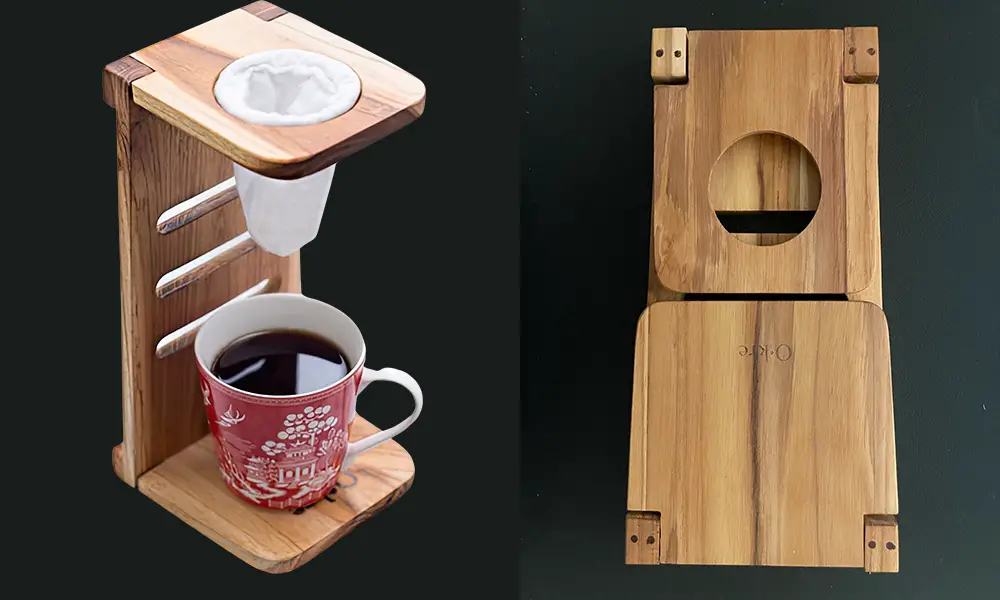
A chorreador (chorreador de café) is Costa Rica’s traditional coffee maker: a simple wooden or wire stand that holds a cloth filter bag, called a bolsa or colador, over a cup or pot. You put ground coffee in the cloth, pour hot water over it, and the coffee drips through into the cup. It works like a pour-over, but the cloth filter lets through more of the coffee’s oils than paper, giving a smooth, full-bodied cup. To brew one mug, use about 20 g of medium-ground coffee and 320 g of water just off the boil, poured slowly over about 3 to 4 minutes.
| Coffee | 20 g, medium grind (like coarse sand) |
| Water | 320 g (about 11 oz) at 200 to 205°F |
| Ratio | About 1:16; use 1:14 for a stronger cup |
| Brew time | About 3 to 4 minutes |
| Filter | Cloth bolsa, rinsed in hot water first |
| Taste | Smooth, full-bodied, more body than paper pour-over, cleaner than French press |
What Is a Chorreador de Café?
The name comes from the Spanish verb chorrear, to trickle or drip, which describes how the coffee runs out of the cloth. A chorreador has two parts: a stand, traditionally carved from wood or bent from wire, and a cloth bag sewn onto a wire or wooden ring that sits in a hole at the top of the stand. A cup or small pot sits underneath.
Cloth coffee filters have been used across Latin America for generations, and the chorreador became the everyday brewer in Costa Rican homes as coffee spread through the country in the 1800s. Many families still use one daily, and it remains a symbol of Costa Rican coffee culture alongside the country’s well-known Costa Rican coffee. You may also see it called a “Costa Rica coffee sock.” For another traditional Costa Rican brewer, see the clay vandola.
Types of Chorreadors: Wood and Wire
- Wooden chorreadors are the classic style, often handmade from local hardwoods. They are sturdy, look good on a kitchen counter and are popular as souvenirs.
- Wire chorreadors are simple metal stands sold in Costa Rican hardware and grocery stores. They are cheap, light and easy to pack for travel or camping.
Both work the same way. Make sure the cloth bag fits the ring on your stand and that your mug or pot fits underneath.
How to Brew Coffee With a Chorreador
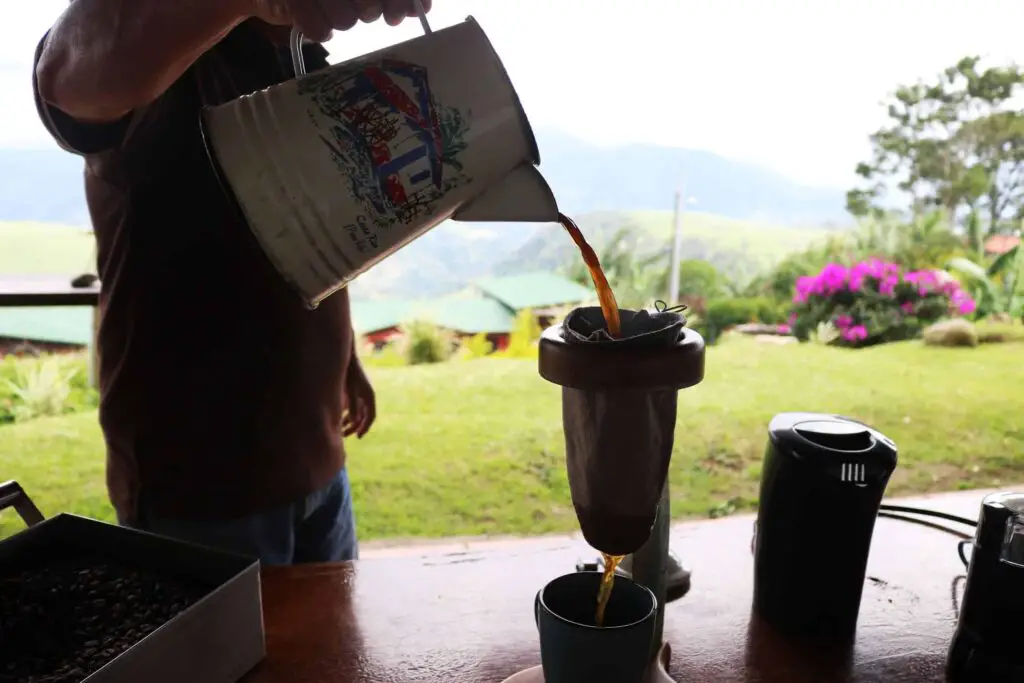
- Rinse the cloth. Pour hot water through the bag to warm it and wash out any old coffee taste, then empty the cup.
- Grind the coffee. Grind 20 g of coffee to a medium grind, like coarse sand. Too fine and the water drains slowly and the coffee tastes bitter; too coarse and it runs through weak. See our grind size chart.
- Heat the water. Bring water to a boil and let it rest for about 30 seconds, to 200 to 205°F.
- Bloom. Put the coffee in the bag and pour about 40 g of water to wet it all. Wait 30 seconds while fresh coffee bubbles and releases gas.
- Pour slowly. Add the rest of the water, to 320 g in total, in a few slow pours, keeping the grounds covered. The coffee will drip through in about 3 to 4 minutes.
- Serve. Remove the bag and enjoy your coffee black, or Costa Rican style with a little milk and sugar.
To brew for more people, keep the same ratio, about 1 g of coffee to 16 g of water, and use a larger bag and pot. For a stronger cup, use a little more coffee rather than a finer grind. See our coffee-to-water ratio guide.
Chorreador vs Pour-Over and French Press
- Vs paper pour-over: a chorreador is brewed the same way, but the cloth lets more oils through, so the cup is rounder and fuller and slightly less bright. See our pour-over guide.
- Vs French press: the cloth traps far more fine particles than a metal mesh, so a chorreador cup is cleaner, with no sludge at the bottom.
- Vs other cloth filters: similar cloth “socks” are used around the world, including for Malaysian and Singaporean kopi.
What Is the Best Coffee for a Chorreador?
Any good, fresh coffee works, but Costa Rican coffee makes it authentic. Washed coffees from Tarrazú, the West Valley or Central Valley are clean and bright with crisp acidity, and Costa Rica’s sweet honey-processed coffees are excellent too. A light to medium roast shows off their fruit and sweetness. Buy whole beans roasted within the last 2 to 4 weeks and grind them just before brewing.
How to Clean and Care for the Cloth Filter
- Empty the grounds and rinse the bag well in hot water after each use. Do not use soap, which leaves a taste in the cloth.
- A brown stain is normal and does not affect the flavor.
- Every so often, soak or briefly boil the bag in clean water to remove built-up oils.
- Let it dry fully between uses, or keep it in a covered jar of water in the fridge, so it does not mildew or pick up odors.
- Replace the bag when it smells stale or the cloth wears thin; new bags are cheap.
Where to Buy a Chorreador
In Costa Rica, wire chorreadors and spare bags are sold in grocery and hardware stores, and wooden ones in souvenir and craft shops. Outside Costa Rica, look for handcrafted wooden models online; Café Tico offers handcrafted chorreadors made from Costa Rican wood (Café Tico). Some specialty coffee shops also stock them for brewing Costa Rican beans. If you visit, a coffee tour is a great way to see one in use; read about the people behind the harvest in Costa Rica’s coffee pickers.

Former roastery owner and coffee tour operator. Steve spent five years roasting coffee for his own shop and wholesale customers. More about Steve