
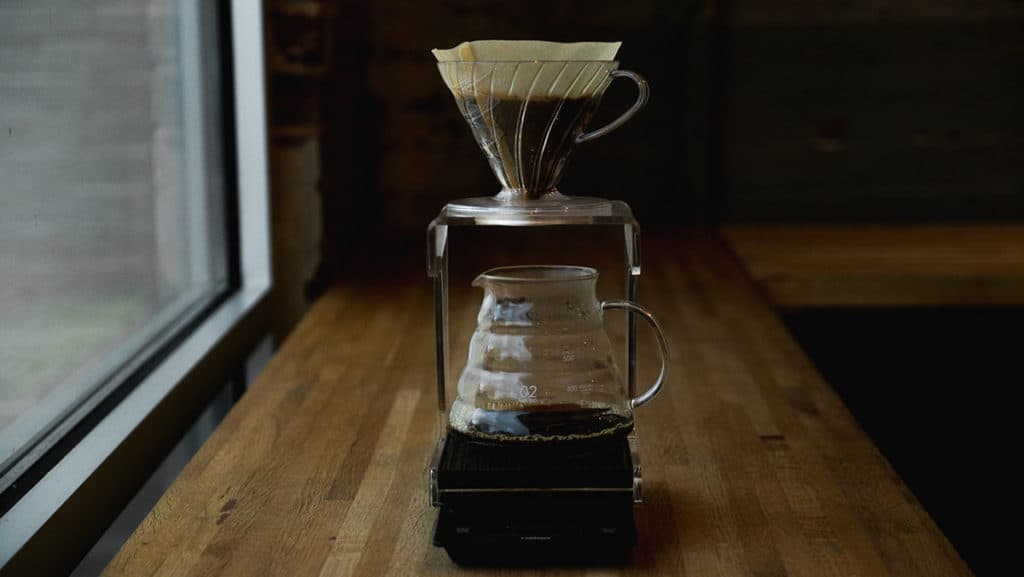
To brew Hario V60 coffee, use 20 g of medium-fine ground coffee (about the texture of table salt) and 320 g of water at 200 to 205°F (93 to 96°C), a 1:16 ratio. Rinse the paper filter, add the coffee, and pour 40 g of water to bloom for 30 to 45 seconds. Then pour the rest in slow spirals, to 200 g and then to 320 g, and let it drain. The whole brew should take about 3 to 3½ minutes. If it runs faster and tastes sour, grind finer; if it runs slower and tastes bitter, grind coarser.
| Coffee | 20 g, medium-fine (like table salt or fine sand) |
| Water | 320 g at 200 to 205°F (93 to 96°C) |
| Ratio | 1:16 |
| Bloom | 40 g of water, wait 30 to 45 seconds |
| Main pours | To 200 g, then to 320 g, finishing by about 2:00 |
| Total brew time | About 3:00 to 3:30 |
| Dripper and filter | V60 size 02 with a matching 02 paper filter |
For a smaller cup, use 15 g of coffee and 250 g of water and aim for about 3 minutes in total.
What You Need
- Hario V60 dripper: size 01 makes 1 to 2 cups, 02 makes 1 to 4, and 03 makes 1 to 6. The 02 is the most versatile.
- V60 paper filters in the same size as your dripper. See coffee filter types.
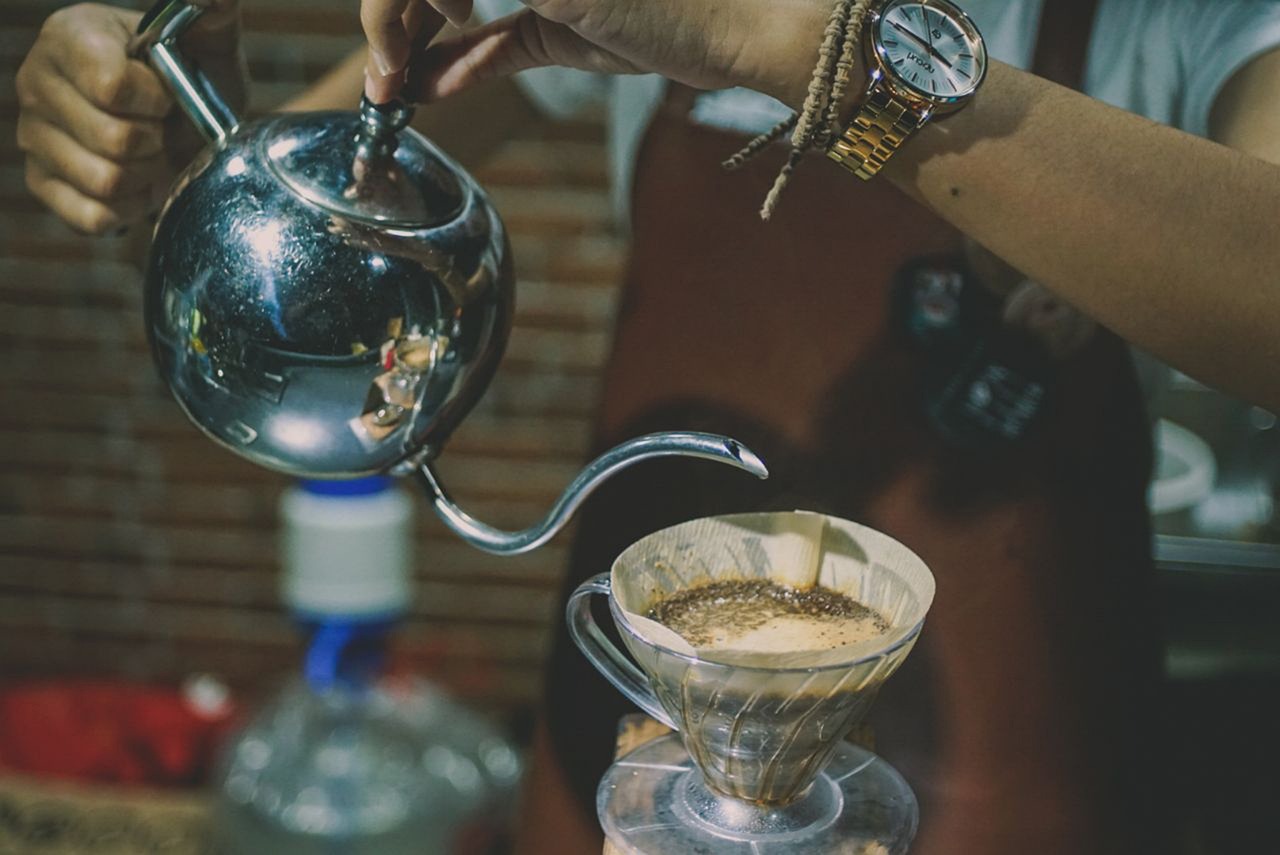
- A gooseneck kettle for a slow, controlled pour. A regular kettle works, but it is harder to pour gently.
- A burr grinder for an even grind; see the best coffee grinders and flat vs conical burrs.
- A coffee scale with a timer so you can weigh the water as you pour.
- Fresh coffee, ideally roasted within the last 2 to 4 weeks.
- A mug or carafe to brew into.
How to Brew Hario V60 Coffee, Step by Step
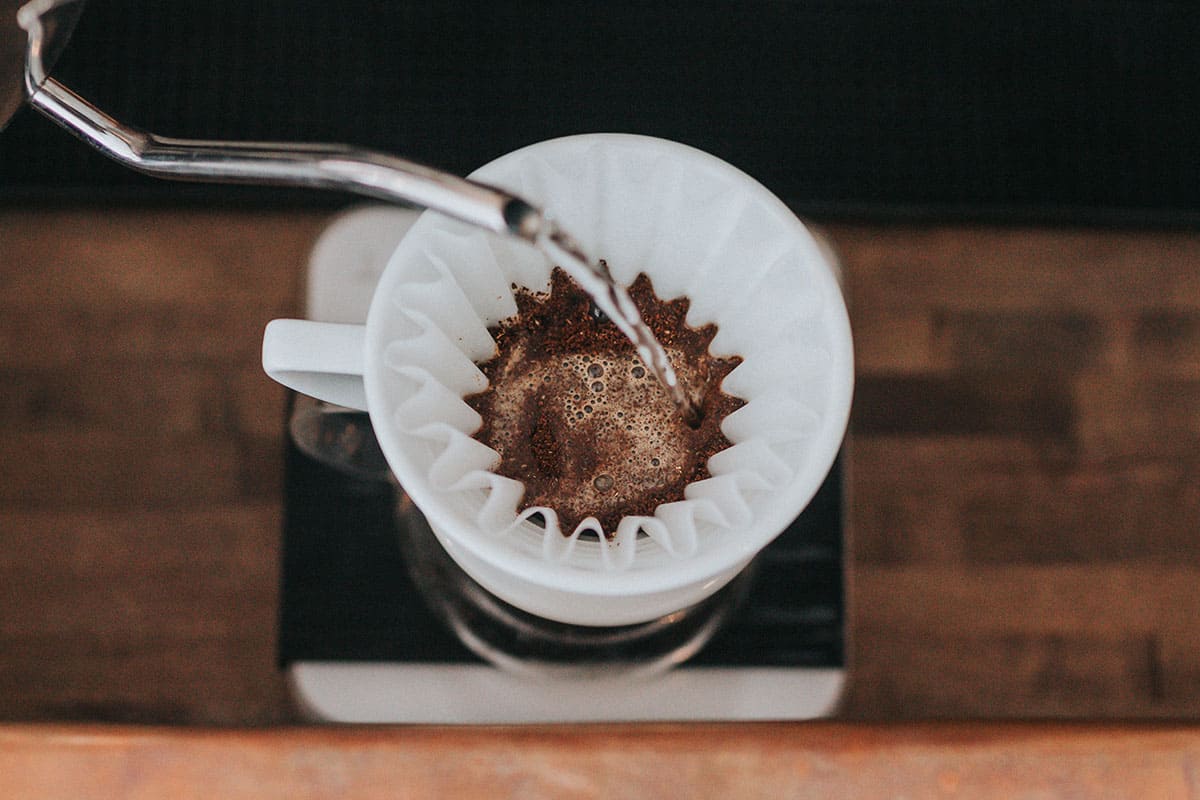
- Heat the water to 200 to 205°F (93 to 96°C). Without a thermometer, take it off the boil and let it rest about 30 seconds.
- Weigh and grind 20 g of coffee to medium-fine, just before brewing.
- Fold and rinse the filter. Fold the paper along its seam, set it in the V60 on your mug, and pour hot water through it to remove any papery taste and preheat everything. Pour away the rinse water.
- Add the coffee, give the dripper a gentle shake to level the bed, set it on the scale and tare to zero.
- Bloom: start the timer and pour 40 g of water, wetting all the grounds. Swirl the dripper gently and wait 30 to 45 seconds while the coffee bubbles and releases gas. See coffee bloom.
- First main pour: pour slowly in spirals, from the center outward and back, to 200 g by about 1:15. Avoid pouring directly onto the paper.
- Second main pour: once the level drops a little, pour to 320 g, finishing by about 2:00.
- Swirl and drain: give the dripper one gentle swirl so the bed settles flat, then let it drain. It should finish at about 3:00 to 3:30.
- Taste and adjust the grind next time, using the troubleshooting table below.
How to Grind Coffee for a V60
Start with a medium-fine grind, about like table salt or fine sand you can still feel between your fingers. The V60 has one large hole at the bottom, so unlike flat-bottomed brewers it does not slow the water down by itself: your grind size and pouring speed set the brew time. That makes grind the main thing to adjust. Use a burr grinder, since a blade grinder makes a mix of powder and chunks that drains unevenly. A Chemex needs a coarser grind and a Kalita Wave about the same; see our coffee grind size chart.
V60 Troubleshooting
| Problem | Likely cause | Fix |
|---|---|---|
| Sour, thin, finished before 2:30 | Grind too coarse, under-extracted | Grind finer, or pour more slowly |
| Bitter, dry, took longer than 4:00 | Grind too fine, over-extracted | Grind coarser |
| Sour and bitter at once, uneven bed | Channeling: water rushed through part of the bed | Pour more gently, keep the kettle low, swirl after the bloom and at the end |
| Brew stalls and drips slowly | Too many fines, or the grind is too fine | Grind coarser; check your grinder for fines |
| Papery taste | Filter not rinsed | Rinse the filter with hot water first |
| Weak but not sour | Too little coffee for the water | Use a stronger ratio, such as 1:15 |
For more on tasting the difference, see why coffee tastes bitter or sour and our coffee-to-water ratio guide.
Try the 4:6 Method
Once the basic recipe is working, try the 4:6 method, created by Tetsu Kasuya, who won the 2016 World Brewers Cup with a V60. It uses 20 g of coffee ground a little coarser than usual and 300 g of water (1:15), poured in five stages of about 60 g, each time letting the water drain before the next pour, for a total of about 3½ minutes. The first 40% of the water (two pours) controls sweetness and acidity: a smaller first pour makes it sweeter, a larger one brighter. The last 60% controls strength: fewer, larger pours make a lighter cup, and more pours make a stronger one.
What Makes the Hario V60 Different?

The V60 was designed by the Japanese glassmaker Hario and launched in 2004. Its name comes from its V-shaped cone, angled at 60 degrees. Spiral ridges inside the cone keep the paper from sticking to the walls so air can escape, and a single large hole lets coffee drain freely. Because nothing restricts the flow, the V60 gives you more control than most drippers, and makes a clean, bright cup that shows off the flavors of single-origin coffees. It comes in plastic, ceramic, glass and metal; the plastic version is cheap, light and nearly unbreakable, which makes it a favorite for travel.
- V60 vs Chemex: the Chemex uses thicker filters and a coarser grind for a lighter, very clean cup, and brews several cups at once. See Chemex vs V60.
- V60 vs Kalita Wave: the Kalita’s flat bottom and three small holes control the flow for you, so it is more forgiving. See our Kalita Wave recipe.
- V60 vs French press: a French press steeps the coffee and uses a metal filter, so it tastes heavier and richer. See immersion vs pour-over.
For the general technique that applies to every dripper, see our pour-over coffee guide, and to compare the V60 with other brewers, see the best pour-over coffee makers.
Former roastery owner and coffee tour operator. Steve spent five years roasting coffee for his own shop and wholesale customers. More about Steve