
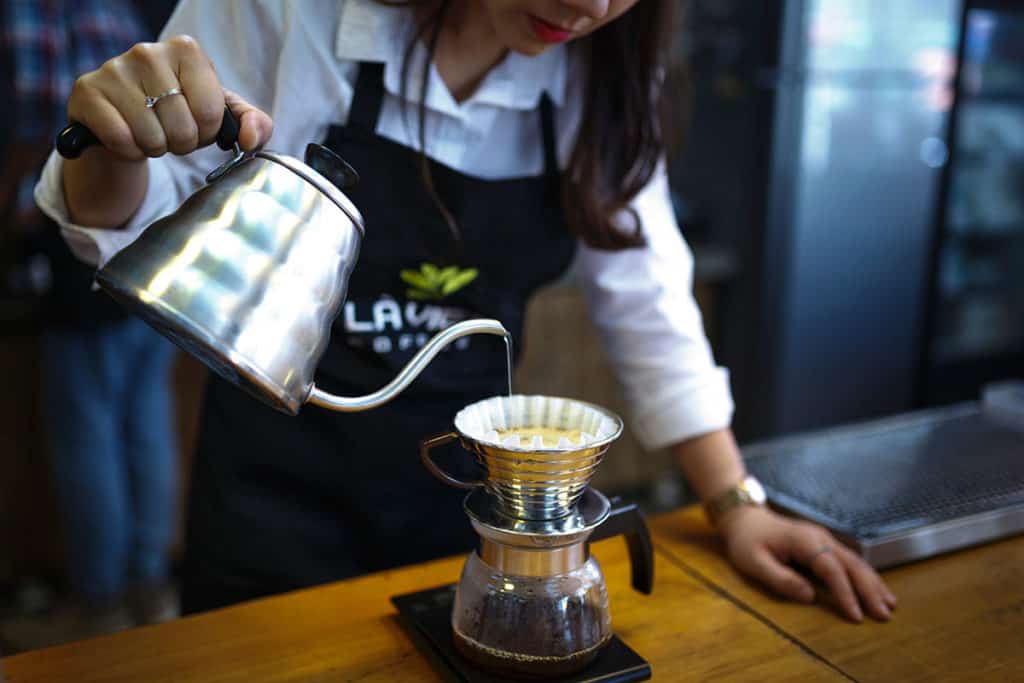
A gooseneck kettle is a kettle with a long, thin, curved spout that lets you pour water slowly, steadily and exactly where you aim it. That control is why it is the standard tool for pour-over coffee: you can wet the grounds evenly, keep the flow gentle, and avoid pouring down the sides of the filter, which all lead to more even extraction and a better-tasting cup. You do not strictly need one, but if you brew with a cone dripper such as a Hario V60 or Chemex, a gooseneck kettle is the single upgrade that makes the biggest difference after a good grinder and a scale.
| Gooseneck kettle | Regular kettle | |
|---|---|---|
| Pour | Thin, steady stream you can slow down or stop | Wide spout; water gushes out |
| Aim | Precise; you can pour onto a coin-sized spot | Hard to place the water |
| Best for | Pour-over (V60, Chemex, Kalita Wave, Origami) | French press, AeroPress, tea, cooking |
| Temperature control | Many electric models let you set and hold a temperature | Usually boil only |
| Typical capacity | About 0.6 to 1.2 liters | Often 1.5 liters or more |
| Rough price | About $25 to $50 stovetop; $60 to $200 electric | About $20 to $50 |
Why Use a Gooseneck Kettle for Pour-Over?
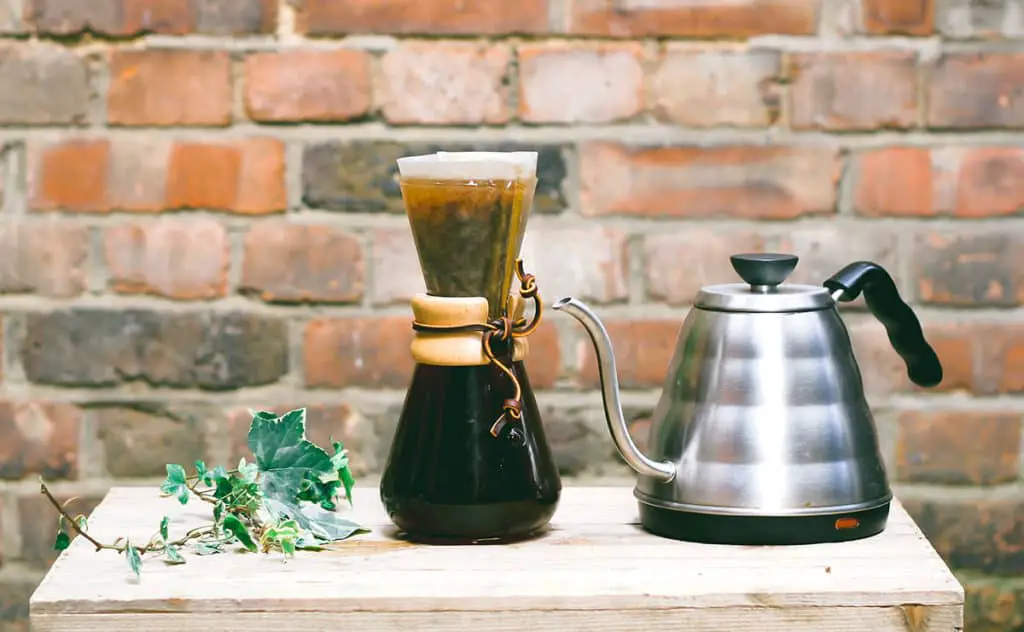
In pour-over coffee, the way you pour controls the brew. In a cone dripper like the Hario V60, the speed of your pour largely decides how fast water moves through the coffee, so your kettle is effectively your brewing control. A gooseneck kettle helps in four ways:
- Slow, steady flow: the narrow spout starts low on the kettle body, so the water comes out in a thin, even stream instead of surging as you tilt. You can pour slowly for the bloom and steadily for the main pours.
- Accurate placement: you can circle the water over the coffee bed and keep it off the paper. Water poured down the filter walls slips past the grounds without extracting much, which weakens the cup.
- Even extraction: wetting all the grounds evenly, without digging holes or channels in the bed, helps avoid a cup that is both sour and bitter at once. See why coffee tastes bitter or sour.
- Repeatable results: when you can pour the same way every morning, you can change one thing at a time, such as grind or ratio, and actually taste the difference.
How to Pour With a Gooseneck Kettle
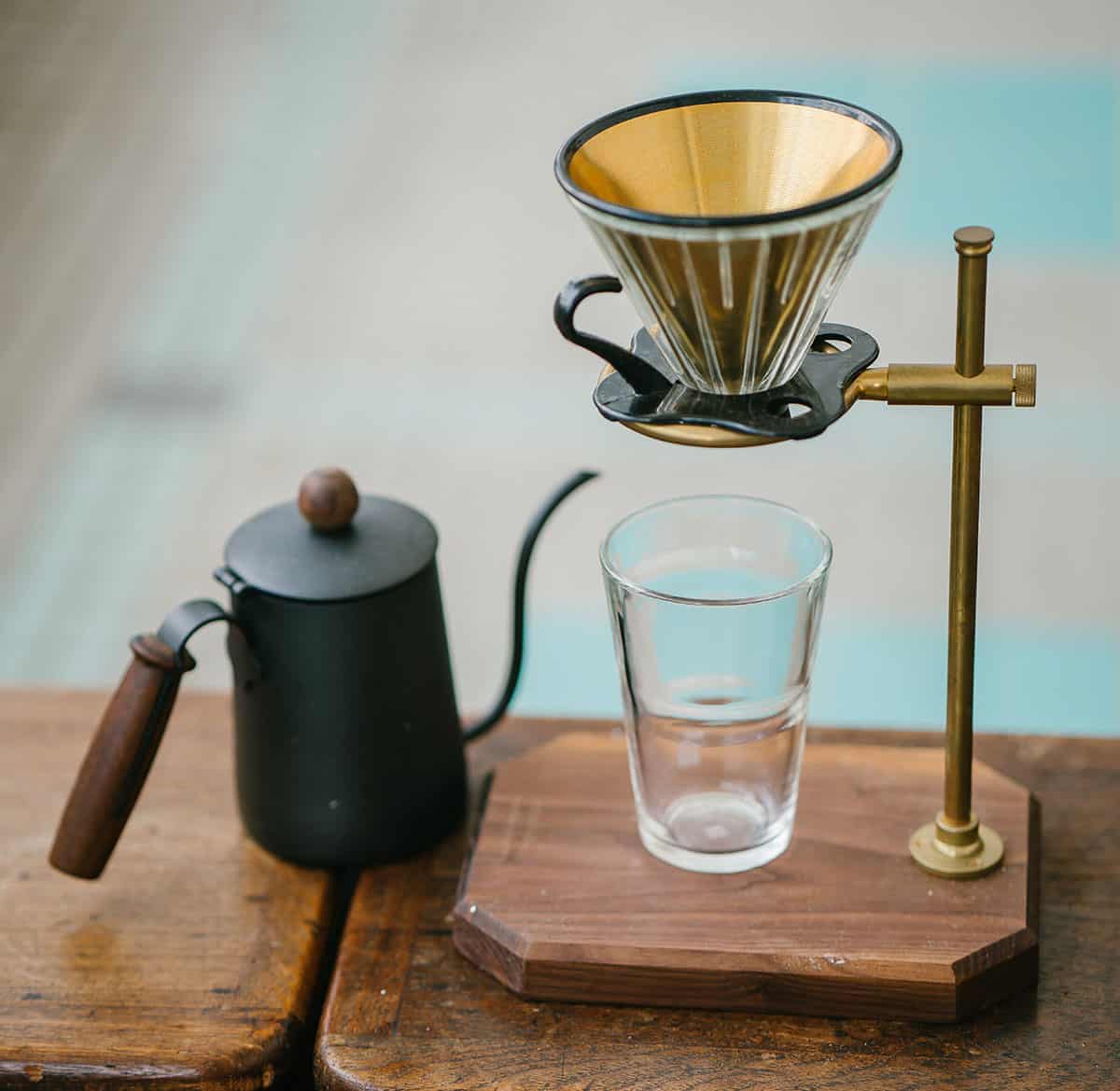
This example uses 20 g of medium-fine coffee and 320 g of water, a 1:16 ratio, on a coffee scale.
- Heat the water to 200 to 205°F (93 to 96°C). With a stovetop kettle, take it off the boil and let it rest about 30 seconds.
- Rinse the paper filter with hot water, which also preheats the brewer, then discard that water.
- Bloom: pour about 40 g of water, twice the weight of the coffee, to wet all the grounds. Wait 30 to 45 seconds. See coffee bloom.
- Pour in slow spirals, starting in the center and working outward, then back in. Stop about half an inch from the edge so you do not pour onto the filter.
- Keep the spout low, about an inch or two above the coffee, so the stream does not churn the bed or splash.
- Pour in stages, for example to 200 g, then to 320 g, keeping the water level steady rather than filling to the top.
- Finish in about 3 to 4 minutes from the first pour to the last drip. If it runs much faster, grind finer; much slower, grind coarser.
For the full method, see our pour-over coffee guide and coffee-to-water ratio guide.
Electric vs Stovetop Gooseneck Kettles
- Electric with temperature control: you set the exact temperature, and most models can hold it while you brew. This is the most convenient choice and makes it easy to brew light roasts hotter and dark roasts a little cooler, around 195°F. It costs more, usually about $60 to $200. See our Stagg EKG kettle review for one popular example.
- Electric, boil only: cheaper and quick, but you have to wait for the water to cool slightly before brewing.
- Stovetop: simple, durable and the least expensive, usually about $25 to $50. You need a thermometer, or a built-in one on the lid, to know your temperature. If you cook on induction, check that the base is induction-compatible.
What to Look For in a Gooseneck Kettle
| Feature | What to look for |
|---|---|
| Spout | Long and narrow, starting low on the body, with a clean tip that lets water fall straight down without dribbling |
| Handle and balance | Comfortable grip and a balanced feel when full, so you can pour slowly without straining your wrist |
| Capacity | About 0.6 to 0.8 liters for one or two cups; about 1 to 1.2 liters for a Chemex or larger batches. You can’t fill a gooseneck to the brim, so allow extra. |
| Temperature | Variable temperature and a hold setting on electric models; a thermometer on stovetop models |
| Material | Stainless steel is durable and easy to clean; check the base suits your stove |
| Extras | A brew timer, a lid that stays put while pouring, and a cord-free base on electric models |
Can You Make Pour-Over Without a Gooseneck Kettle?
Yes. A gooseneck makes pour-over easier and more consistent, but it is not required. If you are using a regular kettle:
- Pour from a small spouted pitcher, such as a milk-frothing pitcher or measuring cup, which gives you a narrower, slower stream.
- Pour in more, smaller stages so you never flood the brewer.
- Choose a forgiving brewer. Flat-bottomed drippers with small holes, such as the Kalita Wave and Melitta, control the flow themselves, so your pour matters less than it does with a V60 or Chemex.
- Or skip the pouring: immersion brewers such as the French press need no special kettle; see immersion vs pour-over.
Is a Gooseneck Kettle Worth It?
If you brew pour-over most days, yes. A basic stovetop gooseneck costs about as much as a bag of good beans or two and makes your pouring noticeably more controlled. If you mostly use a French press, AeroPress or drip machine, you do not need one. Spend first on fresh beans and a burr grinder, since grind quality affects the cup more than anything else; then add a scale and a gooseneck kettle. For help choosing a dripper to go with it, see our guide to the best pour-over coffee makers.
Former roastery owner and coffee tour operator. Steve spent five years roasting coffee for his own shop and wholesale customers. More about Steve