
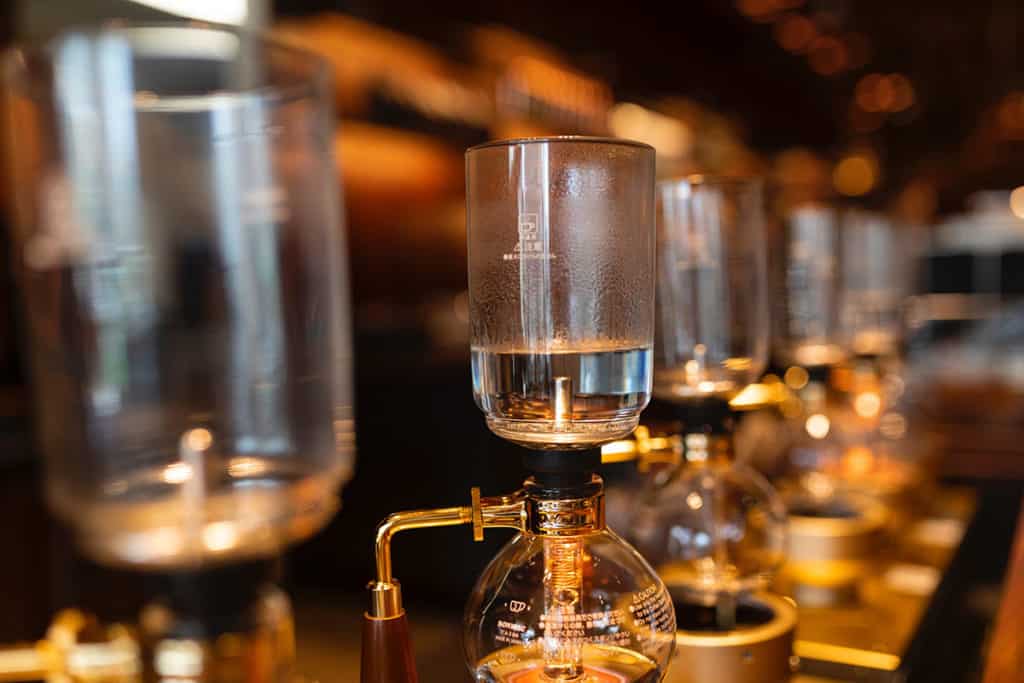
A siphon coffee maker, also called a syphon or vacuum pot, brews coffee with two glass chambers and a heat source. Heating the lower chamber pushes the water up into the top chamber, where it steeps with the coffee for about a minute. When you take the heat away, the cooling lower chamber pulls the brewed coffee back down through a filter. The result is a very clean, aromatic cup with a light, tea-like body, and the process is a bit of theater to watch.
Siphon recipe at a glance
For a 3-cup siphon, about two mugs.
- Coffee and water: 20 g coffee to 300 g water (1:15). Use up to 25 g for a stronger cup.
- Grind: medium-fine, a little finer than for drip.
- Temperature: about 200°F (93°C) in the top chamber while it brews.
- Time: about 1 minute of steeping, then 45 to 60 seconds for the coffee to draw down.
How Does a Vacuum Coffee Maker Work?
A siphon has a round lower chamber (the bulb), an upper chamber (the hopper) with a glass tube running down into the bulb, and a filter that sits at the bottom of the hopper. It works in three stages:
- Up: as the water in the bulb heats, steam and expanding air push it up the tube into the hopper. A little water always stays behind in the bulb, which is normal.
- Steep: you add the coffee to the hot water in the hopper and stir. The heat stays on low so the water above holds its temperature. This part is an immersion brew, like a French press.
- Down: when you remove the heat, the vapor in the bulb cools and contracts, creating a partial vacuum that pulls the coffee down through the filter, leaving the grounds behind in the hopper.
Vacuum coffee makers date back to the 1830s in Europe and were popular in American homes in the early and mid-1900s, before electric drip machines took over. Today they are mostly made by Japanese companies such as Hario and Yama, and are found in specialty cafés and at home among people who enjoy the ritual.
What You Need
- A siphon coffee maker. A 3-cup model makes about two mugs; 5-cup models are common for groups.
- A heat source. Most come with a small alcohol lamp, which works but is slow. A butane burner heats faster and is easier to control. Halogen beam heaters are what many cafés use. Some siphons are made to sit directly on a stove.
- A filter. See the next section.
- A burr grinder, a scale, a timer and a bamboo paddle or spoon for stirring.
- Fresh coffee. Light and medium roasts show off what a siphon does best: clarity and aroma.
Cloth, Paper or Metal Filter?
- In the cup
- Clean, with a round, smooth body
- Care
- Rinse well, keep it wet in the fridge, replace every few months
- Best for
- The classic siphon cup
- In the cup
- The cleanest and brightest
- Care
- Single use, needs a paper-filter adapter
- Best for
- Easy cleanup and light roasts
- In the cup
- More body and some sediment
- Care
- Rinse and reuse; very low upkeep
- Best for
- A heavier cup and no fuss
How to Make Siphon Coffee, Step by Step
Siphon coffee (3-cup siphon)
20 g coffee, 300 g water. About 8 minutes including heating.
- Fit the filter. Put the filter in the bottom of the hopper and hook its chain or spring to the bottom of the glass tube so the filter sits centered.
- Fill the bulb. Add 300 g of water. Starting with water just off the boil saves several minutes. Dry the outside of the bulb; water on hot glass can crack it.
- Heat. Set the bulb on its stand over the burner and rest the hopper loosely on top, without sealing it, until the water is close to boiling.
- Seal and let it rise. Seat the hopper gently but firmly in the bulb. Within a minute or so, most of the water rises into the hopper.
- Lower the heat. Turn the flame down so the water in the hopper stays at about 200°F (93°C), bubbling gently at the filter but not boiling hard.
- Add the coffee and stir. Add 20 g of medium-fine coffee and stir gently for a few seconds until it is all wet. Start a timer.
- Steep. Leave it for about 1 minute.
- Remove the heat. Take the burner away and give the coffee a few gentle stirs. Within 45 to 60 seconds it will be drawn down into the bulb, leaving a neat dome of grounds in the hopper.
- Serve. Gently rock the hopper to loosen it, lift it out onto its stand, and pour from the bulb.
Troubleshooting
| Problem | Likely cause | Fix |
|---|---|---|
| Drawdown takes more than 2 minutes or stalls | Grind too fine, or too much stirring | Grind a little coarser; stir gently |
| Bitter, harsh cup | Water too hot, or steeped too long | Lower the flame once the water rises; shorten the steep |
| Sour or thin cup | Water too cool, or grind too coarse | Keep the water near 200°F; grind finer |
| Grounds in the cup | Filter off-center or worn | Recenter the filter; replace a worn cloth |
| Water will not rise | Hopper not sealed, or heat too low | Seat the hopper firmly; turn up the heat |
Cleaning and Safety
- Cloth filters: rinse well right after use, without soap. Store them wet in a sealed container in the fridge so they do not go stale, and soak them now and then in a little coffee-equipment detergent. Replace them when they stay stained or the coffee starts tasting off.
- Glass: wash the bulb and hopper with warm water and mild soap. Let hot glass cool before it touches cold water.
- Never heat an empty bulb, and keep the outside of the bulb dry before it goes over the flame.
- Burners: refill alcohol lamps and butane burners only when cool, away from any flame, and use them on a stable, heat-resistant surface.
Is a Siphon Worth It?
If you love clean, aromatic coffee and enjoy the process, yes: a siphon makes a cup that sits between a French press and a pour-over, with the even extraction of an immersion brew and the clarity of a good filter. It is slower, more fragile and more work to clean than either, so for everyday coffee most people reach for something simpler. Our guide to immersion vs pour-over brewing and our beginner’s guide to brewing methods compare the options, and our grind size chart and guide to burr grinders help you dial it in.
Former roastery owner and coffee tour operator. Steve spent five years roasting coffee for his own shop and wholesale customers. More about Steve