
The best pour-over coffee maker for most people is a simple cone dripper. Choose the Hario V60 if you want the most control and a bright, clean cup, or a forgiving dripper like the Bee House or Melitta if you want great coffee with less technique. For brewing several cups at once, the Chemex is the classic choice. If you want to skip paper filters, look at the Bodum with its steel filter or a Costa Rican chorreador with a cloth one. All of them make better coffee than most automatic machines, as long as you use fresh beans, a good grind and the right ratio.
| Pick | Best for |
|---|---|
| Hario V60 | Best overall for control and flavor |
| Bee House Dripper | Best for beginners |
| Melitta Ready Set Joe | Best budget and travel pick |
| Chemex | Best for several cups and for looks |
| Bodum Pour Over | Best large brewer with no paper filters |
| Costa Rican chorreador | Best traditional, low-waste brewer |
The 6 Best Pour-Over Coffee Makers
1. Hario V60: Best Overall

The V60 is the dripper you see in most specialty cafés. Its 60-degree cone, spiral ribs and single large hole let water flow fast, so the taste depends almost entirely on your grind and how you pour. That makes it less forgiving than other drippers, but it rewards practice with a bright, clean, aromatic cup. It comes in three sizes (01 for 1 to 2 cups, 02 for 1 to 4 cups, 03 for up to 6) and in plastic, ceramic, glass and metal. The plastic 02 is inexpensive and holds heat surprisingly well; ceramic looks great but needs preheating. It uses V60 cone filters, which are easy to find.
Watch out for: you will want a gooseneck kettle to control the pour. Our V60 brew guide walks you through it.
2. Bee House Dripper: Best for Beginners
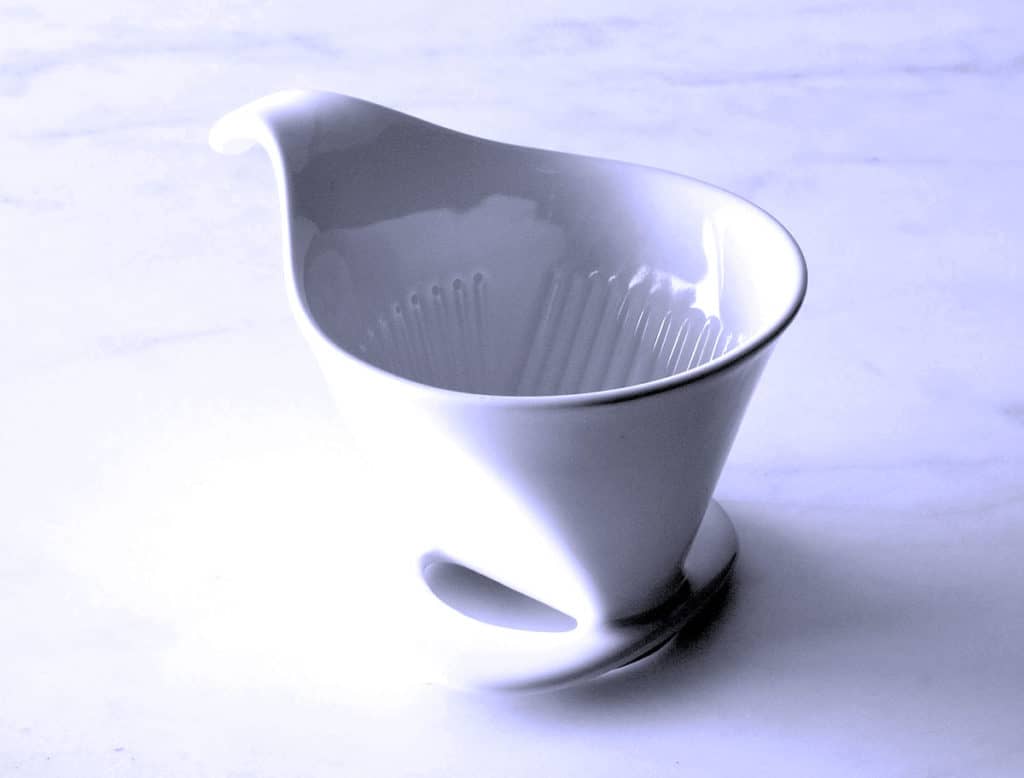
The Bee House is a ceramic, wedge-shaped dripper with two small holes that slow the flow. That means the brew time stays steady even if your pouring is uneven, so it is easy to get a good, balanced cup from day one. It takes standard #2 cone filters from any supermarket, comes in two sizes and several colors, and has a window in the base so you can see how full your mug is. Ceramic needs a rinse with hot water before brewing.
Watch out for: it is a one-to-two-cup brewer and gives you less control than a V60. See our Bee House brew guide.
3. Melitta Ready Set Joe: Best Budget and Travel Pick

Melitta invented the paper coffee filter, and its plastic Ready Set Joe cone is about as simple and cheap as pour-over gets. It sits on any mug, uses standard #2 filters, and is light and nearly unbreakable, so it is ideal for the office, camping or travel. Its single small hole slows the drip, which makes it forgiving, though brews take a little longer. Melitta also makes porcelain cones if you prefer something for home.
Watch out for: single cup only, and plastic does not look as nice on the counter. Our Melitta brew guide has the method.
4. Chemex: Best for Several Cups

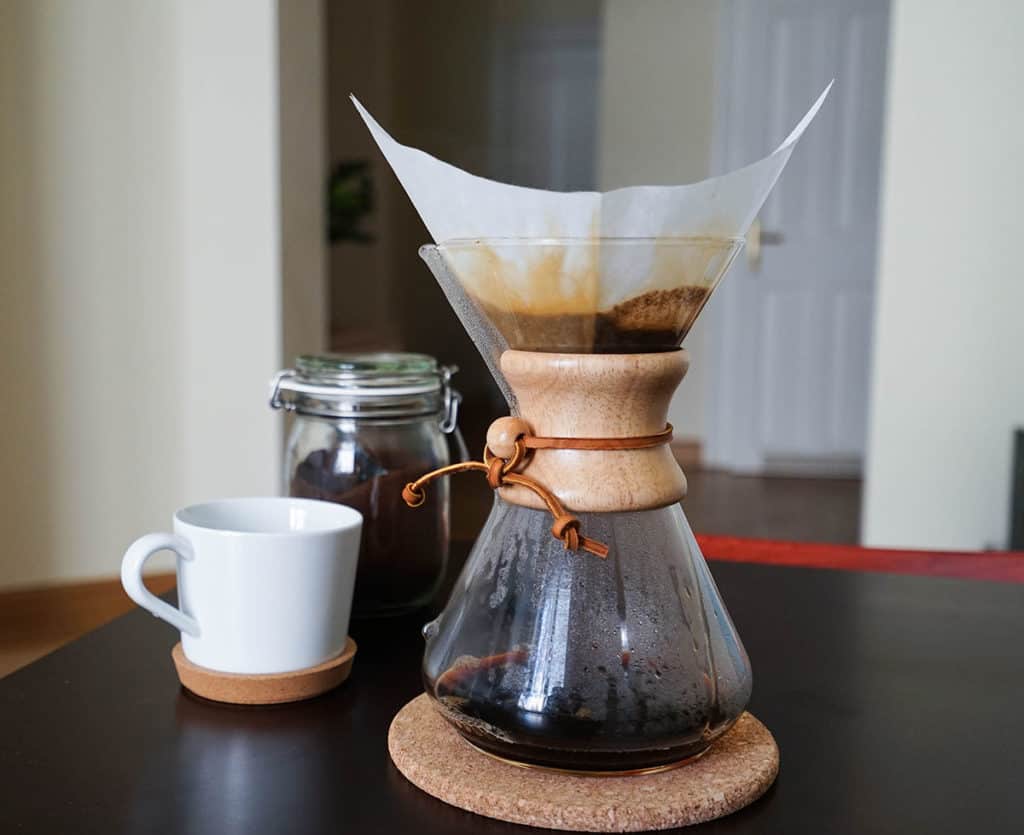
Designed in 1941 and part of the Museum of Modern Art’s collection, the Chemex is a one-piece glass brewer and carafe with a wood collar and leather tie. It comes in 3, 6, 8 and 10-cup sizes, so it is the easiest way to make pour-over for two to four people. Its thick paper filters remove most oils and fine particles, giving an exceptionally clean, light-bodied cup.
Watch out for: it costs more than a cone dripper, needs Chemex’s own filters, and the glass is fragile. See how to brew with a Chemex and our Chemex vs V60 comparison.
5. Bodum Pour Over: Best Large Brewer Without Paper Filters

The Bodum looks like a Chemex but comes with a reusable stainless steel mesh filter, so you never buy paper. It is glass with a cork or silicone band, and holds up to about 51 oz (1.5 liters) in the largest size, which makes it good for families and offices. The metal filter lets more oils and fine particles through, so the coffee has more body, closer to French press, and a little sediment at the bottom.
Watch out for: the cup is less clean than with paper, and the mesh needs regular washing. Our guide to paper, metal and cloth filters explains the trade-offs.
6. Costa Rican Chorreador: Best Traditional Brewer

The chorreador is how coffee has been made in Costa Rican homes for generations: a wooden stand that holds a reusable cloth filter, often called a bolsita, over your mug or pot. Cloth lets through more body than paper but far less sediment than metal, giving a smooth, rounded cup. Stands are usually sized for one to three cups, and many fold flat for travel. You can find handmade versions from brands like Cafe Tico.
Watch out for: the cloth filter needs rinsing after every use and an occasional boil, and should be replaced when it stays stained. Our chorreador guide covers brewing and care, and it pairs naturally with Costa Rican coffee.
Pour-Over Coffee Makers Compared
| Brewer | Price range | Capacity | Material | Filter | Ease of use |
|---|---|---|---|---|---|
| Hario V60 | $ to $$ | 1 to 6 cups (three sizes) | Plastic, ceramic, glass, metal | V60 paper cones | Takes practice |
| Bee House | $$ | 1 to 2 cups | Ceramic | Standard #2 paper | Very easy |
| Melitta Ready Set Joe | $ | 1 cup | Plastic | Standard #2 paper | Very easy |
| Chemex | $$$ | 3 to 10 cups | Glass | Chemex paper | Moderate |
| Bodum Pour Over | $$ | Up to about 51 oz | Glass | Reusable steel mesh | Easy |
| Chorreador | $$ | 1 to 3 cups | Wood stand | Reusable cloth | Easy |
Price ranges: $ under $20, $$ about $20 to $40, $$$ over $40. Prices vary by size, material and retailer.
Other drippers worth a look: the flat-bottomed Kalita Wave is very consistent, the Origami takes both cone and flat filters, the Clever Dripper combines steeping and filtering, and the Ceado Hoop and Hikaru take most of the technique out of pouring.
How to Choose a Pour-Over Coffee Maker
- Shape and flow. Cones with one large hole (V60) flow fast and give you the most control. Wedges and cones with small holes (Bee House, Melitta) and flat-bottomed drippers (Kalita Wave) slow the flow and are more forgiving.
- Filter type. Paper gives the cleanest cup and traps most of the oils, including cafestol, which can raise cholesterol. Metal gives more body and no waste but some sediment. Cloth sits in between. See our guide to filtered coffee and health.
- Capacity. Single-cup drippers sit on a mug. For two or more people, choose a larger V60, a Chemex or a Bodum.
- Material. Plastic is cheap, light, unbreakable and holds heat well. Ceramic and glass look better but need preheating. Metal is durable and good for travel.
- How much effort you want. If you enjoy the ritual, go V60. If you want good coffee with little fuss, go Bee House, Melitta or Bodum.
What Else You Need
- A burr grinder. Grinding fresh is the biggest single upgrade. See our best coffee grinders and grind size chart.
- A gooseneck kettle. Its thin spout lets you pour slowly and evenly. See our gooseneck kettle guide.
- A scale. Weighing coffee and water makes every cup repeatable. Here are four reasons to use a coffee scale.
- Filters that fit your brewer, and fresh beans roasted within the past few weeks.
Start with 15 g of coffee per 8 oz (240 ml) of water, a 1:16 ratio, ground medium-fine (medium-coarse for a Chemex), with water just off the boil at 200 to 205°F (93 to 96°C). Pour a little water to let the coffee bloom for 30 to 45 seconds, then pour the rest in slow circles. A single cup should take about 3 minutes, anywhere from 2½ to 4 depending on the dripper. Our pour-over coffee guide has the full recipe, and our coffee-to-water ratio chart scales it up.
Pour-over essentials
- Gooseneck kettle: controls the pour, the biggest upgrade after the dripper. Shop on Amazon →
- Burr grinder: an even medium-fine grind for a balanced cup. Shop on Amazon →
- Coffee scale: weigh coffee and water and time the brew. Shop on Amazon →
- Paper filters: match the filter to your dripper size. Shop on Amazon →
As an Amazon Associate we earn from qualifying purchases.
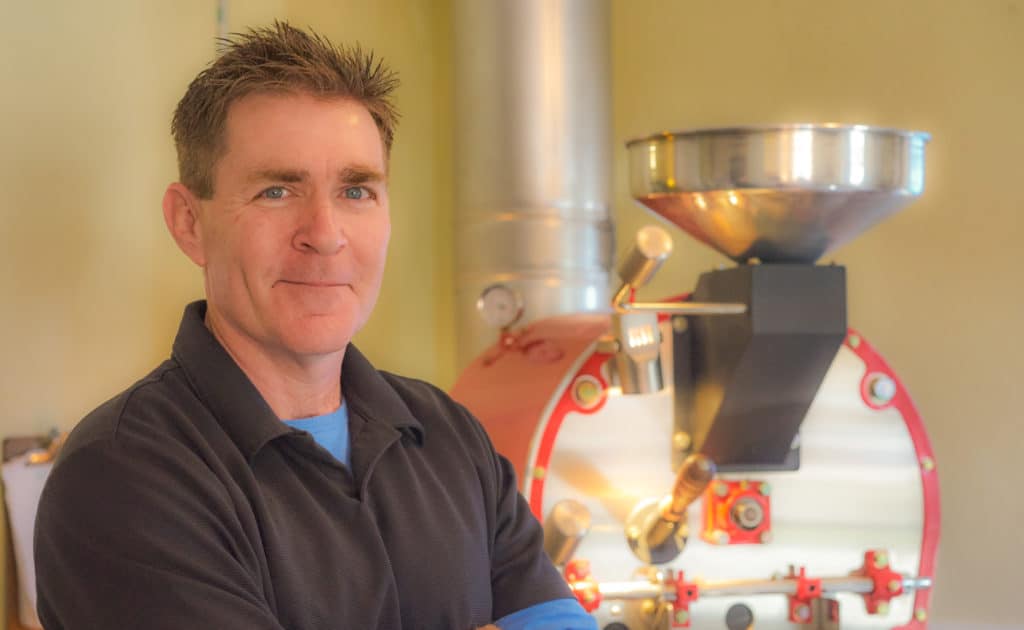
Former roastery owner and coffee tour operator. Steve spent five years roasting coffee for his own shop and wholesale customers. More about Steve