


Cloud coffee is one of the few viral drinks that survives contact with an actual coffee person. Coconut water over ice, concentrated coffee poured through it, and a float of frothed milk sitting on top like weather. Leave it alone for a minute and the cloud sinks through the glass in slow motion.
The problem is that every version you have seen calls for espresso. Two shots, pulled fresh, cooled for a minute. If you do not own a machine, that is where the recipe quietly ends.
It does not have to. The espresso is not doing anything magic here. It is doing one specific job, and there are two easier ways to do that job at home.
The short version
Cloud coffee, no machine
Swap the espresso for cold brew concentrate or a proper instant syrup. Five steps, about two minutes.
- Fill a tall glass with ice and add 5 oz (150 ml) of chilled coconut water.
- Add your coffee concentrate — 2 oz cold brew concentrate, or instant coffee dissolved in 1 tbsp hot water and cooled.
- Froth 2 oz (60 ml) of oat milk for about 30 seconds.
- Pour the foam slowly over the back of a spoon so it floats on top.
- Let it sit for a minute, then stir and drink.
What the espresso is actually for
Strip the drink down and you have three layers doing three separate jobs.
Frothed oat milk poured on top. This is the cloud. It is the whole reason the drink looks the way it does.
It only has to be concentrated. Espresso, cold brew concentrate, or a proper instant syrup all do the same job.
Cold, thin, faintly sweet, and doing far more than anyone gives it credit for.
The coconut water is the body — cold, thin, faintly sweet, and doing considerably more work than anyone gives it credit for. We will come back to that.
The coffee is the spine. It has to be concentrated, because it is about to meet five ounces of coconut water and a full glass of ice. That is the entire requirement. Espresso happens to be concentrated. So is cold brew concentrate. So is instant, if you make it properly rather than the way most people do.
The milk float is texture and theatre. It is the cloud.
Once you see the drink that way, the machine stops mattering.
The cold brew version
This is the better of the two, and it is arguably better than the espresso original. Cold brew is already low in the sharp organic acids that make iced espresso taste aggressive, so it sits more comfortably against coconut water instead of fighting it.
Fill a tall glass with ice. Pour in 5 oz (150 ml) of chilled coconut water, leaving about two fingers of room at the top. Add 2 oz (60 ml) of cold brew concentrate, or 4 oz (120 ml) of ready-to-drink cold brew if that is what you have. Then float 2 oz (60 ml) of frothed oat milk over the back of a spoon.
If your cold brew is homemade, aim for a concentrate rather than a ready-to-drink batch. A 1:8 brew gives you something strong enough to hold its shape in the glass. Our complete cold brew guide walks through the ratios if you are starting from scratch.
Everything should be cold before it goes in the glass. Warm coffee hitting ice water is the fastest way to get a muddy, unlayered drink and a float that collapses on contact.
The instant coffee version
Instant has a reputation problem, but in this drink it has a real structural advantage: it dissolves completely, so it never mutes the float the way an oily espresso crema can.
The trick is not to make a cup of instant coffee. You are making a syrup. Put 1.5 teaspoons of instant coffee in a small jar with 1 tablespoon of hot water — that is all the water it gets — and stir until it is glossy and completely dissolved. No grit at the bottom. Then add a tablespoon of cold water to knock the temperature down.
Pour that over ice and 5 oz of coconut water, then float your frothed milk on top. Total time, about ninety seconds.
Freeze-dried instant is worth the extra dollar or two here. Spray-dried granules carry a scorched note that the coconut water will not hide.
- The coffee
- 2 oz cold brew concentrate (or 4 oz ready-to-drink)
- Effort
- Zero, if your cold brew is already made
- Tastes like
- Smoothest option — low acidity sits easy against the coconut
- Best for
- Batch brewers who keep concentrate in the fridge
- The coffee
- 1.5 tsp instant dissolved in 1 tbsp hot water, then cooled
- Effort
- About 90 seconds, start to finish
- Tastes like
- Clean and bright — dissolves fully, never muddies the float
- Best for
- No cold brew on hand and you want it now
Why coconut water actually works
This is the part that gets dismissed as a wellness gimmick, and it is the part that is genuinely doing something.
Coconut water is not just flavoured water. It carries a meaningful mineral load — potassium above all, plus sodium, magnesium and calcium. Those dissolved salts behave in your glass the same way mineral content behaves in your brew water, which is to say they change how the coffee’s acids register on your palate.
Three things are happening at once.
- Buffering. Coffee’s brightness comes from organic acids — citric, malic, and the quinic acid that shows up as that sour edge in an under-developed cup. Dissolved mineral salts blunt how sharply those acids read. It is the same reason coffee brewed with distilled water tastes hollow and thin while coffee brewed with moderately mineralised water tastes round.
- Sodium suppresses bitterness. At low concentrations — well below the level where you would taste salt — sodium reliably knocks down perceived bitterness. This is why a pinch of salt in bad diner coffee is not folklore.
- Sugar masks sourness. Coconut water carries a small amount of natural sugar. Not enough to make the drink sweet, but enough to soften the leading edge of acidity before it registers.
The important word in all of this is perceived. Coconut water is not neutralising anything chemically in a meaningful way, and it is not lowering the acid content of your coffee. It is changing how those acids present.
Which means it is a finishing move, not a repair. If your coffee is genuinely under-extracted and sour, coconut water will make it slightly more tolerable and no more than that. The thin, hollow, puckering quality underneath is still there. Fix the extraction first — our guide to bitter versus sour coffee covers how to tell which problem you actually have — and then let the coconut water do the polishing.
Getting the cloud to hold
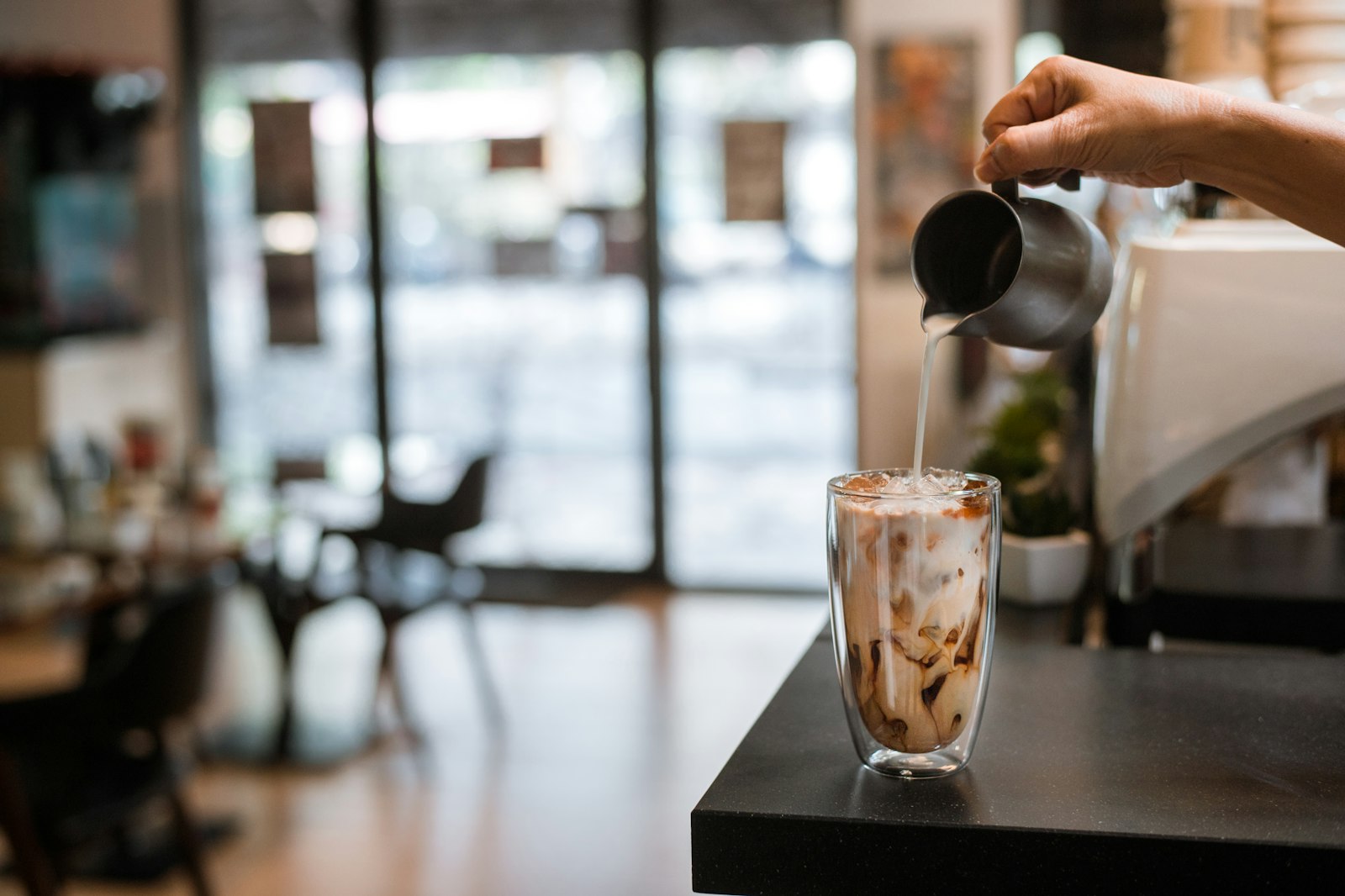
The float is the only technically fussy part, and it comes down to three things.
Use oat milk. It froths denser than almond and holds its structure longest. Barista-edition oat milk is formulated for exactly this and is worth buying if you plan to make the drink more than once.
Do not use coconut milk. It seems like the obvious move and it is the wrong one — it is too dense and sinks straight through instead of sitting on top.
Pour slowly over a spoon. Hold a spoon upside down just above the surface of the liquid and pour the foam onto its back. This breaks the fall and lets the float settle rather than punch through.
No frother? A jar with a tight lid and thirty seconds of hard shaking gets you most of the way there. Shake cold milk, not warm.
Three things that go wrong
Buy the plain, unsweetened, single-ingredient kind. The versions with added sugar or fruit purée turn the drink into a soft drink and bury the coffee entirely.
The instinct is to go stronger because the coconut water feels dilute. Resist it. Overshoot and you lose the tropical note that makes the drink work — you are just drinking a slightly odd iced americano.
Let it sit for a minute. The layers are half the point, and the drink tastes different as the cloud descends — the milk first, then the coffee, then the clean coconut finish underneath.
Then stir it properly and drink it fast, before the ice does its work.