
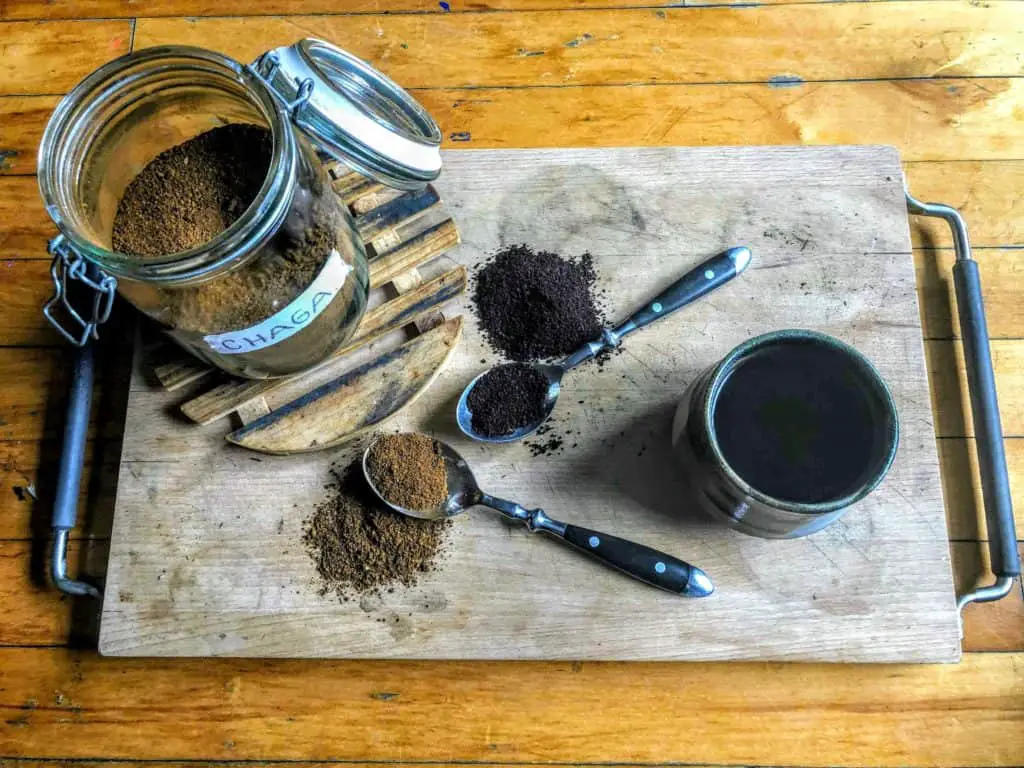
Mushroom coffee is regular coffee blended with powdered extracts of so-called functional mushrooms, most often lion’s mane, chaga, reishi and cordyceps. It doesn’t taste like the mushrooms in your grocery store. Most blends taste like a slightly earthier, mellower cup of coffee, and many have about half the caffeine of a regular cup.
The health claims are a different story. Some of these mushrooms show promise in lab, animal and small human studies, but the research is early, and a serving of mushroom coffee often contains only a small amount of mushroom. Here’s what it is, how much caffeine it has, what the evidence actually says and how to brew it.
| Question | Short answer |
|---|---|
| What it is | Coffee blended with mushroom extracts or powders |
| Common mushrooms | Lion’s mane, chaga, reishi, cordyceps, turkey tail |
| Taste | Like coffee, a little earthier and smoother |
| Caffeine | Often about 50 mg per instant serving, vs about 95 mg in 8 oz of brewed coffee |
| Forms | Instant packets, ground coffee blends and pods |
| Health benefits | Promising but unproven; none are FDA-approved for any condition |
Where Mushroom Coffee Came From
Mushroom coffee started as a substitute, not a wellness trend. When coffee ran short in Finland during World War II, people brewed chaga, a mushroom that grows on birch trees, as a stand-in. Finnish entrepreneur Tero Isokauppila later revived the idea with Four Sigmatic, which helped turn coffee-and-mushroom blends into a mainstream product. Today dozens of brands sell them online and in grocery and health food stores.
The Mushrooms and What the Research Says
Each mushroom is marketed for something different. Here’s how the claims line up with the evidence so far.
| Mushroom | Marketed for | What the evidence says |
|---|---|---|
| Lion’s mane | Memory and focus | A few small human trials, mostly in older adults with mild cognitive decline, suggest possible benefits. A study in young adults found no effect. Larger trials are needed. |
| Chaga | Antioxidants and immunity | Rich in antioxidant polyphenols, but benefits in people are not established. It’s high in oxalates. |
| Reishi | Sleep and stress | Traditional use and animal studies; human research is lacking. |
| Cordyceps | Energy and endurance | Some small studies suggest better stamina, especially in athletes. |
| Turkey tail | Immune support | Studied mainly in cancer research; more human studies are needed. |
Studies usually test concentrated supplements. A coffee packet may contain far less mushroom, and many labels don’t say how much.
So is mushroom coffee healthier than regular coffee? Not in any proven way. Regular coffee already has a large body of research behind it, and the main difference you can count on with most mushroom blends is less caffeine.
How Much Caffeine Is in Mushroom Coffee?
| Drink | Typical caffeine |
|---|---|
| Brewed coffee, 8 oz | About 95 mg |
| Instant mushroom coffee packet | About 40–60 mg (Four Sigmatic instant: about 50 mg) |
| Ground mushroom coffee, brewed | Can be close to regular coffee, around 100 mg |
| Mushroom-only “coffee alternatives” | Little or none, unless they add tea or cacao |
The mushrooms don’t cancel out caffeine. Instant blends simply use less coffee per serving. If you’re cutting back for sleep or jitters, check the label, because ground blends can have nearly as much caffeine as your usual cup. For comparison, see how much caffeine is in a cup of coffee.
What Does Mushroom Coffee Taste Like?
Mostly like coffee. The mushroom extracts add a slightly earthy, woody note and can make the cup taste smoother and less sharp, partly because many blends use a milder coffee. Reishi-heavy blends can be a little bitter. If you take your coffee with milk, you may not notice the mushrooms at all.
How to Make Mushroom Coffee
Instant or ground, in five steps
Instant: about 1 packet per 8 oz · Ground: brew at about 1:16
- Check the label for the serving size and caffeine per serving.
- Heat the water to just off the boil, about 195–205°F.
- For instant, stir one packet into about 8 oz of hot water until it dissolves.
- For ground blends, brew it like regular coffee in a drip machine, French press or pour-over, starting around 1 g of coffee per 16 g of water.
- Adjust to taste with milk, oat milk or a pinch of cinnamon, which suits the earthy flavor.
Our coffee-to-water ratio guide has a calculator for scaling ground blends up or down. You can also make your own version by stirring a mushroom extract powder into the coffee you already drink. That way you control both the coffee and the dose.
Who Should Be Careful
For most healthy adults, mushroom coffee is a coffee with less caffeine. A few groups should check with a doctor first:
Skip it. These are real mushrooms, even in powder form.
Chaga is high in oxalates. There is at least one reported case of kidney damage linked to heavy daily chaga use.
Lab studies suggest chaga may add to the effect of blood thinners such as warfarin and may lower blood sugar.
These mushrooms haven’t been studied for safety in pregnancy, and the drink still contains caffeine.
Some people get digestive upset from mushroom extracts. Start with a half serving.
This article is for general information and isn’t medical advice.
How to Choose a Mushroom Coffee
- Look for amounts. Good labels list each mushroom and how many milligrams are in a serving, not just a “proprietary blend.”
- Check what part of the mushroom is used. Fruiting-body extracts are generally preferred. Products made from mycelium grown on grain can include a lot of leftover grain.
- Prefer third-party testing for purity and contaminants.
- Check the caffeine if that’s why you’re switching.
- Compare cost per cup. Mushroom coffee often costs several times more than good regular coffee.
If you want to try it, you can compare instant mushroom coffee and ground mushroom coffee blends on Amazon. As an Amazon Associate, Craft Coffee Guru earns from qualifying purchases.
Mushroom Coffee FAQ
Does mushroom coffee taste like mushrooms?
No. It tastes like coffee with a slightly earthy, smoother finish. You won’t taste anything like a cooked mushroom.
Does mushroom coffee have caffeine?
Yes, unless it’s a mushroom-only blend. Most instant versions have about half the caffeine of brewed coffee. If you want none, look at decaf coffee or caffeine-free roasted chicory root (our chicory coffee guide explains it).
Is mushroom coffee worth it?
If you like the taste and want less caffeine, it can be. If you’re buying it mainly for health benefits, know that the evidence is still early, and a half-caf blend of good regular coffee gets you the lower caffeine for less money.
Sources: TODAY (Cleveland Clinic and Weill Cornell experts); Oncology Nursing Society on lion’s mane research; Dr. Weil on chaga safety; Food52 on the wartime origins; Caffeine Informer.
Former roastery owner and coffee tour operator. Steve spent five years roasting coffee for his own shop and wholesale customers. More about Steve