
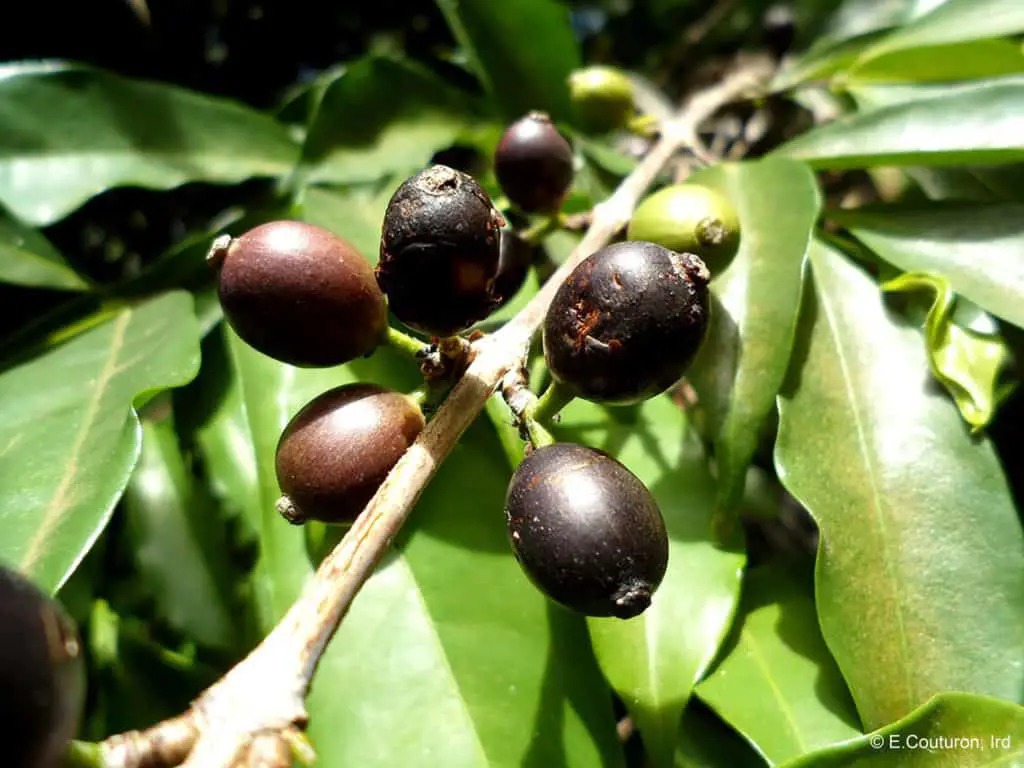
Coffea stenophylla is a rare wild coffee species from West Africa that tastes remarkably like arabica but grows in much hotter conditions. Once farmed in Sierra Leone, it was abandoned for higher-yielding robusta in the early 1900s and almost forgotten. Scientists rediscovered it in the wild in 2018, and it’s now being studied as a possible way to keep good coffee growing as the climate warms.
| What | Details |
|---|---|
| Native to | Guinea, Sierra Leone and Ivory Coast |
| Also called | Highland coffee of Sierra Leone |
| Grows at | Mean annual temperature of about 24.9°C (77°F) |
| Heat tolerance | Up to 6.8°C (12°F) warmer than arabica |
| Taste | Arabica-like: sweet, fruity, medium-high acidity |
| Can you buy it? | Not widely; trials are under way in Sierra Leone |
What Is Coffea Stenophylla?
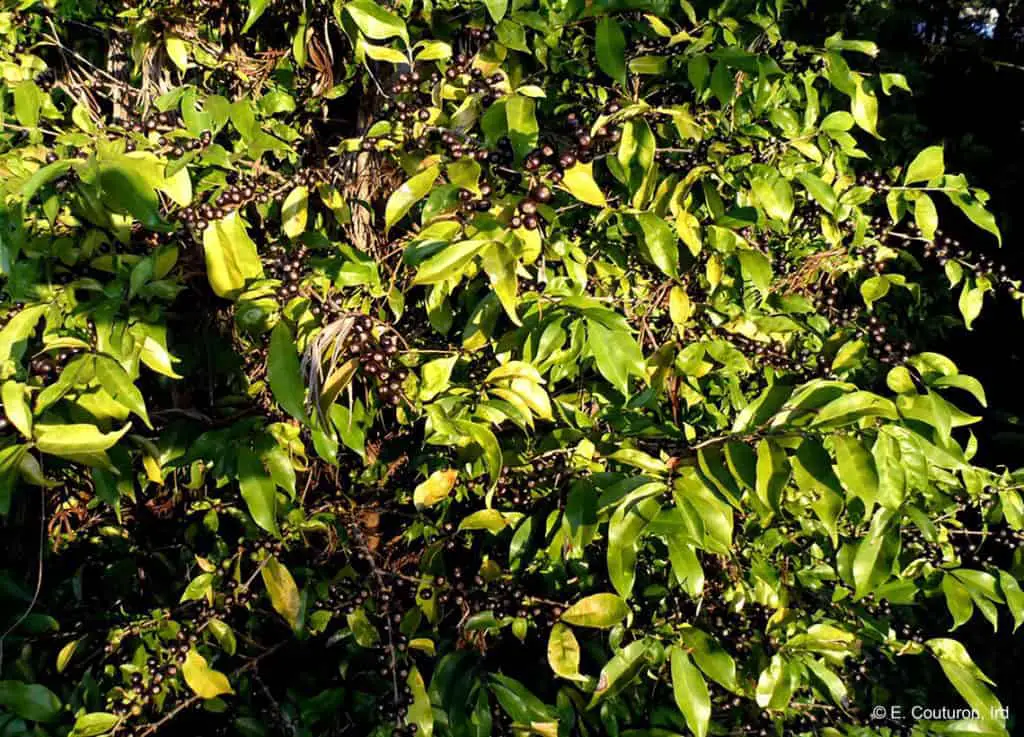
Most of the world’s coffee comes from just two species: arabica and robusta. But there are more than 120 known coffee species, and stenophylla is one of the few that was ever grown for drinking. The name means “narrow leaf,” after its slender leaves. Its small cherries ripen to a deep purple-black rather than red.
It grows wild in the humid forests of Upper West Africa, mainly Guinea, Sierra Leone and Ivory Coast, and at lower, hotter elevations than arabica. That combination of heat tolerance and good flavor is what makes it interesting today.
A Coffee Almost Lost
| When | What happened |
|---|---|
| 1790s | Swedish botanist Adam Afzelius collects it in Sierra Leone |
| 1834 | Formally described as a new species |
| Late 1800s | Farmed and exported from Sierra Leone; praised for its flavor |
| Early 1900s | Replaced by higher-yielding robusta and largely forgotten |
| 2018 | Rediscovered growing wild in Sierra Leone |
| 2020–2021 | First samples tasted; results published in Nature Plants |
In the 1800s, stenophylla had a good reputation. Botanists of the time noted its flavor and recorded that it seemed to tolerate drought and coffee leaf rust. But robusta produced much bigger harvests, so farmers switched, and stenophylla faded from farms and from memory. Meanwhile, its wild forest habitat kept shrinking.
In late 2018, a team led by Dr. Aaron Davis of the Royal Botanic Gardens, Kew, and Jeremy Haggar of the University of Greenwich, working with Sierra Leonean coffee expert Daniel Sarmu, found wild stenophylla trees again. It took until 2020 to find trees with enough fruit for a small tasting sample.
What Does Stenophylla Taste Like?
The big surprise was the flavor. Most heat-tolerant coffees, like robusta, taste harsher and more bitter than arabica. Stenophylla doesn’t.
In a blind tasting with 18 judges in France, 81% said stenophylla tasted like arabica, compared with just 7% for a robusta sample. Tasters described it as complex, with natural sweetness, medium-high acidity, fruitiness and good body.
Why Stenophylla Matters for the Future of Coffee
Arabica, the species behind almost all specialty coffee, needs relatively cool conditions. As temperatures rise, many of today’s arabica-growing regions are expected to become less suitable. Robusta handles heat better, but most drinkers find it harsher.
Stenophylla grows at a mean annual temperature of about 24.9°C, roughly 1.9°C warmer than robusta and up to 6.8°C warmer than arabica, and it appears to be more drought-tolerant too. That makes it promising in two ways:
- As a crop: a high-quality coffee that could be grown in hotter, lower places where arabica struggles.
- For breeding: a source of genes for heat tolerance, and possibly rust resistance, that could help develop hardier arabica-style coffees.
Rust tolerance is still mostly based on 19th-century reports, and stenophylla gives smaller harvests than arabica, so there’s research still to do. See our guide to coffee rust for why disease resistance matters so much.
Can You Buy Stenophylla Coffee?
Not easily. Kew and the University of Greenwich are working with partners in Sierra Leone, including Welthungerhilfe and coffee trader Sucafina, to set up trial plots and nurseries and bring stenophylla back as a farm crop. Until those trees mature and produce reliably, it will stay a rarity. For other unusual coffees you can actually buy, see our guides to Geisha coffee and peaberry coffee.
Coffea Stenophylla FAQ
Is stenophylla arabica?
No. It’s a separate species, Coffea stenophylla. It just tastes similar to arabica.
Why did farmers stop growing stenophylla?
Robusta produced much larger harvests, so farmers in West Africa switched to it in the early 1900s.
Does stenophylla have more caffeine?
There’s little published data on its caffeine content yet. The interest in stenophylla is about heat tolerance and flavor.
Can I grow stenophylla at home?
Seeds and plants are very hard to find. If you’d like a coffee plant, arabica is easy to grow indoors; here’s how to grow a coffee plant at home.
Sources: Davis et al. in The Conversation (2021); Royal Botanic Gardens, Kew: revitalization of stenophylla coffee in Sierra Leone.

Former roastery owner and coffee tour operator. Steve spent five years roasting coffee for his own shop and wholesale customers. More about Steve