
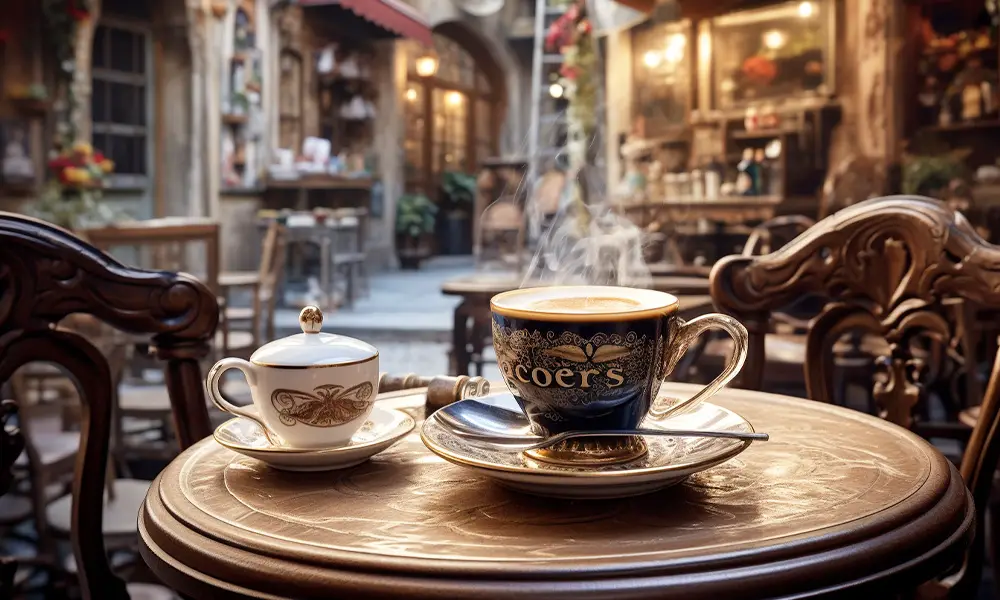
Caffè sospeso (“suspended coffee”) is a Naples tradition: you pay for two coffees, drink one, and leave the other “on hold” for someone who can’t afford one. Later, anyone in need can walk in and ask if there’s a sospeso waiting. The tradition is more than a century old, and since 2013 it has spread to cafés around the world as “suspended” or “pending” coffee.
| What | Details |
|---|---|
| Meaning | “Suspended coffee” in Italian |
| Where it started | Working-class cafés in Naples |
| How old | Said to be over 100 years old |
| How it works | Pay for an extra coffee; the café holds it for someone in need |
| Other names | Suspended coffee, pending coffee, café pendiente |
My First Encounter with Caffè Sospeso
Years ago, while I was studying in Italy, I stopped at a busy café in Naples. The barista pointed to a chalkboard that read “Caffè Sospeso” with a number next to it. That number, he explained, was how many coffees other customers had already paid for, waiting for anyone who needed one. It stuck with me as one of the simplest acts of kindness I’ve seen.
The History of Caffè Sospeso
Nobody knows exactly when it began. The custom grew up in the working-class cafés of Naples, where someone who’d had a bit of good luck would pay for two coffees and drink only one. Neapolitan accounts describe it as more than a hundred years old.
It faded during Italy’s postwar economic boom, when fewer people needed the help, and for decades survived mostly around Christmas. Then it came back whenever times got hard: during the 2008 recession, the eurozone crisis that followed, and the 2020 COVID-19 lockdowns.
Writer Luciano De Crescenzo did a lot to popularize it with his book Il caffè sospeso, and in December 2011 Naples declared an annual Suspended Coffee Day. Gran Caffè Gambrinus, the city’s grandest historic café, is one of the places most associated with the tradition.
How Caffè Sospeso Works
Paying a coffee forward
The Neapolitan way
- Order and pay for two. Ask for un caffè e un sospeso: one coffee for you and one suspended.
- The café keeps count. The barista notes it, often on a chalkboard or a jar by the register.
- Someone asks. Later, a person who can’t afford a coffee asks, “C’è un sospeso?” (“Is there a suspended coffee?”).
- They get it free. If one is waiting, the barista serves it. No names, no questions.
The anonymity is the point. The giver never knows who drinks the coffee, and the person who receives it doesn’t have to explain anything.
Why It Fits Italian Coffee Culture
In Italy, coffee is a small, daily, social ritual. Most people stop at the neighborhood bar for a quick espresso at the counter, often more than once a day, and it’s cheap enough that paying for a stranger’s cup is easy. That makes the café a natural place for a small, regular act of generosity.
Caffè sospeso sits alongside other Italian coffee customs, like knowing which coffee drinks to order when, and the debated espresso with lemon peel.
Experiencing Caffè Sospeso
I’ve been on both ends of it. Once in Milan, after a long flight, I realized I’d left my wallet behind. The barista checked the board and handed me an espresso someone had already paid for. That cup turned my day around, and a few days later I paid for a few extra in Rome to pass it on.
If you’re in Naples, ask about it at Gran Caffè Gambrinus or any neighborhood bar. Many baristas are happy to explain. Then order your coffee and leave one sospeso for the next person.
How Suspended Coffee Spread Around the World
The idea went global in March 2013, when John Sweeney started a “Suspended Coffees” Facebook page. By 2015 the movement said it had led to more than 15 million coffees bought in 34 countries. Starbucks UK pledged to match suspended coffees with donations to charity, and that summer a customer in Edmonton, Canada, paid for 500 coffees at Tim Hortons, setting off a chain of more than 10,000 paid-forward cups.
| Name | Where you’ll hear it |
|---|---|
| Caffè sospeso | Italy |
| Suspended coffee, pending coffee | US, UK, Canada, Australia |
| Café pendiente | Spain, Argentina, Costa Rica |
| Café en attente | Quebec |
Cafés in Bulgaria, Ukraine, Romania, Russia and Turkey have also taken it up.
In Costa Rica, where so much great coffee is grown, campaigns have promoted the café pendiente too. For more customs like this, see our roundup of coffee traditions around the world and the dates of National and International Coffee Day.
Why Small Acts Like This Matter
Caffè sospeso is a tiny gesture, but it tells someone they’re seen and welcome. It also does something for the giver: in a well-known 2008 study, people who spent money on others reported feeling happier than people who spent the same amount on themselves.
How to Take Part Anywhere
- Ask your local café if it keeps suspended coffees. If it doesn’t, suggest it; many owners like the idea.
- Pay for an extra next time you order, and let the barista hand it on.
- Find a participating café through Suspended Coffees, a nonprofit that keeps a map of cafés taking part.
- Make it your own: some cafés also hold suspended meals, pastries or tea.
Caffè Sospeso FAQ
What does caffè sospeso mean?
It means “suspended coffee” in Italian: a coffee that’s been paid for and left waiting for someone who needs it.
Where did caffè sospeso start?
In the working-class cafés of Naples, Italy. Accounts there put it at more than a hundred years old.
Is caffè sospeso still common in Italy?
It’s strongest in Naples and comes back in hard times and around Christmas. Many Italian cafés don’t do it day to day, so ask.
How do I ask for a suspended coffee?
In Naples, ask the barista “C’è un sospeso?” Elsewhere, just ask whether the café has any suspended or pending coffees.
Sources: Caffè sospeso (Wikipedia); Dunn, Aknin and Norton, Spending Money on Others Promotes Happiness, Science (2008).
Former roastery owner and coffee tour operator. Steve spent five years roasting coffee for his own shop and wholesale customers. More about Steve