
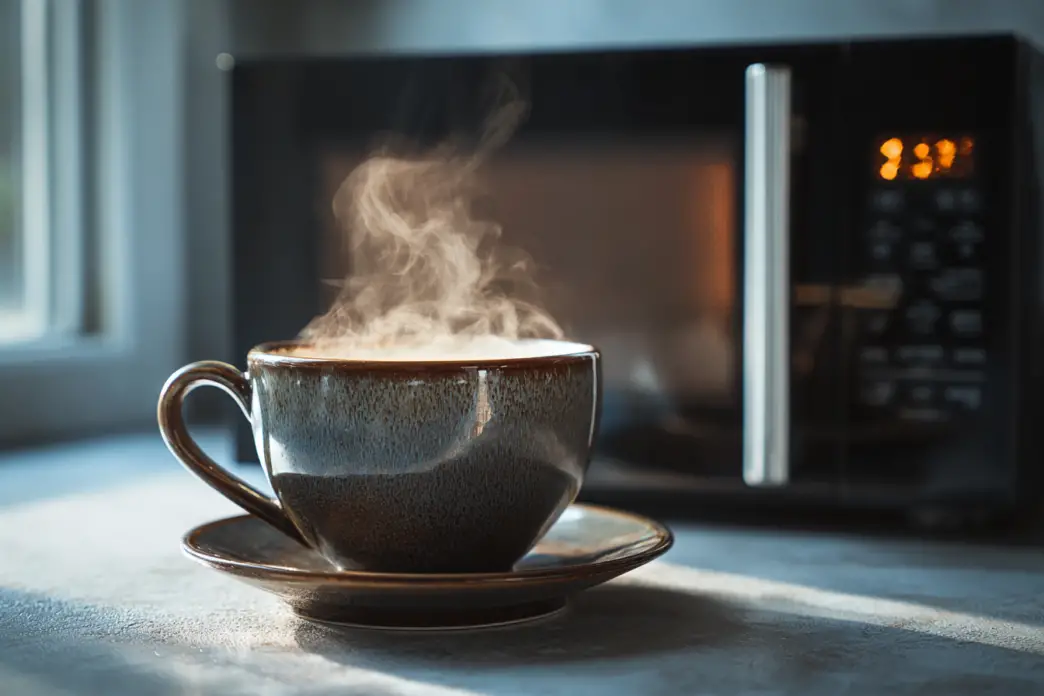
Many coffee drinkers face this situation: you brew a fresh pot, get distracted, and come back to a lukewarm cup. The question pops up—can you just zap it in the microwave or warm it on the stove without issue?
In short, reheating coffee works in a pinch, but it often leads to a less enjoyable drink. The heat alters the compounds inside, shifting the balance of flavors. If you’re set on reheating coffee, certain approaches minimize the damage. Otherwise, a few habits can help you avoid the need altogether.
This post breaks down the reasons behind those changes, when reheating makes sense, and practical steps to handle your brew better. Whether you stick to black coffee or prefer it with milk, understanding these details helps you get more from each cup.
The Science of What Happens When You Reheat Coffee
Coffee’s taste comes from a mix of acids, oils, and aromatic compounds released during brewing. When you let it cool and then reheat it, several reactions kick in that affect the final sip.
Heat speeds up oxidation, where oxygen interacts with the coffee’s oils and compounds. This process starts right after brewing but ramps up with reheating, leading to a stale or flat profile. Aromatic compounds, the ones responsible for those fruity or nutty notes, are volatile—they evaporate easily under heat. Reheating drives them off faster, so the coffee loses its lively scent and depth.
Acidity plays a role too. Coffee contains chlorogenic acids, natural compounds that add brightness. Reheating breaks them down into quinic acid and caffeic acid, which taste more bitter and astringent. That’s why reheated coffee often comes across as harsh or thin. The mouthfeel changes as well; some dissolved solids redistribute unevenly, making the body feel lighter.
These shifts are more obvious in higher-end beans with complex profiles. A light roast with berry notes might turn dull, while a darker roast holds up a bit better since it already has bolder, roasted flavors. The longer the coffee sits before reheating, the more these effects compound. If it’s been out for hours, oxidation has already done some work.
Temperature matters here. Coffee tastes best around 140°F to 160°F, where flavors balance out. Below that, it seems sweeter and less bitter; above, the heat amplifies sharpness. Reheating pushes it back up, but not without losing some of the original harmony.
Safety First: Does Reheating Coffee Pose Any Risks?
From a health standpoint, reheating coffee is fine in most cases. The process itself doesn’t introduce toxins or make the drink unsafe. Microwaving or stovetop warming heats the liquid evenly enough to kill any bacteria that might have started growing.
That said, how long the coffee has sat out matters. If it’s been at room temperature for more than two hours, bacteria can multiply, especially in a warm environment. Reheating will eliminate most of them, but it’s smarter to avoid letting it linger that long. In a fridge, sealed coffee stays safe for a day or two, but the flavor will still degrade.
Caffeine levels don’t drop much with reheating—it’s stable under normal heat. No worries there if you’re counting on that boost. Overall, as long as you’re not dealing with moldy or spoiled coffee, reheating won’t harm you. Just use a clean container to avoid any off tastes from residues.
When Reheating Coffee Makes Sense
Sometimes life gets in the way, and reheating coffee becomes the practical choice. If you’ve brewed a full pot but only need one cup right now, warming up the rest later saves waste. For busy mornings, it beats starting from scratch.
It’s more forgivable with everyday blends or robust dark roasts, where subtle notes aren’t the star. In those cases, the bitterness increase might not stand out as much. If the coffee cooled quickly—say, in under an hour—the changes stay minimal.
On the flip side, skip reheating for specialty pours like a single-origin Ethiopian with floral hints. Those delicate elements vanish fast under heat. If quality ranks high for you, treat reheating as a last resort. Many pros in the coffee world advise against it entirely, viewing coffee as a one-and-done experience.
Consider your setup too. In an office with limited brewing options, reheating might be the only way to go. At home, though, you have more control to prevent the need.
Best Ways to Reheat Coffee Without Major Flavor Loss
If you decide to reheat coffee, the method counts. The goal is quick, even heating to limit evaporation and compound breakdown. Here’s how to do it right.
Microwaving stands out as a solid option. It heats fast, which helps preserve more aromas than slower methods. Use a microwave-safe mug, heat in short bursts—20 to 30 seconds at a time—and stir between each. Aim for 140°F to avoid overheating, which boosts bitterness. A rotating turntable ensures even warmth, preventing hot spots that could scorch parts of the liquid.
Stovetop reheating works too, but it takes longer and risks uneven results. Pour the coffee into a small saucepan over low heat, stirring constantly. Don’t let it boil; that drives off volatiles and adds a burnt edge. This approach suits larger amounts, like a half-pot.
Avoid hot plates or keeping coffee on a warmer for hours—they slowly cook the brew, amplifying off-flavors. Whatever method you pick, reheat only what you’ll drink right away.
Here’s a quick comparison of common reheating methods:
| Method | Pros | Cons | Best For |
|---|---|---|---|
| Microwave | Fast, even heating | Can create hot spots if not stirred | Single cups |
| Stovetop | Good control over temperature | Slower, risks scorching | Larger batches |
| Hot Plate | Hands-off | Prolonged heat ruins flavor | Not recommended |
Test the temperature with a thermometer if you have one—staying under 160°F keeps things balanced.
Alternatives to Reheating: Keep Your Coffee Fresh Longer
Reheating coffee often stems from cooling too fast, so focus on prevention. Start with an insulated mug or tumbler—they hold heat for hours without accelerating degradation. Look for double-walled stainless steel models with tight lids; they trap steam and maintain temperature.
Brew smaller batches to match what you need. A single-serve method like pour-over or AeroPress lets you make just enough. Preheat your mug with hot water before pouring; that simple step slows cooling.
If you end up with extras, repurpose them instead of reheating. Chill the coffee and turn it into iced drinks—add ice, milk, or a dash of cinnamon for a refreshing twist. The cold masks some bitterness and brings out sweetness. Store leftovers in the fridge in a sealed jar; they last a couple of days.
Get creative with uses beyond drinking. Mix cooled coffee into smoothies for a caffeine kick, or freeze it into ice cubes for cold brew without dilution. In the kitchen, it adds depth to marinades for meats, boosts chocolate desserts, or enhances savory dishes like chili. These options cut waste and turn potential discards into something useful.
Invest in better gear if cooling happens often. A thermal carafe keeps a full pot warm without electricity, preserving taste better than glass pots on burners.
Wrapping Up: Making the Call on Reheating Coffee
Reheating coffee is acceptable when you need it, but expect some trade-offs in taste—more bitterness, less aroma, and a flatter profile. For casual drinkers, it’s no big deal; for those chasing peak flavor, fresh is always better. Safety isn’t a concern unless the coffee has sat out too long.
By choosing quick reheating methods or shifting to habits like insulated mugs and small brews, you can sidestep the issue. Next time your cup goes cold, weigh the options and pick what fits your moment. Good coffee rewards attention to these details.