
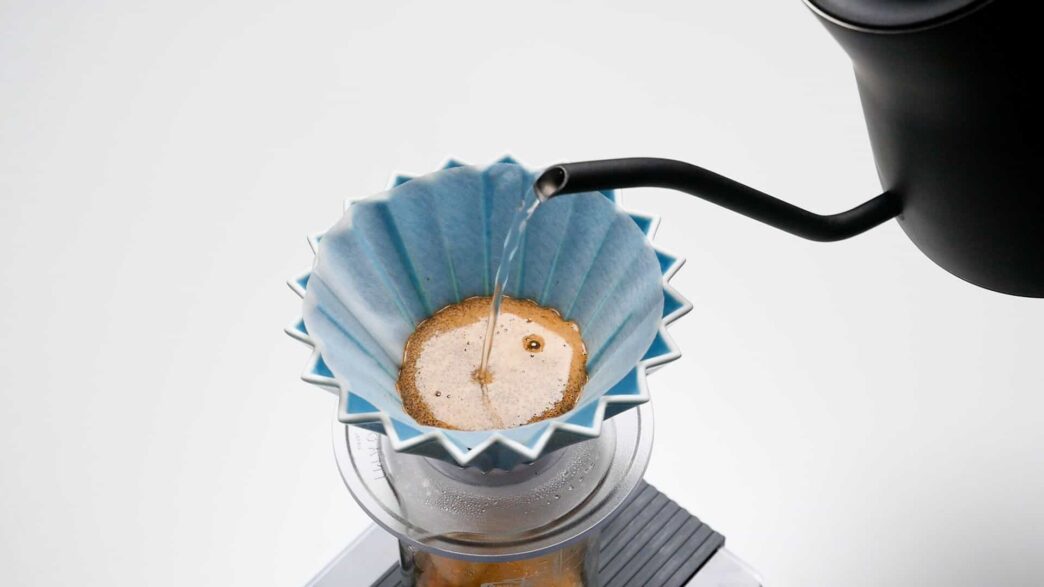
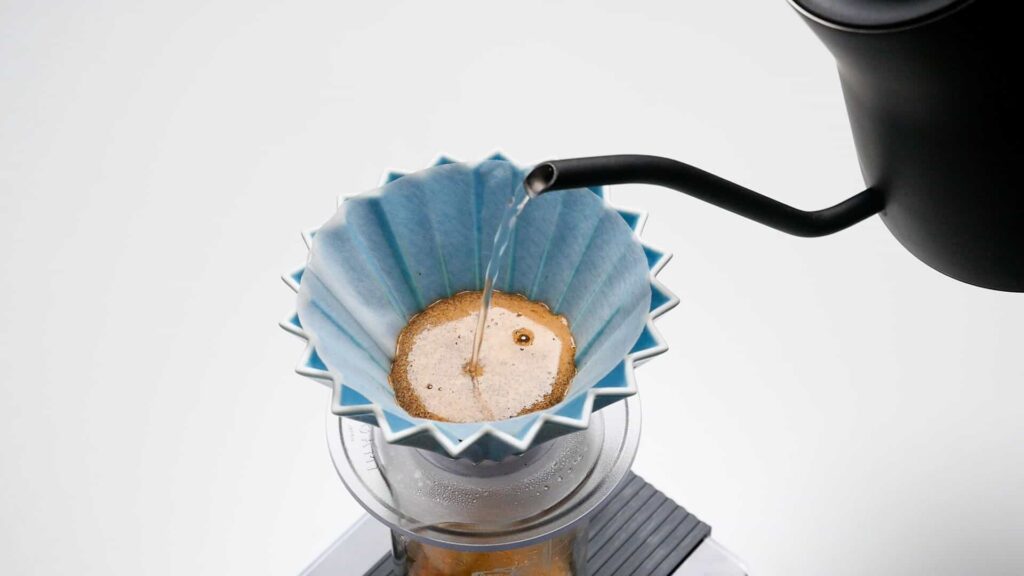
The Origami dripper has earned a spot in many home setups for its smart design that lets you switch between filter types without buying extra gear. Crafted in Japan, this pour over tool gives you options for tweaking your brew, whether you aim for a bright cup or something more even. If you’re into manual brewing and want control over the process, this dripper fits right in. Let’s break down what it offers and how to use it.
What Sets the Origami Dripper Apart
This brewer draws from traditional Japanese ceramics, with a shape that echoes folded paper. It comes in small and medium sizes, handling one to four cups depending on the model. The small version suits solo brews, while the medium works for sharing. At around 200 grams, it’s light enough to handle easily, with a base hole about 25 millimeters wide for steady flow.
The standout feature is the 20 vertical grooves inside. These create space between the filter and the walls, letting air move freely. That setup prevents stalls during the pour and gives you room to adjust the speed. Slower pours draw out more body, while faster ones keep things light. Baristas often pick it for competitions because of that flexibility.
Materials and Construction
Porcelain forms the core of the Origami dripper, pulled from Japan’s Gifu region where they’ve made ceramics for centuries. This material holds heat well, which helps maintain steady temperatures during extraction. Extraction here means pulling flavors from the grounds into the water—stable heat leads to better results.
The porcelain handles temperature shifts up to 120 degrees Celsius, so you can rinse it with hot water without worry. It’s safe for microwaves and dishwashers, making cleanup simple. Some versions come in plastic, which warms up quicker and has deeper grooves for even faster flows, but the ceramic original brings that classic feel.
Colors range from matte finishes to bright tones, adding a touch of style to your counter. Just note it’s fragile, so handle it carefully to avoid chips.
Filter Choices and Flavor Differences
One big draw is how the Origami works with two filter styles: cone-shaped like those for V60 drippers, or wave-shaped flat-bottom ones similar to Kalita. Cone filters sit deeper, creating a thicker bed of grounds. Water passes through layers, picking up varied notes for a cup with depth—think hints of fruit mixing with earthier tones.
Wave filters, on the other hand, spread the grounds thinner and more even. The ribs hold them in place, cutting down on uneven flow where water skips parts of the bed (that’s channeling). You get a more consistent extraction, often sweeter and less sharp. Switch filters based on the coffee: try cones for washed beans that shine with clarity, or waves for naturals that benefit from balance.
Both types fit without adapters, so you can experiment with the same setup. Paper quality matters—thicker ones slow things down for finer control.
How to Brew with the Origami Dripper
Start with fresh beans, ground medium to medium-fine depending on your filter. A gooseneck kettle helps with precise pours, and a scale keeps ratios on point. Water temperature sits between 88 and 94 degrees Celsius; hotter for lighter roasts, cooler for darker.
Rinse the filter first to remove any paper taste and warm the dripper. Add grounds, then bloom with a small pour—about twice the coffee weight in water. Let it sit 30 to 45 seconds to release gases and start extraction evenly.
From there, pour in stages. Circle from the center out to agitate the grounds gently—agitation means stirring up the bed for better contact. Aim for a total brew time under three minutes to avoid over-extraction, which can turn bitter.
Remove the dripper once the flow stops, even if a bit of water lingers, to halt the process. Swirl the cup before sipping to mix layers.
Sample Recipes for the Origami
Recipes vary by coffee type, but here’s a solid starting point for the medium dripper. Adjust based on taste.
For a balanced cup with wave filters:
- Coffee: 18 grams, medium grind
- Water: 270 grams at 93 degrees Celsius (1:15 ratio)
- Bloom: 60 grams in a circle, wait 20 seconds
- Second pour: 140 grams in a circle, starting at 50 seconds
- Third pour: Remaining water into the center at 1 minute
- Total time: Under 2 minutes
This setup pulls sweetness without sharpness, ideal for medium roasts.
For cone filters and brighter profiles:
- Coffee: 15 grams, medium-fine grind
- Water: 240 grams at 91-94 degrees Celsius (1:16 ratio)
- Bloom: 30 grams, wait 45 seconds
- Pours: Three stages—60 grams at 45 seconds, 60 at 1:35, 90 at 2:10
- Total time: Around 3 minutes
Use this for washed coffees to highlight acidity.
Another approach for quick intensity:
- Coffee: 15 grams, fine grind
- Water: 270 grams at 88-90 degrees Celsius
- First 30 seconds: 40 grams
- Next 30 seconds: 130 grams slow
- Finish before 80 seconds total, remove dripper
This yields a clean, sweet result without strength overpowering nuance.
| Recipe | Filter Type | Coffee (g) | Water (g) | Temp (°C) | Grind | Total Time |
|---|---|---|---|---|---|---|
| Balanced | Wave | 18 | 270 | 93 | Medium | <2 min |
| Bright | Cone | 15 | 240 | 91-94 | Medium-fine | ~3 min |
| Quick Intense | Either | 15 | 270 | 88-90 | Fine | <80 sec |
These ratios scale up for the medium size—double for two cups.
Advantages and Drawbacks
On the plus side, the dual filter setup means one tool covers multiple styles, saving space and cost. The grooves ensure smooth drains, reducing clogs even with finer grinds. It produces clean cups with good body, and the design looks sharp on any setup.
Drawbacks include the ceramic’s breakable nature, so it’s not ideal for travel. Without built-in handles, it can get hot during use—pair it with a wooden or resin base. Some note a slight dry finish with flat-bottom filters if pours aren’t even, but practice fixes that. Price sits in the mid range, around 35 to 40 dollars, which feels fair for the quality.
Overall, it shines for those who like tweaking variables without extra buys.
Comparing to Other Pour Over Tools
Against the Hario V60, the Origami adds wave filter support for more even brews, while the V60 sticks to cones for faster, brighter results. The larger base hole in the Origami stabilizes flow better.
Versus Kalita Wave, it’s similar with flat beds but gains cone options for variety. Kalita focuses on consistency, but Origami gives more speed control through grooves.
Timemore drippers offer modern twists, but Origami’s traditional roots and color choices make it more appealing for daily use. All brew well, but pick based on whether you value versatility over specialization.
Tips for Optimal Results
Grind fresh each time—stale grounds flatten flavors. Experiment with water quality; soft water enhances sweetness. Preheat everything to keep temps steady. For competitions or precise brews, the plastic version speeds things up, but ceramic holds appeal for home. Store it dry to avoid mold, and clean with mild soap.
If brews taste off, check grind size—too coarse skips extraction, too fine stalls. Track times and adjust pours accordingly.
Final Thought
In summary, the Origami dripper brings Japanese precision to pour over coffee, with its grooves and filter options letting you tailor each cup. For anyone building a home station, it adds real value through control and style. Give it a try with your next bag of beans.