

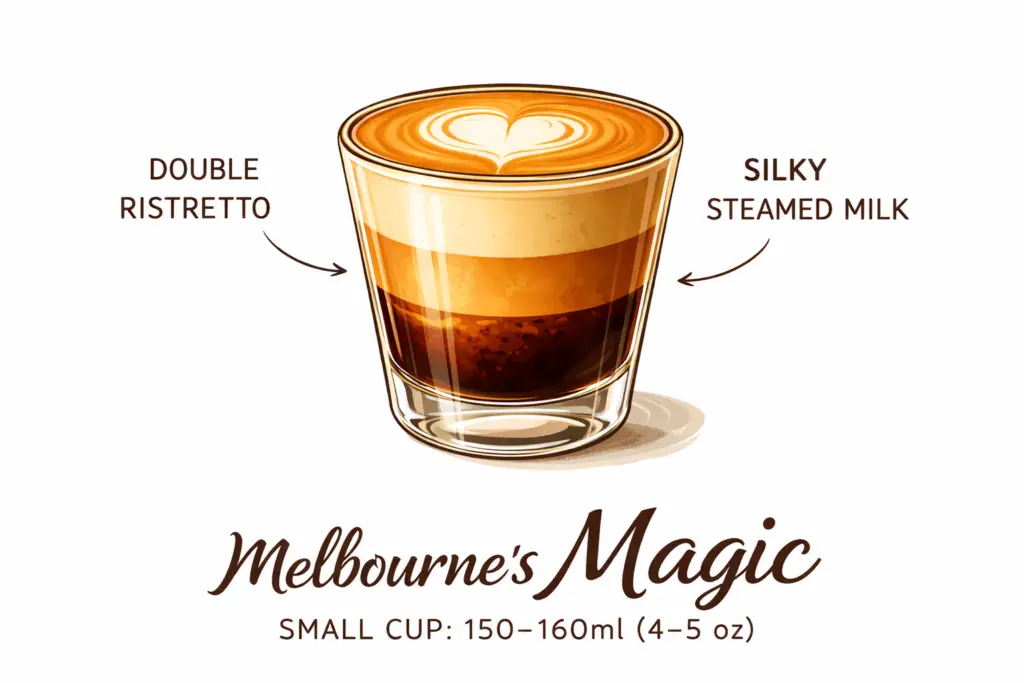
Magic coffee comes from Melbourne’s sharp-eyed coffee scene. It’s a compact, intense milk drink built on a double ristretto base and finished with silky steamed milk. Served in a small 5-ounce cup, it delivers a strong hit of coffee flavor without tipping into bitterness. The name “magic” fits because the balance feels almost too good—bold yet smooth, concentrated yet easy to drink.
Melbourne baristas created this drink to highlight the sweeter, fruitier side of good beans. Regular flat whites and lattes use more water and milk, which can mute those notes. Magic coffee keeps things tight: less liquid overall, more focus on the coffee itself. It’s become a quiet staple in Victoria, and while it’s spreading to other Australian cities, it still carries that local edge.
Origins of Magic Coffee
Melbourne has long treated coffee like a craft worth obsessing over. In the early 2000s, cafes started experimenting with ristretto shots to pull out brighter flavors from their espresso blends and single origins. The magic coffee emerged as a practical answer for drinkers who wanted intensity without a straight black or a diluted milk drink.
The format stuck because it works well with the high-quality Arabica beans many Melbourne roasters use. Lighter roasts with berry, citrus, or stone fruit notes shine when extracted short. The small volume also suits the fast pace of city coffee runs—quick to make, quick to drink. Order “a magic” at a knowledgeable cafe in Melbourne, and the barista will nod and pull it without extra questions.
How Magic Coffee Differs from Other Milk Drinks
If you’ve ordered a flat white or latte and found it too mild, magic coffee steps in with a distinct approach that sets it apart from the pack. While most milk-based espresso drinks stretch the coffee with more water or milk, the magic keeps things concise, emphasizing the bean’s core flavors through a shorter extraction. Let’s break down how it stacks up against familiar favorites.
- Flat white: Double espresso (about 60 ml total) with steamed milk and a thin foam layer. Larger cup, milder coffee presence.
- Latte: Same double espresso, but more milk and thicker foam. Bigger volume, creamier, less coffee-forward.
- Cortado: Equal parts espresso and warm milk, no foam. Smaller, but standard espresso strength.
- Magic coffee: Double ristretto (35–40 ml), steamed milk with minimal microfoam, served in 5 oz (140–160 ml) cup. Stronger coffee-to-milk ratio, usually around 1:3 or less milk.
The key difference sits in the ristretto base. A ristretto uses the same dose of ground coffee as a regular espresso (18–20 grams) but stops the extraction earlier—typically 20–25 seconds instead of 25–30. This pulls the first, sweetest compounds (sugars, acids, fruit notes) while leaving behind harsher bitter compounds that come out later. Result: brighter taste, thicker body, no need for extra syrups or roast darkness to cover flaws.
Milk plays a supporting role. Steamed to 60–65°C with a smooth, velvety microfoam (think paint-like texture, not bubbly froth), it softens the intensity without drowning it. The drink arrives about three-quarters full in the cup, leaving a clean rim and no overflow.
How to Make Magic Coffee at Home
Brewing a magic coffee in your kitchen isn’t reserved for pros—if you have basic espresso gear, you can pull off this Melbourne classic with practice. Start with quality beans and precise measurements to mimic cafe results. Follow these steps to build the drink from base to finish.
- Grind and dose: Use 18–20 grams of medium-dark to light roast coffee, ground fine (similar to table salt). Single-origin beans with fruit or floral notes work best.
- Tamp: Distribute grounds evenly in the portafilter, tamp firm and level.
- Pull the double ristretto: Lock in the portafilter. Start extraction and stop at 35–40 ml yield, around 20–25 seconds. The pour should look honey-thick and tiger-striped.
- Steam the milk: Use cold whole milk (or oat/barista blend for non-dairy). Stretch briefly to incorporate air, then swirl to create microfoam. Aim for glossy, no big bubbles, 60–65°C.
- Assemble: Pour the ristretto into a 5 oz ceramic cup. Gently add steamed milk, holding back foam at first for a layered pour, then mix lightly. Finish with a thin foam cap if you like.
The total volume lands around 140–150 ml, strong but not overwhelming.
Quick Proportions Table
| Component | Amount | Notes |
|---|---|---|
| Coffee dose | 18–20 g | Fine grind |
| Ristretto yield | 35–40 ml | 20–25 sec extraction |
| Steamed milk | 100–120 ml | Silky microfoam, 60–65°C |
| Total drink | 140–160 ml | 5 oz cup, ~3/4 full |
Tips for Getting It Right
Even with the right recipe, small adjustments can make or break your magic coffee. Focus on elements like bean freshness and machine calibration to avoid common pitfalls. Here are some practical pointers to refine your technique.
- Freshness counts. Grind beans right before pulling the shot. Stale grounds lose brightness and turn bitter faster.
- Dial in your machine. Ristretto needs precise timing and pressure. If it runs too fast, tighten the grind; too slow, coarsen slightly.
- Milk texture matters. Over-aerate and you get cappuccino foam; underdo it and the drink feels thin. Practice the hiss-to-swirl technique.
- Bean choice shapes the drink. Ethiopian naturals bring berry and citrus; Colombian washed add chocolate and nut. Avoid very dark roasts—they can over-extract even in ristretto.
- Temperature control. Serve warmer than iced coffee but cooler than a latte. Hot milk burns the tongue and hides flavors.
Variations Worth Trying
Once you’ve mastered the standard magic, experiment with tweaks to suit different moods or seasons. These adaptations maintain the drink’s core strength while adding subtle twists. Consider these options to expand your repertoire.
- Iced Magic: Pull the ristretto, cool it quickly over ice, then add cold milk. Keeps the intensity without dilution.
- Flavored Magic: Add a dash of vanilla, caramel, or hazelnut syrup to the shot before milk. Keeps it simple.
- Magic Mocha: Stir in cocoa powder or chocolate syrup with the ristretto for a richer twist.
Why Craft Coffee Drinkers Should Give It a Shot
Magic coffee rewards attention to detail. It shows off bean quality and barista skill in a way larger drinks can hide. The short extraction highlights acidity and sweetness that get lost in longer pulls. For anyone who enjoys tasting origin characteristics or prefers drinks that lean coffee-heavy, this format delivers without extras.
Next time you see a cafe with good espresso gear, ask for a magic. If they know it, you’ll get a drink that feels custom-made for serious coffee people.