
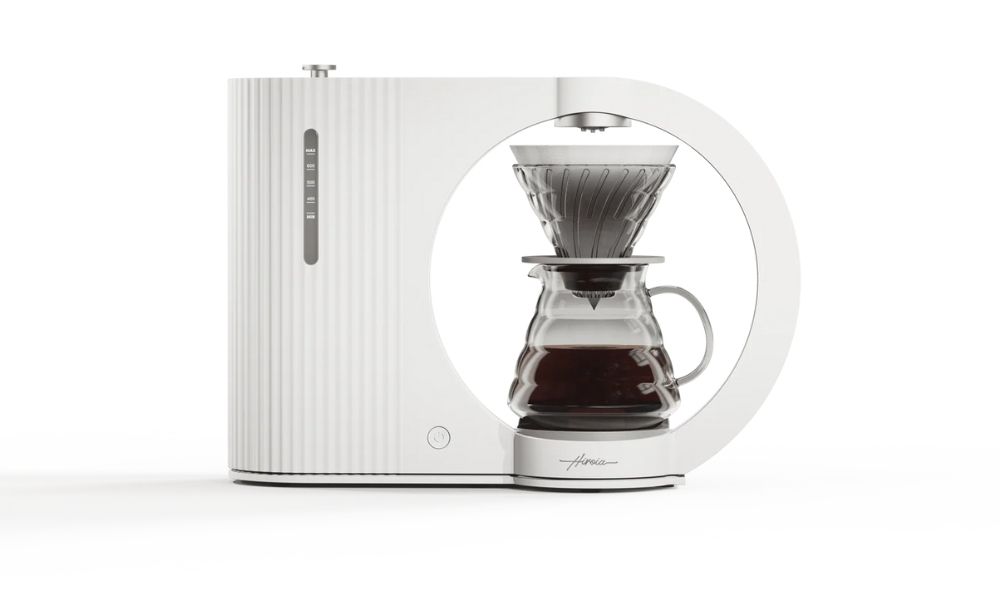
Pour-over coffee stands out for highlighting a bean’s true character. Yet it demands steady hands and focus, which can falter on busy mornings. The Hiroia Hikaru V60 steps in here. This automated brewer centers on the Hario V60 dripper, delivering barista-like pours with reliability. It handles the mechanics so you can adjust what counts for taste.
For those who prize V60’s clean notes but seek steady results without manual effort, the Hikaru offers a solid option in automated gear.
What Sets the Hikaru Pour Over Brewer Apart?
The Hikaru V60 from Hiroia brings automation to the classic Hario V60 dripper, focusing on exact control over the pour. It uses a circular shower head to distribute water in patterns that copy a skilled barista’s technique, handling details like heat stability and flow timing.
With a built-in scale and app connectivity, it measures doses precisely and saves custom settings, making it stand out for home setups that aim for pro results without constant hands-on work. Recent updates have even pushed it toward cafe use, with improved hardware for higher volume brewing.
The brewer’s VTE technology adjusts water flow dynamically during the process. This means it can change turbulence levels to pull even extraction from the coffee bed, avoiding spots that get over or under soaked. The shower head spreads water across the grounds, not just in the center, which helps with light roasts that need thorough wetting to release their bright acids.
Specs include a 700ml water tank made from BPA-free material, enough for up to three cups per brew. Temperature ranges from 80°C to 96°C, giving room to match different roasts—higher for lights to draw out fruity notes, lower for darks to keep bitterness in check. Flow rates offer 10 levels from 3ml/s to 12ml/s, so you can go slow for deeper flavors or faster for lighter bodies.
Bluetooth 5.2 connects to an app on iOS or Android, where you manage everything. The machine weighs about 2.8kg and fits on most counters at 407mm wide by 171mm deep by 297mm high. It comes with a V60 02 dripper, glass server, and 40 paper filters, plus a one-year warranty.
Ideal Users for the Hikaru (and Those It Might Skip)
If you chase the sharp, layered tastes of V60 coffee but get uneven results from manual pours, the Hikaru fits right in. It appeals to folks who brew daily for one or two and want reliable outcomes through tech tweaks, like adjusting water speed or heat on the fly.
On the flip side, if you find peace in the slow ritual of hand-pouring or just need a basic drip machine without apps, this might add unnecessary steps. It’s built for those who see brewing as a science more than a hands-only art.
Home coffee fans who experiment with beans from various roasters will like the repeatability. You can test a new light roast from Ethiopia one day, save the settings that work, and replicate them next time. For small households or solo drinkers, its capacity hits the mark without waste.
People who avoid it often prefer the tactile feel of a gooseneck kettle or dislike relying on connectivity. Some report occasional Bluetooth hiccups, which could frustrate tech-averse users. If you brew large batches for groups, look elsewhere—this tops out at around 580ml.
The Core Appeal: Steady, Repeatable Pour-Over
At its heart, the Hikaru tackles the biggest pain in V60 brewing—human error in pours that can swing flavors wildly. By locking in variables like bloom phase and water pulses, it delivers the same cup every time, pulling out bright notes from light roasts or smooth body from mediums.
This consistency turns morning coffee into a sure thing, especially for busy routines where manual methods often fall short. Reviews highlight how it beats hand pours for even extraction, making it a go-to for repeatable quality.
In pour-over, extraction yield refers to how much soluble material you pull from the grounds—aim for 18-22% for balanced taste. The Hikaru’s controls help hit that range without guesswork. TDS, or total dissolved solids, measures strength; it keeps pours steady to avoid weak or over-strong cups.
Users note it shines with medium roasts, where even agitation brings out caramel and nut tones. For consistency, it’s hard to beat—set a recipe once, and it follows through.
How the Hikaru Stands Out Among Smart Brewers
While many auto brewers prioritize quick setup over fine details, the Hikaru zeros in on V60-specific traits like cone shape and paper filters for clean cups. It offers 10 flow levels and pulse options that other devices skip, plus firmware updates for ongoing improvements.
Unlike bulk drip machines, it keeps the focus narrow on pour-over precision, with quiet operation and a small footprint. Recent models include cafe-friendly boosts, setting it apart for both home and light commercial spots seeking controlled, high-clarity brews.
Compare it to basic drip makers: those flood grounds evenly but lack temp and flow tweaks. Higher-end options like some pod systems sacrifice clarity for speed. The Hikaru sticks to V60’s geometry for that signature clean finish.
Its app sets it ahead, with a library of pro recipes and QR sharing. Over-the-air updates fix bugs and add features, like better turbulence control in recent firmware.
| Feature | Hikaru V60 | Typical Drip Brewer | Manual Pour-Over |
|---|---|---|---|
| Temp Control | 80-96°C precise | Often fixed or broad | Kettle-dependent |
| Flow Adjustment | 10 levels, VTE tech | Basic on/off | Hand-controlled |
| Consistency | High, programmable | Medium | Varies by user |
| Capacity | Up to 3 cups | 8-12 cups | Flexible |
| App Integration | Yes, recipes and monitoring | Rare | None |
This table shows where it fits—precision without losing pour-over’s appeal.
Simple Workflow for Brewing on the Hikaru
Getting started with the Hikaru keeps things straightforward, blending tech with familiar V60 steps. Fill the tank, grind your beans, and select a preset via the screen or app—no need for complex setups. It handles the pour automatically after you add grounds and rinse the filter, aiming for a total time that matches manual benchmarks. This flow suits quick mornings while allowing room for tweaks, turning what could be a fussy process into a reliable habit without losing the essence of pour-over coffee.
Step by step:
- Fill the 700ml tank with fresh water.
- Grind 18g of coffee medium-fine for a 300g brew (1:16.7 ratio).
- Rinse the V60 filter in the dripper to remove paper taste and preheat.
- Add grounds, place under the shower head.
- Choose a preset—small for one cup, light roast for brighter profiles.
- Hit start; it heats, blooms with about 36g water for 30-45 seconds, then pours in stages.
- Enjoy in 2:45-3:30 minutes total.
The built-in light indicates stages: heating, blooming, brewing.
Key Tweaks for Dialing In Your Cup
Fine-tuning the Hikaru revolves around a few core settings that shift flavors noticeably. Start with heat to match your roast—higher for pulling acids from lights, lower to tame bitterness in darks. Then adjust flow and pulse strength to control how water interacts with grounds, affecting body and strength.
These changes let you experiment methodically, building on a stable base that manual brewing often lacks. Users note that small shifts here can transform a flat cup into something vibrant and tailored.
Temperature: 94-96°C for light roasts unlocks citrus and floral notes; 88-92°C for darks prevents harsh edges.
Flow rate: Slower (3-6ml/s) builds fuller body; faster (9-12ml/s) keeps it light.
Turbulence: VTE adjusts agitation—moderate for sweetness in mediums, low for clean darks.
Save these as custom recipes in the app for easy recall.
Targeting Specific Flavor Styles
With the Hikaru’s controls, you can aim for distinct profiles based on your mood or beans. For a light, crisp cup, opt for quicker flows and less stirring to highlight fruity acids. A balanced everyday brew calls for mid-range settings that draw even sweetness, while fuller styles benefit from slower pours that build depth. This setup makes it easy to switch between modes, saving them for repeat use and helping you match coffee to preferences without random outcomes.
Clean and bright: Coarser grind, 95°C, fast flow, low turbulence, under 3 minutes.
Sweet and balanced: Medium grind, 93°C, moderate flow, medium turbulence, around 3 minutes.
Rich and heavy: Finer grind, 90°C, slow flow, higher turbulence, over 3 minutes.
The app’s library offers starting points from pros.
Maintenance Tips for Lasting Performance
Keeping the Hikaru in top shape ensures clean tastes and smooth operation over time. Daily rinses clear out residues from the dripper and tank, preventing buildup that dulls flavors. Weekly washes with mild soap on removable parts go further, and monthly descaling fights hard water issues. Firmware updates add longevity, with recent ones improving reliability for frequent use. Stick to these habits, and the machine holds up well, maintaining its precision for years of consistent brewing.
Daily: Rinse shower head, dripper, server.
Weekly: Soap wash tank and parts, air dry.
Monthly: Use descaling solution if water is hard.
Check app for OTA updates to fix any software quirks.
Real-World Pros and Cons
The Hikaru shines in delivering uniform V60 cups, with strong heat control and app-based recipes that simplify dialing in tastes. Its compact design fits small counters, and quiet runs make it apartment-friendly. Drawbacks include occasional app glitches or uneven water spread that might need filter tweaks for perfect evenness. Some find the price steep for home use, but updates have addressed early issues, making it more robust overall.
Pros:
- Even extraction for consistent flavor.
- Customizable via app.
- Quiet and compact.
- Includes essentials like dripper and server.
Cons:
- Bluetooth can falter.
- Learning curve for tweaks.
- Center-focused pour may need aids for some beans.
- Around $780, higher than basic options.
Is the Hikaru V60 Worth It?
For anyone tired of inconsistent manual pours but hooked on V60’s clear flavors, the Hikaru offers solid value through automation that preserves the method’s strengths. It saves time on busy days while opening up precise experiments, especially with recent cafe-oriented upgrades. If reliability ranks high and you’re okay with a touch of tech, it pays off—turning everyday coffee into something closer to specialty shop standards without the effort.