
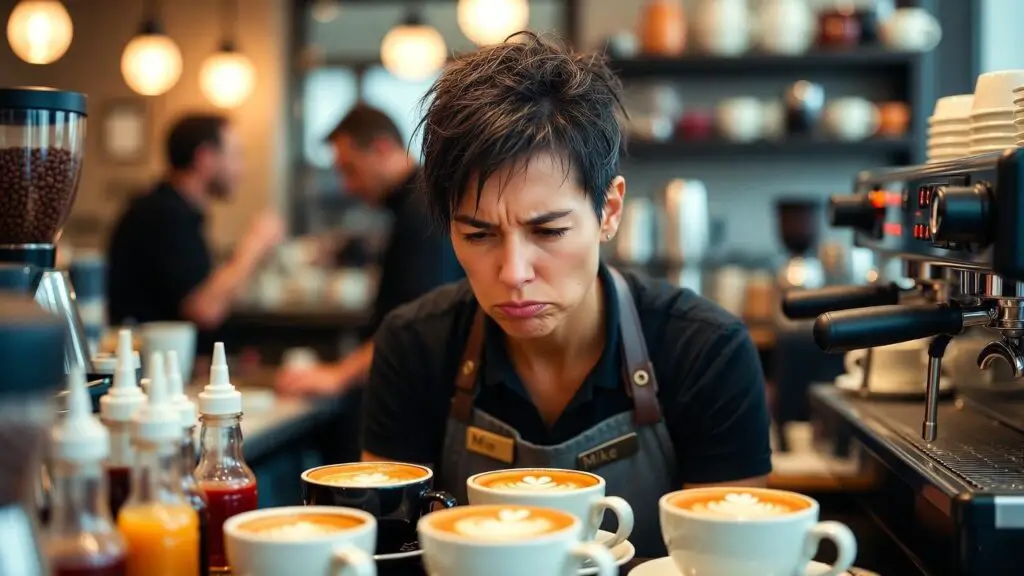
Baristas handle hundreds of drinks a day, pulling shots, steaming milk, and keeping the line moving. Most orders go smoothly, but some make them pause. These aren’t about personal taste—they stem from how certain requests affect drink quality, prep time, or the flow behind the counter. Based on input from coffee pros, here are the orders that often lead to quiet sighs. If you spot yours, no judgment; just tips to tweak it for better results.
Temperature Requests That Push Limits
Heat plays a big role in coffee, but asking for extremes can throw things off. Milk steams best around 140-150°F, creating that smooth texture in lattes or cappuccinos. Go higher, and it scorches, turning sweet notes bitter and ruining the foam.
One common offender: the extra-hot latte. Baristas note that superheating milk breaks down its proteins, leading to a flat, less flavorful sip. Plus, it cools quickly anyway once poured. If you like it warm for a commute, try asking for it at “to-go temperature” instead—around 160°F max. That keeps the integrity without the burn risk.
Extra-hot cappuccinos get similar reactions. A cappuccino balances espresso, steamed milk, and foam in equal parts. Cranking the heat kills the airy top layer, making it dense and unappealing. Opt for a standard temp to enjoy the intended mouthfeel.
Overly Customized Drinks That Slow the Pace
Customization lets you tailor your coffee, but stacking too many changes creates chaos. Think half-caf, ristretto shots with three syrups, specific milk ratios, and a drizzle on top. These “Franken-drinks” require precise measurements, pulling baristas from their rhythm and backing up orders.
For example, a decaf nonfat latte with sugar-free syrup and extra foam. It demands careful handling to match restrictions, but the minimal coffee element makes pros wonder about the point. Why not a simple herbal tea? If caffeine sensitivity drives it, a full decaf shot keeps more flavor without the fuss.
Half-caf orders—half regular, half decaf—also raise brows. Mixing requires splitting shots, which isn’t always straightforward on busy machines. It aims to cut caffeine, but baristas see it as a halfway measure that complicates things without much gain.
Iced Orders That Defy Logic
Cold coffee has surged in popularity, but some requests clash with how it works. Pouring hot espresso directly over ice shocks the shot, amplifying bitterness and watering it down fast. Better to build an iced Americano: shots over cold water, then ice on top for balanced extraction.
An iced latte with no ice? That leaves you with room-temp milk and espresso, missing the chill factor. Baristas prep these knowing they’ll melt quickly if ice is added later, or just sit warm. Request “light ice” if you want less dilution but still cold.
Nitro cold brew with added ice gets flagged too. Nitro infuses nitrogen for a creamy cascade; ice flattens those bubbles, stripping the texture. Stick to it straight from the tap for the full effect.
Blended and Sweetened Options That Mask the Coffee
Frappés and blended drinks bring the blender into play, which is loud and time-intensive during rushes. Adding dietary twists—like nonfat, sugar-free bases—means checking ingredients closely, as pre-mixes often have hidden elements.
Overly sweetened orders, like an iced mocha with six pumps of syrup, drown out the coffee’s natural profiles. Baristas craft with beans that have nuanced notes of fruit or chocolate; excess sugar turns it into candy. If sweetness calls, start with two pumps and adjust up—many find less brings out more depth.
Espresso over ice with a splash of milk on the side? It’s a hack for a cheap iced latte, but pros spot it as skimping on the menu price. Order the real thing to support the shop and get a properly mixed drink.
Minimal Coffee Requests That Seem Pointless
Some orders dial back the coffee so far they barely qualify. A single ristretto shot (a short, concentrated espresso pull) with four sugars? The tiny volume can’t dissolve all that, leaving grit at the bottom.
Or a large coffee with just an eighth of a shot. It’s mostly hot water or milk, losing any espresso punch. Baristas prep these wondering if a flavored steamer—hot milk with syrup—might fit better.
Decaf skim sugar-free lattes fall here too. Stripping calories and caffeine leaves a bland base. If health drives it, herbal infusions or tea lattes offer similar comfort without pretending to be coffee.
How to Order Without the Dread Factor
Baristas appreciate clear, collaborative requests. Lead with basics: size, hot or iced, milk type. Then add mods like “half sweet” for syrup or “coffee-forward” if you want the beans to shine. During peaks, keep it simple to help everyone.
If allergies or needs apply, mention them first—they take priority. For chains versus independents, note that craft spots handle customs better with fresh setups, while big operations thrive on standards.
Testing tweaks at quieter times builds rapport. A regular who asks thoughtfully often gets spot-on results, turning potential dread into a fun challenge.
In the end, coffee orders reflect habits and needs, but small shifts can improve the experience for all. Next time you queue up, consider the bar’s side—it might lead to your best cup yet.
Common Dreaded Orders and Fixes
Here’s a table summarizing key orders, why they annoy, and alternatives:
| Order | Why Dreaded | Better Option |
|---|---|---|
| Extra-hot latte | Scorches milk, alters taste | To-go temp (160°F max) |
| Over-customized frappe | Time-consuming, error-prone | Limit to 2-3 mods |
| Iced espresso straight over ice | Bitter, watery result | Iced Americano build |
| Half-caf with extras | Complicates splitting shots | Full decaf or regular |
| Super-sweet mocha | Masks coffee flavors | Start with 2 pumps syrup |
| Minimal-shot large drink | Lacks coffee essence | Flavored milk steamer |
This covers the basics without overwhelming. Adjust based on your spot’s setup. Coffee culture evolves, but these insights hold from bar feedback across shops. Stick to what enhances the drink, and you’ll avoid the secret eye-rolls.